Wasp nest removal and bee removal are not the same service, and a licensed pest control company can't treat them the same way. Wasps and hornets are pests we eliminate directly, while bees are pollinators protected under Ontario rules that limit how they can be handled, often requiring relocation instead of extermination.
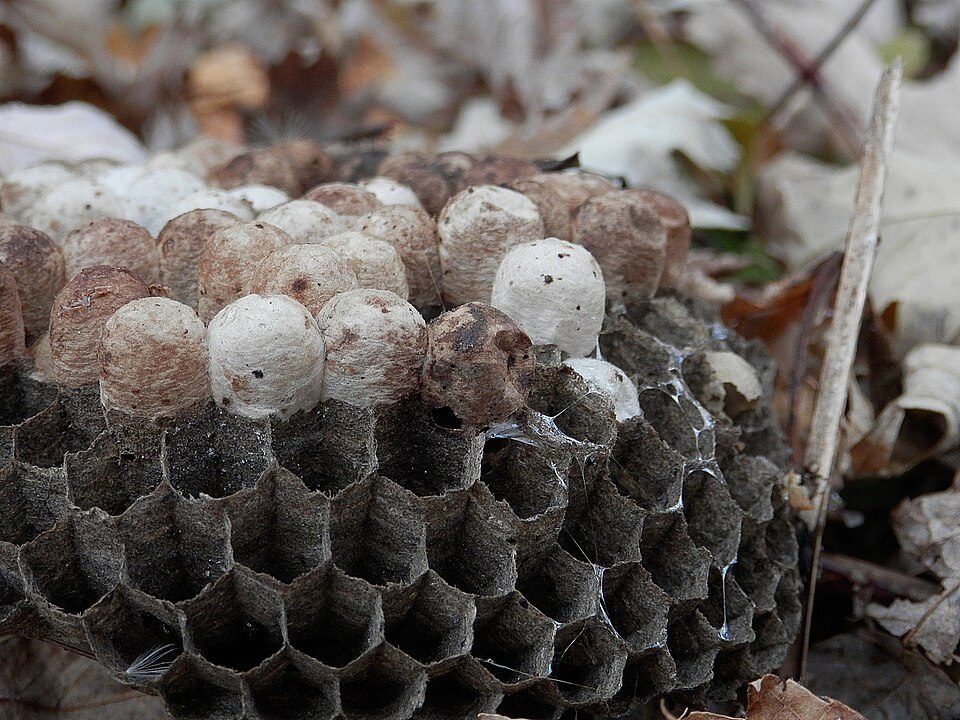

Why We Get Asked "Do You Remove Bees Too?" on Almost Every Wasp Call
Someone sees a flying, stinging insect near their porch or attic vent and assumes every stinging insect falls under one category.
It doesn't. Yellow jackets, paper wasps, and hornets are aggressive, colony-building insects that build new nests every year and pose a real threat to people on the property. Bees, particularly honeybees and bumblebees, are pollinators, and many species are in decline, which is why their treatment is handled completely differently under provincial guidance.
- Wasps and hornets: Not protected, aggressive when disturbed, nest reused sites annually, safe to exterminate directly.
- Honeybees: Often require a beekeeper for live removal/relocation rather than extermination.
- Bumblebees: Ground or cavity nesters, generally left alone since a colony naturally dies off by fall and there's little a homeowner or exterminator can legally do about an active bumblebee nest.
If it's a fuzzy, slow-moving bee, that's a different call entirely, and we'll tell you honestly if it's outside what we do.
How to Tell Wasps, Hornets, and Bees Apart Before You Call
Identification changes everything about the approach, so here's what we look for on every inspection:
- Common wasp nests: Smaller, open-comb structures, or built directly into soffits, eaves, and wall voids.
- Hornet nests: Large, fully enclosed, football-shaped paper structures usually hanging in trees or shrubs.
- Mud dauber nests: Solitary insects that don't defend a shared nest and typically only sting if physically handled or trapped against the skin. Low risk, low priority.
- Bees: Rounder, fuzzier bodies, slower and less erratic flight, and nests that are waxy comb structures rather than paper.
One detail that surprises most homeowners: the visible entrance hole is not always the nest. A wasp nest entrance can be located two to three feet away from the actual nest and queen inside a wall, ceiling, or the ground, which is why a proper inspection matters more than just spraying the hole you can see.
How Fast a Single Queen Becomes a 1,500-Wasp Problem
In spring, a lone queen starts a nest about the size of a golf ball. By midsummer, that same nest can hold 1,500 to 15,000 wasps depending on species. That's why a nest people ignore in May becomes an emergency call in August.
Unlike honeybees, a wasp's stinger isn't barbed and doesn't get left behind in the skin, which means one wasp can sting repeatedly in a single encounter. That's part of why a nest near a doorway, deck, or kids' play area needs to be dealt with, not just monitored.
Local Nesting Patterns We See on the Job
This isn't guesswork; it's what we log on service calls.
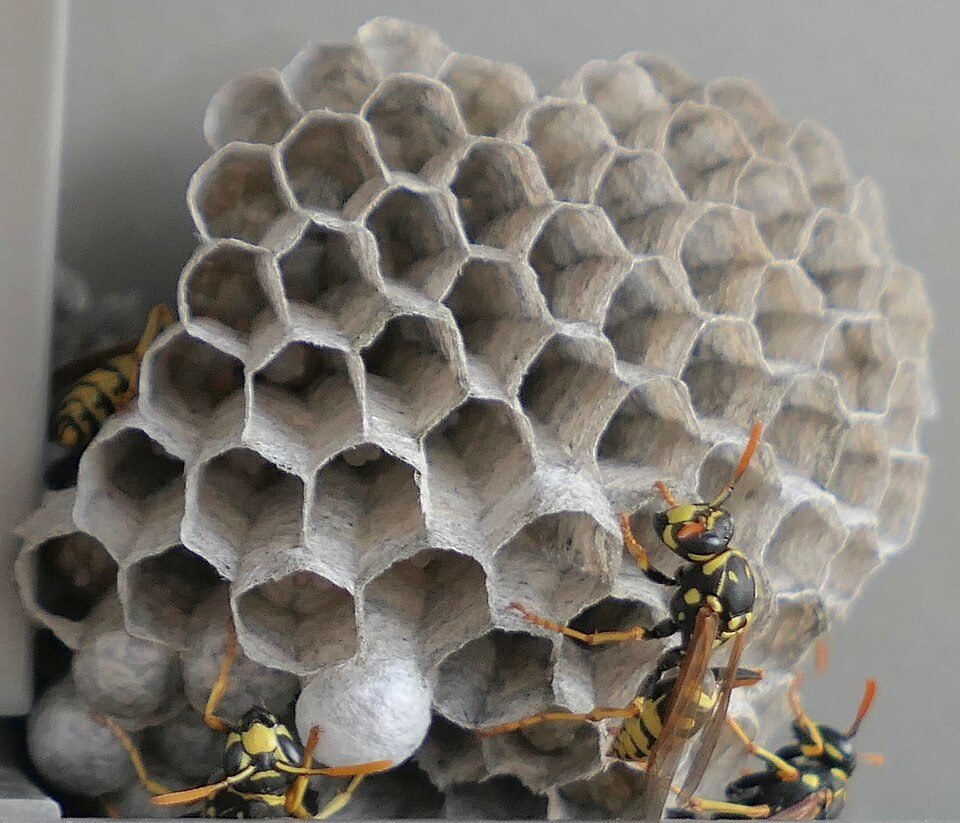

How AstraHive Pest Control gets rid of wasps and hornets
The nest is usually not where the wasps are going in and out. It can be deep in a wall, ceiling or the ground, so the treatment has to reach the nest itself.
How an AstraHive wasps and hornets treatment works
Remove the nest if it is accessible
If the nest is visible and reachable, we remove it completely, so there is no structure for the colony to rebuild around.
Dust into the wall void
If the nest is inside a wall, ceiling void or other structure, we use a professional pump to push pesticide dust through the entry point. The dust travels through the void: workers carry it back to the queen, and wasps that touch it die. It works as both a bait and a contact kill.
Knockdown treatment if there is immediate risk
If someone in the home has a severe allergy or the colony is highly aggressive, we use a knockdown ULV treatment to bring the active population down at once.
Document, and back it with a 30-day warranty
Every product used and every zone treated goes in the service report. If wasps return to the treated spot within 30 days, we re-treat at no charge.
Our products are Health Canada approved and safe for kids and pets, and we apply every product according to its label. AstraHive is licensed by the Ontario Ministry of the Environment, Conservation and Parks. Ontario requires a ministry-approved certification course before it issues an exterminator licence, and that training is delivered through the University of Guelph, Ridgetown Campus.
Spraying the entry point kills a few workers, leaves the queen untouched and can leave the survivors more aggressive. Large nests, nests inside walls or attics, and households with someone allergic to stings are best left to a professional.
What To Do If You're Stung Before We Arrive
Systemic allergic reactions to wasp stings occur in roughly 3% of adults, and insect stings are a leading trigger of fatal anaphylaxis, according to research published in the Canadian Medical Association Journal. That's not something to take lightly if you're clearing brush near a nest or trying to knock one down yourself.
- Normal, non-allergic sting: Ice packs or a baking soda paste help with local swelling and discomfort.
- Warning signs of a severe reaction: Unusual swelling, itching, dizziness, or shortness of breath. These require immediate medical attention, not home remedies.
If you're seeing repeat activity around the same part of your home, don't keep swatting or spraying yourself, since disturbing a nest without eliminating the queen usually makes the colony more aggressive, not less.
Why We Don't Seal Wasp Entry Points
People assume that once a nest is knocked down, the next step is caulking the hole shut so nothing ever gets back in. We don't do that, and it's not an oversight, it's deliberate.
Those small exterior gaps around weep holes, soffit panels, and fascia seams usually aren't a construction mistake that got missed. Builders put weep holes and vent gaps in exterior walls on purpose to let moisture escape from behind brick, siding, and framing. Weep holes provide a path for water and condensation trapped inside the wall assembly to drain and let the cavity ventilate, which is what keeps that moisture from turning into mold and rot. Seal that opening and the moisture has nowhere to go, and you've traded a wasp problem for a mold problem.
Then there's the colony itself. Wasps and other flying insects are naturally drawn toward light and openings, and a nest that gets sealed while wasps or larvae are still alive inside turns into a do-or-die situation for them. They'll chew and search for the nearest weep hole, vent gap, or seam to try to save the queen and the brood, and that new opening they find can end up leading further into the house rather than back outside. We've run into this enough times on real jobs to know there's rarely a clean fix once it happens. That's exactly why we treat the nest fully first, confirm the colony is dead, and leave the exterior weep holes and gaps alone rather than sealing anything ourselves.
When It Actually Is a Bee, Not a Wasp
If, after reading all this, you're still not sure what's on your property, that's normal. We'd rather tell you it's not our service than take a job that isn't appropriate for extermination.
Typical cost: Starting at $150 CAD, with final cost depending on property size and severity of infestation - there is no fixed upper limit. Call 905-925-8427 for an exact free quote.
Why Choose AstraHive
- Licensed & Insured: Certified by the Ontario Ministry of Environment, Conservation and Parks.
- Fast response: Same-day service available, with a callback within 5 minutes.
- 30-Day Warranty: If pests come back within that window, we re-treat at no additional charge.
- Proven track record: 5.0 stars on Google across 200+ reviews.
- Family & pet safe: Health Canada approved products on every job.
Frequently Asked Questions
Do pest control companies remove bees the same way they remove wasps?
No. Wasps and hornets are exterminated directly because they aren't protected and rebuild nests annually, while bees, especially honeybees, are often subject to relocation rather than extermination due to their role as pollinators. Bumblebee nests in particular have limited legal options for removal, and a colony typically dies off naturally by fall.
How can I tell if it's a wasp nest or a bee hive?
Wasp and hornet nests are made of paper-like material, either open-comb and built into soffits and eaves, or fully enclosed and football-shaped in trees, while bee nests are waxy honeycomb structures. Bees also have rounder, fuzzier bodies and calmer flight patterns compared to the erratic, aggressive movement of wasps and hornets.
Why don't you seal the wasp entry point after removing the nest?
The gaps wasps use as entry points are often weep holes or vent seams that exist on purpose to let moisture escape from behind brick and siding, so sealing them traps that moisture and can lead to mold. Sealing an opening while wasps or larvae are still alive inside also forces the colony into survival mode, and they'll chew through to find another way out, sometimes leading further into the house instead of back outside. That's why we confirm the colony is fully dead before doing anything and leave those exterior gaps alone rather than caulking them shut.
What should I do if I get stung by a wasp?
For a normal, non-allergic sting, ice packs or a baking soda paste help manage local swelling and discomfort. If you notice unusual swelling, itching, dizziness, or shortness of breath, these are signs of a severe allergic reaction and require immediate medical attention, since systemic reactions occur in roughly 3% of adults.
Sources
- Health Canada: Wasps (Pest control tips) — Yellow jackets and hornets are 10 to 25 mm with black and yellow or white bands; nests are made of paper and some are hidden; wasps can sting more than once; seek care for unusual swelling, dizziness or shortness of breath after a sting; most active in late summer; spraying a nest after nightfall is recommended because wasps are less active; professional help is recommended for active nests.
- Government of Ontario - Pesticide Licences and Permits — The Ministry of the Environment, Conservation and Parks regulates the sale, storage, use, transportation and disposal of pesticides in Ontario, including licensing requirements for exterminators.
- Canadian Medical Association Journal (CMAJ) - Venom anaphylaxis — About 3% of adults will have a severe systemic hypersensitivity reaction to venom from wasps, hornets, and other stinging insects.
- Ontario Pesticide Training & Certification (OPT&C) — A commercial pesticide applicator must hold a Pesticide Exterminator licence from the Ministry of the Environment, Conservation and Parks to legally apply pesticides.
- Polyguard — Builders install weep holes in exterior walls to let trapped water drain out and to ventilate the wall cavity, which helps prevent mold and moisture damage.
Areas We Serve
AstraHive Pest Control proudly serves 75+ communities across the following regions:
- Toronto: Toronto, North York, Scarborough, Etobicoke, East York, York, Leslieville, Lakeview
- Durham Region: Oshawa, Whitby, Ajax, Pickering, Clarington, Bowmanville, Courtice, Newcastle, Port Perry, Brooklin, Uxbridge, Scugog, Brock, Seaton
- York Region: Vaughan, Markham, Richmond Hill, Aurora, Newmarket, Thornhill, Woodbridge, Kleinburg, Maple, Stouffville, Unionville, Keswick, Holland Landing, East Gwillimbury, Georgina, King City, King Township, Nobleton, Berczy Village, Cathedraltown, Commerce Valley, Cornell, Wismer, Whitchurch-Stouffville, Sutton, Schomberg
- Peel Region: Mississauga, Brampton, Caledon, Malton, Port Credit, Streetsville, Meadowvale, Cooksville, Bolton, Palgrave
- Extended Service Area: Peterborough, Lindsay, Port Hope, Barrie, Bradford, Innisfil, Collingwood, Wasaga Beach, Orillia, Burlington, Oakville, Milton, Hamilton, Grimsby, St. Catharines, Welland, Niagara Falls
Don't see your city listed? Call us — we likely cover it.
Got a pest problem right now?
Call AstraHive for a free consultation. Licensed & insured, serving the GTA, Durham, York, Peel and Simcoe County.
Call 905-925-84275.0 Stars — 200+ Google Reviews | Licensed & Insured | Health Canada Approved