Blow flies are large, shiny, metallic green, blue or black flies that breed in dead animals, wounds and rotting waste. A sudden crowd of them indoors often means there is a hidden carcass in a wall, attic or chimney. To get rid of blow flies, find and remove the source, then clean up, trap the adults and keep them out.
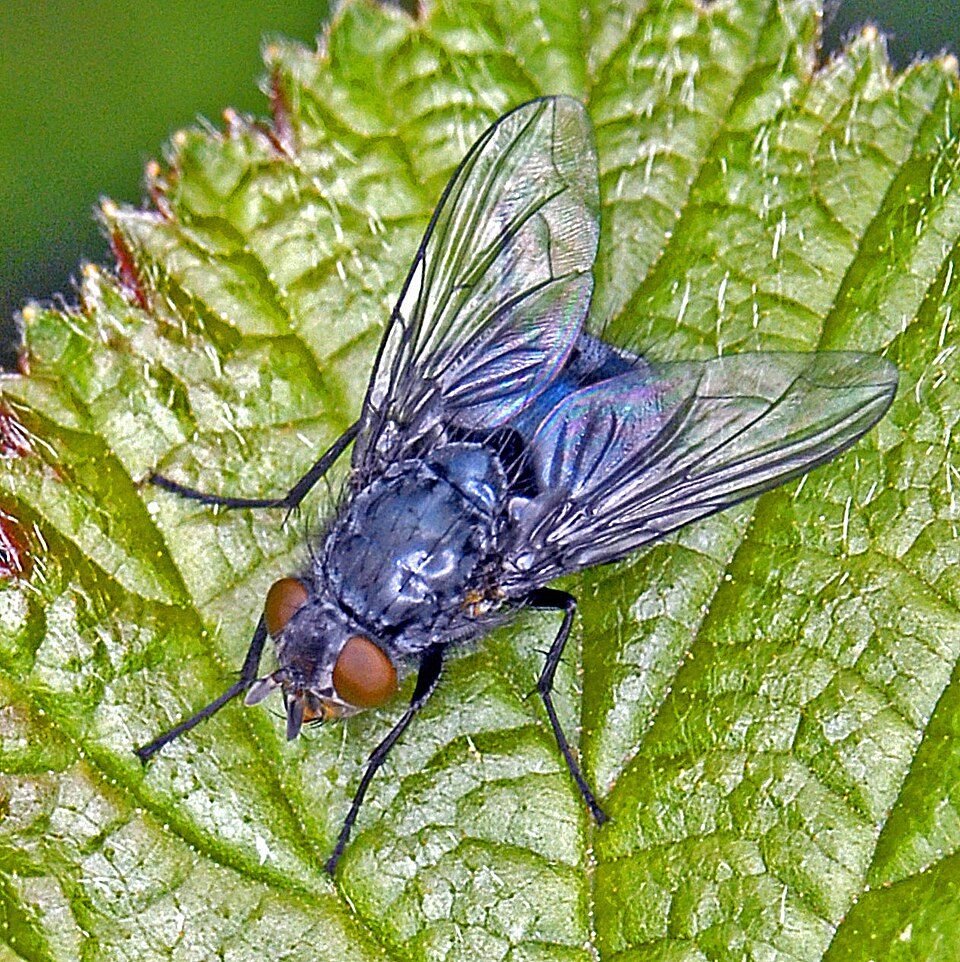

What do blow flies look like?
Blow flies (family Calliphoridae) are medium to large flies, often 8 to 12 mm, with a metallic shine that runs from green to blue to bronze or black. You may hear them called bluebottles or greenbottles. In Canada, one of the most common is the black blow fly, dark green or blue-black and about 8 to 9 mm long. Like other flies they have one pair of wings and large eyes, but the shiny, metallic body sets them apart from a house fly.
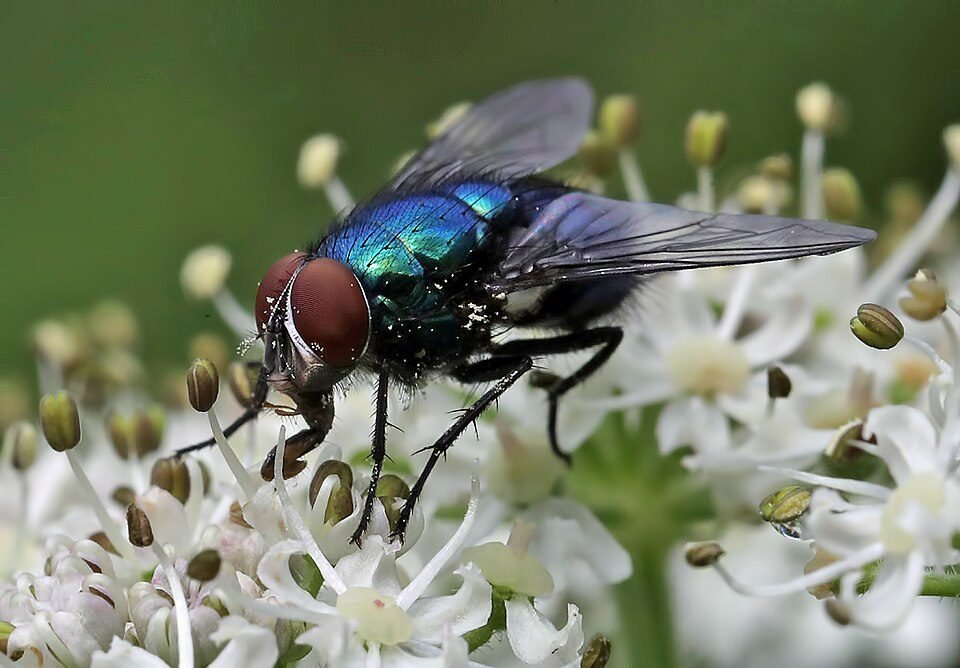

Blow fly vs house fly vs cluster fly
Blow flies are easy to tell apart from the other flies in a house if you can see them clearly: they are shiny and metallic where the others are dull. What they are doing there matters more than what they look like, and the table shows the difference.
| Blow fly | House fly | Cluster fly | |
|---|---|---|---|
| Body | Metallic green, blue or copper-coloured, about 8 to 9 mm for the black blow fly | Dull gray-black with four dark thorax stripes, 4 to 8 mm | Dull dark, with short golden hairs on the thorax, 9.5 to 12.5 mm |
| Why it is indoors | Breeding in a dead animal or rotting waste, often out of sight | Following food odours and garbage | Sheltering for winter, and not breeding indoors |
| Clue | A sudden crowd of large, shiny flies, especially with a smell | Flies around food and bins all summer | Slow flies at windows in fall, winter and spring |
| First step | Find and remove the carcass or waste | Remove breeding sites and screen doors | Seal gaps before fall and vacuum |
Blow fly biology and life cycle
Blow flies specialise in dead and decaying things. The eggs hatch in about a day, and the maggots feed so efficiently that a small animal can be gone in about a week. That speed is why a dead mouse in a wall can turn into a swarm of new flies within a couple of weeks.
Blow fly life cycle
Eggs on a food source
A female lays her eggs on carcasses, wounds, rotting food or waste. They hatch in about a day.
Maggots feed fast
The cream-coloured maggots eat soft tissue quickly. With their help a small animal can break down in about a week, and a large one in about a month.
Pupation
After roughly a week as larvae, the maggots crawl away to pupate.
New flies
Adults emerge about eight days later. Egg to adult takes roughly one to two weeks, and the flies may lay eggs on the same carcass again.
Winter
Some blow flies overwinter as adults. They can appear for short periods through the winter, and they are most common in spring and fall.
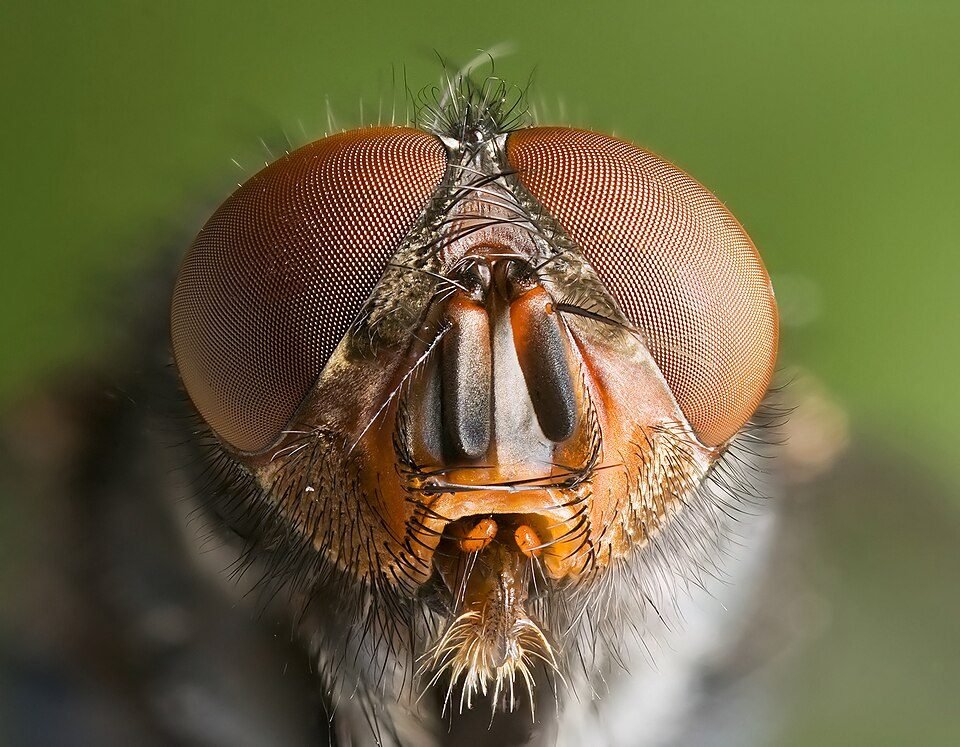

Where blow flies come from
Outdoors they are drawn to carcasses, wounds and waste, and they are common around household garbage cans. Indoors, the source is often a small dead animal you have not found: a mouse in a wall void, a bird in a chimney or attic, a squirrel in the roofline. Maggots can feed on a fresh carcass for days before anyone knows the animal has died. Rotting food, pet waste and garbage left uncovered can also breed them.
Why blow flies get into your house
There are two routes. Adults come in from outside through open doors and gaps and go looking for food or a place to lay eggs. Or the flies are already inside, having hatched from a hidden carcass in the building. A crowd of large, shiny flies in one room, especially in the attic or near a wall, is the sign of the second one.
Dead animal in wall: why the flies show up and how long it lasts
When a mouse, bird or squirrel dies out of sight, the first sign is often the flies, followed by the smell. Blow flies find the carcass, lay eggs on it, and the maggots feed on the soft tissue. Once that tissue is gone, other insects take over. As a rough guide, a small animal breaks down in about a week and a large one in about a month, though warm weather speeds this up and cool weather slows it. Fresh flies can keep emerging from the same carcass in that time, which is why a swarm can appear in a room with no visible source and can keep coming back until the animal is removed.
If you suspect a dead animal in the wall, look for the strongest smell and the flies gathering closest to it: a ceiling stain, an attic hatch, a vent, a chimney or a spot along a baseboard. Where the animal is out of reach, you may have to open the wall or attic space. Where mice or other rodents are the cause, fixing the entry point is the lasting solution, since the animal died because it found a way in.
What to do when the flies are already indoors
Deal with the source first, then the flies. Once the carcass or waste is removed and the area is cleaned, the remaining adults die off and no new ones emerge. Sticky or black-light traps speed this up, and a vacuum takes care of dead flies on window sills. Any maggots that have wandered out of the source to pupate may still produce a few flies over the following week or two, so do not be alarmed if a few appear after the clean-up.
Signs of a blow fly infestation
- Many large, shiny metallic flies indoors, often around a window, a wall or a light.
- Maggots on the floor, in a garbage can or near a wall or vent.
- A strong smell of decay in one part of the house.
- Flies gathered near an attic hatch, chimney or crawl space.
- Dead flies piling up on window sills.
Are blow flies harmful?
Blow flies are a health concern more than a property concern. They feed on carrion, feces and rotting food, so they can carry harmful bacteria to food and surfaces. Roughly one in three of the bacteria carried by a typical blow fly are capable of making people sick. Blow flies and other filth flies can contaminate food.
If you find a swarm of blow flies in one spot, do not just spray. Look for the source: a dead animal, spoiled food or waste. The flies will keep coming until it is gone.
Common myths about blow flies
- "They come from a dirty kitchen." They can, but a hidden carcass is a more likely cause of a sudden swarm.
- "One big shiny fly is nothing." One can be a stray, but a crowd in one room points to something breeding nearby.
- "They are cluster flies." Cluster flies are dull, sluggish and do not breed inside. Blow flies are shiny and breed in decaying matter.
- "Spraying will solve it." A spray kills the adults but not the maggots in the source, and more flies will follow.
How to get rid of blow flies yourself
- Find the source. Check attics, wall voids, crawl spaces, chimneys and garbage areas. Bury or dispose of dead birds, rodents and other animals promptly, before they become infested.
- Clean up carefully. Use gloves, and wet the area with disinfectant before wiping so you do not stir up contaminated dust. Do not sweep or vacuum droppings dry.
- Seal the way in. Use tight screens, close gaps, and cover chimney and vent openings.
- Keep garbage and pet waste sealed, and wash the bins.
- Trap the adults. Sticky fly traps and black-light traps are effective and portable.
- Do not fill weep holes or vents with sealant, foam or mortar. The wall is hollow, and these openings let moisture and warm air out. Blocking them solid traps moisture in the wall and can lead to mould. Breathable mesh over them keeps pests out while the wall can still breathe.
How AstraHive Pest Control gets rid of blow flies
Blow flies are a source problem, and the source is usually a dead animal or rotting waste. AstraHive deals with rodents and wildlife entry every day, so we know where to look.
How an AstraHive blow flies treatment works
Inspect and find the source
We inspect attics, wall voids, crawl spaces, chimneys, garbage areas and any place with a smell or a crowd of flies to find the carcass or waste that is breeding them.
Remove the source
We help you find and safely deal with the source, and where rodents are the cause we seal the exterior entry points so it does not happen again.
Treat inside only when needed
If a large number of blow flies are already through the house, we add an interior treatment, applied according to the label and kept away from food and food-preparation surfaces.
Back it with a 90-day warranty
If blow flies come back within 90 days, we re-treat at no charge.
Our products are Health Canada approved and safe for kids and pets, and we apply every product according to its label. AstraHive is licensed by the Ontario Ministry of the Environment, Conservation and Parks. Ontario requires a ministry-approved certification course before it issues an exterminator licence, and that training is delivered through the University of Guelph, Ridgetown Campus.
Blow fly control in Ontario: when to call an exterminator
A single blow fly after summer garbage is nothing to worry about. Call a licensed pest control company when you have a sudden crowd of shiny flies indoors, when you smell decay and cannot find the source, when the source may be in a wall or attic you cannot reach, or in a food business.
Why Choose AstraHive
- Licensed & Insured: Certified by the Ontario Ministry of Environment, Conservation and Parks.
- Fast response: Same-day service available, with a callback within 5 minutes.
- 90-Day Warranty: If pests come back within that window, we re-treat at no additional charge.
- Proven track record: 5.0 stars on Google across 200+ reviews.
- Family & pet safe: Health Canada approved products on every job.
Frequently Asked Questions
How do I get rid of blow flies?
Find the source: a dead animal in a wall, attic, chimney or crawl space, or rotting waste. Remove it safely, clean the area, seal the entry, and use sticky or black-light traps for the adults. Spraying alone will not fix it.
What do blow flies look like?
They are 8 to 12 mm, with a shiny metallic body that is green, blue, bronze or black. The black blow fly is about 8 to 9 mm and dark green or blue-black.
Why do I have blow flies in my house?
Usually because something is decaying: a dead mouse, bird or squirrel in a wall, attic or chimney, or rotting food and waste. A sudden crowd of large shiny flies in one place often means a hidden carcass.
Are blow flies harmful?
They can be. They feed on carcasses, feces and rotting food and can carry harmful bacteria onto food. Roughly one in three of the bacteria a typical blow fly carries can make people sick.
What is the difference between a blow fly and a house fly?
Blow flies are shiny and metallic green, blue or black and breed in dead animals and rotting waste. House flies are dull gray-black with four stripes on the thorax and breed in garbage and other decaying matter.
Do I need a blow fly exterminator?
Yes if you have a sudden crowd of shiny flies indoors, if you smell decay but cannot find the source, or if the source may be in a wall or attic you cannot reach.
Sources
- Manitoba Agriculture: Mosquito and Fly Prevention and Control (black blow flies) — Black blow flies are dark green or blue-black and 8 to 9 mm; breed in carcasses, wounds and household garbage cans; larval stage 4 to 15 days; egg to adult 8 to 15 days; adult life 45 to 68 days; more common in spring and fall; overwinter as adults.
- Government of British Columbia: Home and Garden Pest Management Guide, Insects Around the Home (flies) — Cluster flies and blow flies are sometimes seen around homes; management is the same for most species; remove breeding sites; bury dead birds, rodents and other animals promptly; screens, sealing and traps.
- Health Canada: Clustering flies (Pest control tips) — Blow flies and face flies can present a risk of food contamination; cluster flies do not breed in homes.
- Ontario.ca: Pesticide licences and permits — Ontario's Ministry of the Environment, Conservation and Parks issues exterminator licences after a ministry-approved certification course, delivered through the University of Guelph, Ridgetown Campus.
- NC State Extension: Blow Fly Biology and Management — Eggs hatch in about 24 hours; maggots feed on soft tissue; small mammals decompose in about a week and large ones in about a month; about a week as larvae then about 8 days to emerge; blow flies feed on feces and rotting food; about a third of bacteria on a typical blow fly can cause disease in humans.
Areas We Serve
AstraHive Pest Control proudly serves 75+ communities across the following regions:
- Toronto: Toronto, North York, Scarborough, Etobicoke, East York, York, Leslieville, Lakeview
- Durham Region: Oshawa, Whitby, Ajax, Pickering, Clarington, Bowmanville, Courtice, Newcastle, Port Perry, Brooklin, Uxbridge, Scugog, Brock, Seaton
- York Region: Vaughan, Markham, Richmond Hill, Aurora, Newmarket, Thornhill, Woodbridge, Kleinburg, Maple, Stouffville, Unionville, Keswick, Holland Landing, East Gwillimbury, Georgina, King City, King Township, Nobleton, Berczy Village, Cathedraltown, Commerce Valley, Cornell, Wismer, Whitchurch-Stouffville, Sutton, Schomberg
- Peel Region: Mississauga, Brampton, Caledon, Malton, Port Credit, Streetsville, Meadowvale, Cooksville, Bolton, Palgrave
- Extended Service Area: Peterborough, Lindsay, Port Hope, Barrie, Bradford, Innisfil, Collingwood, Wasaga Beach, Orillia, Burlington, Oakville, Milton, Hamilton, Grimsby, St. Catharines, Welland, Niagara Falls
Don't see your city listed? Call us — we likely cover it.
Got a pest problem right now?
Call AstraHive for a free consultation. Licensed & insured, serving the GTA, Durham, York, Peel and Simcoe County.
Call 905-925-84275.0 Stars — 200+ Google Reviews | Licensed & Insured | Health Canada Approved