White vinegar does not kill ants or harm their colony. Wiping diluted vinegar over a trail wipes out the scent marker scouts leave for other workers, which briefly interrupts foraging, but the nest, queen, and rest of the colony stay completely untouched, so ants are usually back within a day or two.
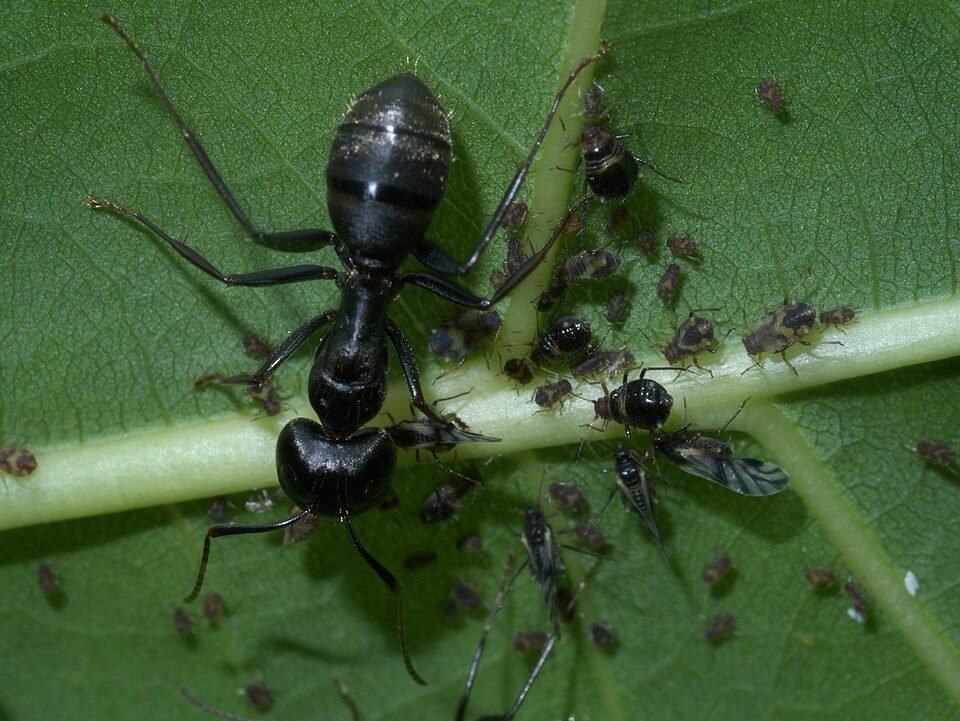

Can White Vinegar Kill Ants? The Short Answer
No, not in a way that matters for an actual infestation. A vinegar spray works by erasing the pheromone path a scout ant lays for others to follow, not by killing or repelling ants through any chemical action. A handful of ants might drown if they're caught directly in a puddle of the liquid, but that's beside the point. A counter or windowsill looking "clear" after a vinegar wipe just means the scent road map is gone, not that anything was poisoned.
What Does Vinegar Do to Ants? The Pheromone Trail Explained
When a scout ant locates food or water, it marks its return route with a chemical pheromone trail that other workers pick up using their antennae. People can't see or smell any of this. Ants spotted crossing a counter or windowsill are almost always workers tracking that invisible scent path back out to a food or water source.
The more ants that travel a trail successfully, the stronger it gets, which pulls in even more traffic. Wiping the surface down with vinegar strips away those chemical markers, so the next ant in line loses the route and the group scatters, at least temporarily.
| What It Does | Effect on Nest or Queen | How Long It Lasts | |
|---|---|---|---|
| Diluted vinegar spray/wipe | Wipes out the pheromone scent trail on a surface | None, colony and queen unaffected | Hours, until a new trail forms |
| Spraying visible foraging ants | Kills only the workers it directly hits | None, nest and queen untouched | Days, before replacement workers show up |
| DIY boric acid or diatomaceous earth | Kills ants that eat it or crawl through it | Limited, depends on ants hauling it back | Variable, best suited to light, localized activity |
| Granular bait and bait stations | Carried by workers back to feed the colony and queen | Targets the nest and queen directly | Days to weeks, with ongoing monitoring |
Ants and Vinegar: Why the Trail Always Comes Back
Vinegar doesn't leave anything behind that keeps working over time. As soon as the scent fades and the surface is no longer freshly cleaned, its disrupting effect on the trail disappears too, and a scout can lay a fresh path through that same spot or a nearby opening fairly quickly. This lines up with how pheromone trails function in general: they fade fast and need constant reinforcement from ants walking the route, which is exactly why one cleaning session never solves anything long-term.
As long as the colony outside remains active, a scout will eventually track down the food or water source again and build a new path to it. Cleaning removes crumbs and temporarily breaks up the scent trail, but ants can simply open a different route through another gap if the nearby colony is still going strong.
Where a Vinegar and Water Spray Actually Helps
A diluted vinegar and water solution is a reasonably safe option for wiping down door thresholds and window tracks to break up a trail at that specific spot. It's a sensible short-term cleaning habit, partly because it also clears away the food residue that likely drew ants there to begin with.
Think of vinegar as a temporary patch for one entry point, not a solution. It buys a bit of time and cleanliness, but it never touches the nest.
What vinegar cannot do, under any circumstances, is reach the nest. A vinegar and water wipe-down has no impact whatsoever on the colony, the nest, or the queen, so the infestation keeps going no matter how often the counter gets cleaned.
What To Do When You Spot an Ant Trail Indoors
Follow the trail
Trace the line of ants back to its entry point, whether that's a window track, a threshold, or a gap along a baseboard.
Wipe with diluted vinegar
Use a diluted vinegar and water solution on the surface to break up the scent trail and clear away food residue, treating it only as a short-term step.
Switch to bait, not spray
Set out a bait product near the trail instead of spraying insecticide, allowing foraging workers to carry it back toward the nest.
Watch for returning activity
If a trail reappears nearby or somewhere new within a week, the colony outside is still active and a full inspection is worth scheduling.
Why Spraying Visible Ants Doesn't Solve an Infestation
Spraying ants you can see, whether with vinegar or a store-bought insecticide, only kills the foraging workers in front of you. The nest and queen are never affected, so activity typically picks back up within days as other workers step in. Barrier sprays can even push ants toward a different indoor entry point, occasionally sealing some inside rather than blocking them out.
The scale of a colony explains why this barely makes a dent. A single queen can lay hundreds of eggs daily, and a colony can grow from a handful of ants into a population numbering in the thousands. Wiping out one visible line of workers does almost nothing to that kind of output.
It's also the reason insecticide sprays and an ant bait program should never run at the same time. If foragers are killed on contact, they can't carry bait back to the nest, which defeats the whole approach. Granular products with active ingredients such as cyfluthrin or permethrin fall into this same category: they're contact insecticides rather than genuine ant baits, since they kill foragers on the spot instead of letting them deliver anything to the colony.
So Can White Vinegar Kill Ants for Good? What Reaches the Queen
The answer remains no, and nothing that only kills on contact will get the job done either. Effective ant control has to target the queen, because eliminating visible workers does nothing to slow down new ant production. That's why professional treatment usually relies on granular bait and bait stations placed along active routes, letting workers haul the product back to the nest instead of dying where they stand.
How strong the bait is matters more than most people assume. Off-the-shelf ant bait stations typically run around 5.4% borate, which is enough to kill foragers in a home but less useful against bigger infestations since those foragers often die before reaching the colony with it. Liquid borate baits mixed much weaker, around 0.5% to 1.0% in sugar water, do more damage to the colony itself, though they call for larger refillable stations and generally need several days to a week before results show.
For small, isolated activity, diatomaceous earth or boric acid applied sparingly into cracks and crevices along ant paths can also help. Boric acid works from the inside once ingested, damaging the ant's nervous system and digestive tract, while diatomaceous earth scrapes away the ant's outer shell and dries it out. Neither acts right away, and both only work if ants actually walk through the material.
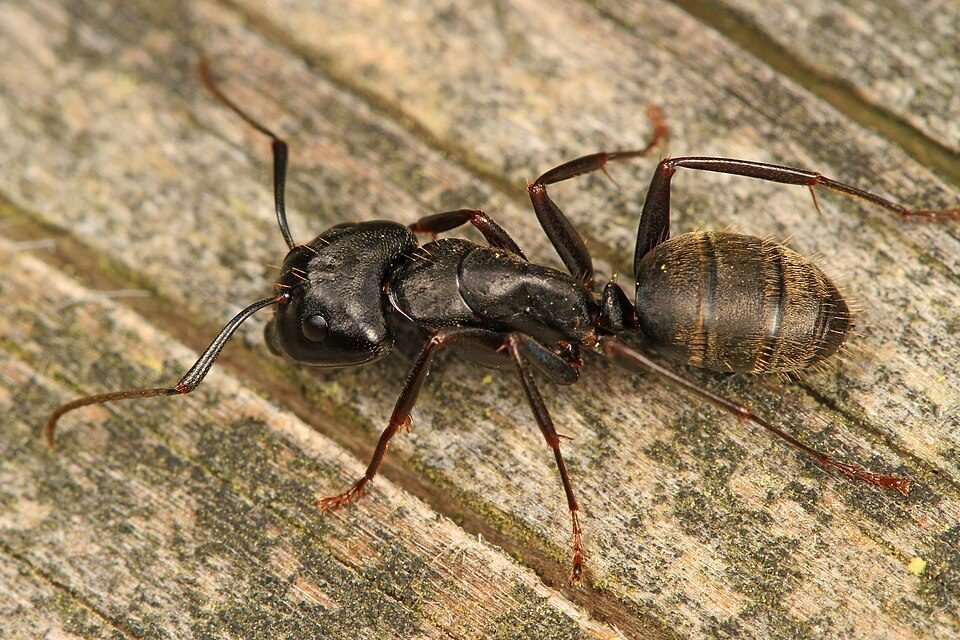

How AstraHive Pest Control gets rid of ants
The goal with ants is the queen, not the workers on your counter. We combine bait that workers carry back to the queen with a weatherproof barrier around the outside of the house, and treat the inside when ants are active there.
How an AstraHive ants treatment works
Inspect and follow the trails
We follow the ant trails to find where they come in and where the nest is likely to be, so the bait and the barrier go in the right places.
Granular bait in the yard
We spread professional granular bait across the front and back yard around the nesting areas and colonies, and along the perimeter of the building. Workers carry it back to the queen, the queen dies and the colony collapses.
Liquid bait in bait stations
We set Scorpio liquid bait in bait stations around the exterior perimeter, near the nest and wherever ants are active. Ants feed and carry it back to the nest, and the stations keep working after we leave.
Weatherproof exterior perimeter spray
We spray a barrier around the foundation, windows, doors and entry points, applied according to the product label. It stays active for about 90 days, so ants coming from outside cross the treated zone before they get in.
Interior treatment if needed
If ants are already active inside, we treat the interior as well as the exterior, never the inside alone: a residual spray along the interior perimeter, baseboards and known travel routes, and gel bait along the trails, out of reach of children and pets.
Document everything
Where we found ants, what we found and every product used goes in the service report, along with what to change around the property, such as moisture and wood-to-soil contact.
Back it with a 90-day warranty
If ants come back within 90 days, we re-treat at no charge.
We also dust into the accessible wall voids and cracks where ants travel and nest, with a professional dust that keeps working in places a spray cannot reach. That, together with the bait and the outside barrier, is how we keep ants from coming back, rather than trying to seal every gap, because ants find another way in.
Our products are Health Canada approved and safe for kids and pets, and we apply every product according to its label. AstraHive is licensed by the Ontario Ministry of the Environment, Conservation and Parks. Ontario requires a ministry-approved certification course before it issues an exterminator licence, and that training is delivered through the University of Guelph, Ridgetown Campus.
Bait and the outer barrier are applied in different places on purpose: the bait stays on the routes ants forage along so workers can carry it home, and the barrier sits at the building's edge. That is also why we ask you not to spray the ants you see or wipe their trails before we arrive: killing the workers stops the bait reaching the queen.
Typical cost: Starting at $350 CAD, with final cost depending on property size and severity of infestation - there is no fixed upper limit. Call 905-925-8427 for an exact free quote.
Why Choose AstraHive
- Licensed & Insured: Certified by the Ontario Ministry of Environment, Conservation and Parks.
- Fast response: Same-day service available, with a callback within 5 minutes.
- 90-Day Warranty: If pests come back within that window, we re-treat at no additional charge.
- Proven track record: 5.0 stars on Google across 200+ reviews.
- Family & pet safe: Health Canada approved products on every job.
Frequently Asked Questions
Can white vinegar kill ants?
No, white vinegar does not kill ants or their colony. It works by erasing the pheromone scent trail scout ants use to guide other workers, which temporarily disrupts foraging but does not reach the nest or the queen.
What does vinegar do to ants?
Vinegar erases the invisible pheromone trail a scout ant lays down after finding food or water, so other ants following that scent via their antennae lose the path. It does not poison the ants or affect the colony itself.
Why do ants come back after I clean with vinegar?
Vinegar leaves no residual active ingredient, so once the smell fades the disruptive effect disappears with it. A scout ant can lay a new trail through the same or a nearby entry point within a short time if the outdoor colony is still active.
Is it safe to use vinegar and water on windowsills or door thresholds for ants?
Yes, a diluted vinegar and water mix is generally safe to wipe along door thresholds and window tracks to temporarily disrupt a trail in that spot. It should be treated as a short-term measure, not a long-term fix.
What actually gets rid of an ant infestation if vinegar doesn't?
Reaching the queen is what stops a colony, which is why granular and liquid bait that workers carry back to the nest work better than sprays. AstraHive pairs that bait with an exterior perimeter spray, and only adds an interior spray when indoor activity is heavy, so call 905-925-8427 if you want an inspection to confirm what your situation needs.
Sources
- Health Canada: Ants (Pest control tips) — Bait systems must work slowly enough for the whole nest to be fed; place bait stations in the path of foraging ants and keep baits available at least two weeks; do not spray while baiting; scouts find food and ants favour sugary and greasy foods; look for a Pest Control Products number.
- Ontario.ca: Pesticide licences and permits — Ontario's Ministry of the Environment, Conservation and Parks issues exterminator licences after a ministry-approved certification course, delivered through the University of Guelph, Ridgetown Campus.
- UC IPM, University of California Statewide IPM Program — Prepackaged borate bait stations usually contain 5.4% borate and kill foragers before they reach the colony, while liquid borate baits at 0.5-1.0% in sugar water have more impact on the colony but take several days to a week to show results.
- University of Florida IFAS Extension — The pheromone trail deposited by scout ants is typically short-lived and must be reapplied continuously to remain effective.
- Wikipedia, Ant colony — Foraging ants reinforce a pheromone trail the more it is used, and the trail weakens once ants stop depositing pheromone along it.
Areas We Serve
AstraHive Pest Control proudly serves 75+ communities across the following regions:
- Toronto: Toronto, North York, Scarborough, Etobicoke, East York, York, Leslieville, Lakeview
- Durham Region: Oshawa, Whitby, Ajax, Pickering, Clarington, Bowmanville, Courtice, Newcastle, Port Perry, Brooklin, Uxbridge, Scugog, Brock, Seaton
- York Region: Vaughan, Markham, Richmond Hill, Aurora, Newmarket, Thornhill, Woodbridge, Kleinburg, Maple, Stouffville, Unionville, Keswick, Holland Landing, East Gwillimbury, Georgina, King City, King Township, Nobleton, Berczy Village, Cathedraltown, Commerce Valley, Cornell, Wismer, Whitchurch-Stouffville, Sutton, Schomberg
- Peel Region: Mississauga, Brampton, Caledon, Malton, Port Credit, Streetsville, Meadowvale, Cooksville, Bolton, Palgrave
- Extended Service Area: Peterborough, Lindsay, Port Hope, Barrie, Bradford, Innisfil, Collingwood, Wasaga Beach, Orillia, Burlington, Oakville, Milton, Hamilton, Grimsby, St. Catharines, Welland, Niagara Falls
Don't see your city listed? Call us — we likely cover it.
Got a pest problem right now?
Call AstraHive for a free consultation. Licensed & insured, serving the GTA, Durham, York, Peel and Simcoe County.
Call 905-925-84275.0 Stars — 200+ Google Reviews | Licensed & Insured | Health Canada Approved