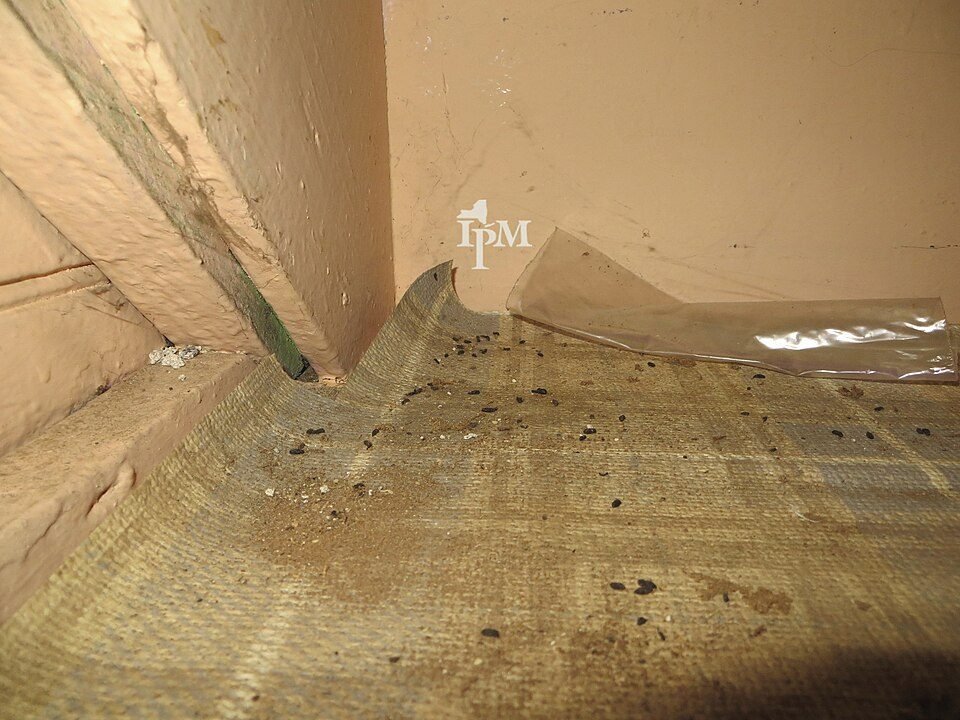
No, mice do not go outside looking for water and die after eating poison. Every rodenticide sold today, bromethalin, anticoagulants like warfarin and diphacinone, and even non-toxic options like RatX, causes a poisoned mouse to retreat deeper into its nest, usually inside a wall cavity, as it weakens and dies there.

Why This Myth Exists in the First Place
AstraHive's owner, Nav Kumar, holds two postgraduate credentials in medical sciences, and when we explain what's happening inside a mouse's body after it eats bait, we're working from actual toxicology, not folklore repeated by whoever stocked the shelf at the hardware store.
The myth traces back to early first-generation rodenticides from the 1950s and 1960s, whose physiological effects were misread as thirst-driven, water-seeking behaviour. No rodenticide sold in Ontario today, whether it's a neurotoxin, an anticoagulant, or a food-grade product like RatX, works that way. We'll go through the actual mechanism of each one.
Bromethalin (Tomcat): A Neurotoxin, Not a Dehydrator
Tomcat's active ingredient is bromethalin, typically formulated at 0.01 percent. It is not an anticoagulant at all. It belongs to a completely different toxicological class.
Here's what happens step by step:
- The mouse's liver enzymes (cytochrome P450) convert bromethalin into its active metabolite, desmethylbromethalin (DMB).
- DMB is lipophilic, crosses the blood-brain barrier quickly, and concentrates in nerve cells.
- Inside those cells, it uncouples oxidative phosphorylation in the mitochondria, the process that produces ATP, the cell's energy source.
- Without ATP, the sodium-potassium pump in the nerve cell membrane shuts down.
- Sodium accumulates inside the cell, water follows by osmosis, and the nerve cells swell.
Veterinary toxicology references describe this precisely: bromethalin's uncoupling of oxidative phosphorylation disrupts sodium-potassium pumps, causing fluid to accumulate around nerve fibres and leading to brain and spinal cord swelling. Bromethalin must be bioactivated to desmethylbromethalin, which uncouples oxidative phosphorylation in the mitochondria of cells in the CNS, resulting in disruption of sodium-potassium pumps, loss of osmotic control, and subsequent cerebral edema. The result is progressive paralysis, not thirst. There's also no antidote. No antidote exists for bromethalin, and treatment is limited to reducing gastrointestinal absorption and supportive care. A mouse experiencing brain swelling doesn't go outside looking for a water dish. It retreats to wherever it already feels safe, and that's almost always inside your insulation or wall void.
Anticoagulants (Warfarin, Diphacinone, Chlorophacinone): Death by Internal Bleeding
Warfarin, diphacinone, and chlorophacinone are all first-generation anticoagulants. They share the same mechanism: they block an enzyme called vitamin K epoxide reductase (VKOR) in the liver.
Anticoagulant rodenticides inhibit vitamin K epoxide reductase and thus the synthesis of vitamin K, and subsequently clotting factors II, VII, IX and X. Without those clotting factors, blood loses its ability to clot, and the mouse dies from spontaneous internal hemorrhage over several days, not from dehydration.
Two practical problems show up constantly on Ontario jobs:
- Multiple feedings required. A mouse typically needs to feed on first-generation anticoagulant bait two to three times over 5 to 15 days to accumulate a lethal dose, depending on the active ingredient and concentration.
- Genetic resistance. Decades of exposure have produced mutations in the VKORC1 gene in wild rodent populations that reduce the binding affinity of warfarin and related compounds, letting some mice eat the bait and survive.
It's also worth knowing that Canada's rules differ from what you'll find on American shelves. Domestic class products containing second-generation anticoagulants (brodifacoum, bromadiolone and difethialone) are prohibited for consumer sale in Canada, which is why what you find at a Canadian hardware store is limited to first-generation actives and bromethalin. That regulatory gap is part of why store-bought bait so often underperforms against an established Ontario mouse population.
RatX: The Product That Does the Exact Opposite of the Myth
RatX is the most interesting product on the shelf for this specific myth, because its mechanism does not just fail to cause water-seeking, it actively shuts thirst off.
RatX is made of corn gluten meal and sodium chloride, and it's classified as a minimum-risk pesticide because the ingredients are food-grade. Here's the mechanism:
- The corn gluten and salt coat the villi lining the lower intestinal wall.
- Those villi carry neural signalling that tells the brain the body's hydration status.
- Once coated, that thirst signal is disrupted, and the mouse simply stops experiencing thirst and stops drinking.
Over 3 to 5 days, dehydration progresses, blood thickens, and the kidneys fail from reduced blood flow. The mouse becomes lethargic, retreats to its nest, and dies there, not outside searching for a water source it no longer feels the need for. Because RatX contains no chemical toxicant that bioaccumulates, a pet or bird of prey that eats a RatX-killed mouse isn't secondarily poisoned, which is a genuine advantage over anticoagulants for households with cats or dogs.
Why Every Product Leads to the Same Place: Dead Mice in Your Walls
None of these three chemical pathways, neurotoxic, anticoagulant, or osmotic, drives a mouse outdoors. They all cause progressive weakness, and a weakening mouse does what any prey animal does: it goes to the most protected space it knows, which is its nest.
Mice nest inside wall cavities, insulation, and ceiling or floor voids, where they can travel for weeks without ever crossing open floor space you'd notice. That's also why bait alone rarely solves an infestation. It kills the mice already inside, but it does nothing about the gap they used to get there in the first place. A mouse only needs an opening about 1/4 inch wide, roughly the width of a pencil, because its skull is the only rigid part of its skeleton and the rest of the body compresses through behind it once the head fits.
Field tip: Expanding foam alone is not a permanent seal, mice chew through it over time. We pair foam with a rodent-resistant mesh, hardware cloth, copper mesh, or steel wool, at every entry point so the seal actually holds.
Cleaning Up After a Dead Mouse or Live Infestation Safely
Dead mice inside a wall or attic, and the droppings a live infestation leaves behind, carry real health risk. Mouse droppings, urine, saliva, and nesting material can carry pathogens including hantavirus, Salmonella, Leptospira, and LCMV. Sweeping or vacuuming dry droppings can aerosolize contaminated particles. As of January 1, 2020, Sin Nombre virus had caused 143 laboratory-confirmed cases of hantavirus cardiopulmonary syndrome in Canada, and nearly all Canadian cases have occurred in British Columbia, Alberta, Saskatchewan, and Manitoba. The safest cleanup method is to thoroughly wet droppings with disinfectant and let it sit before wiping, never sweep or vacuum them dry.

How AstraHive Pest Control gets rid of mice
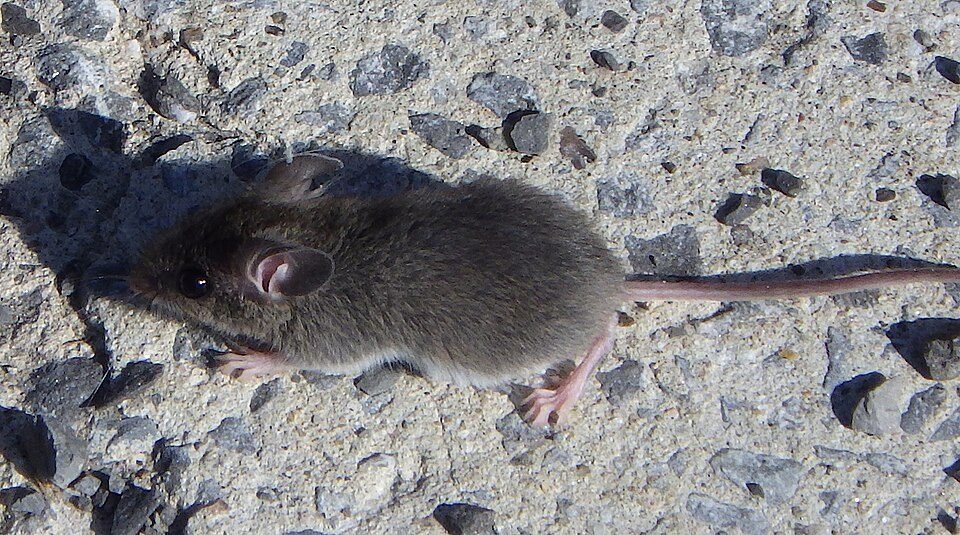
Mice get in through small gaps, so the lasting fix is at the outer shell of the building. We find the entry points, close them from the outside and deal with the mice already inside.
How an AstraHive mice treatment works
Inspect and find the entry points
We inspect the outside and inside of the building for droppings, gnaw marks, runways and every gap. A single property usually has several entry points, not just the one you noticed.
Seal the exterior entry points
We seal the exterior only: foundation cracks, utility and pipe penetrations, vents, weep holes, rooflines and garage door corners. Gaps are packed with steel wool or copper mesh locked in with sealant or foam, and larger openings get hardware cloth. Foam or caulk alone is not a rodent barrier.
Trap and bait where needed
Mice already inside are removed with traps and with tamper-resistant bait stations, inside and outside where needed, using Health Canada approved products applied according to the product label.
Flag structural damage and report
If we find structural damage that needs repair beyond what we can seal, we flag it in the service report, along with every observation, every entry point found and every product used.
Follow up and back it with a 90-day warranty
We come back to re-inspect, refill the bait stations and make sure everything is holding. If mice return within 90 days, we re-treat at no charge.
Our products are Health Canada approved and safe for kids and pets, and we apply every product according to its label. AstraHive is licensed by the Ontario Ministry of the Environment, Conservation and Parks. Ontario requires a ministry-approved certification course before it issues an exterminator licence, and that training is delivered through the University of Guelph, Ridgetown Campus.
Sealing is what ends repeat visits. Traps and bait only remove the mice that are already inside, and new mice keep coming for as long as an exterior entry point stays open.
Sealing lowers the risk a great deal, but it cannot make a house completely mouse-proof. Mice can chew new ways in through the softer parts of a building, such as the rubber seal on a garage door, weatherstripping, siding, wood trim and the plastic coating on wires, and a house keeps shifting and ageing, so gaps that did not exist on the day of the work can open later. Chewing can also damage the structure itself, including wiring, insulation and framing, and that wear and tear can continue after every entry point we found has been sealed. We record the damage we find so you can arrange repairs, we check at the follow-up visit that the seals are holding, and anything new that opens up afterward is a new entry point rather than a failure of the old work. If you see fresh gnaw marks or droppings, or hear scratching, call us early.
What Actually Ends a Mouse Problem: Bait Won't Fix an Open Entry Point
Every product covered here does the same job: it kills mice that are already inside. None of them address the gap in your foundation, siding, or utility line penetration that let the first mouse in. That's why the same household sees a "new" mouse problem every fall, it's rarely the same mouse coming back; it's a different mouse finding the same unsealed opening.
Our process on a mouse job is inspection, sealing every entry point found with foam-and-mesh exclusion, targeted Health Canada-approved bait placement safe around kids and pets, and a follow-up check.
Typical cost: Starting at $300 CAD, with final cost depending on property size and severity of infestation - there is no fixed upper limit. Call 905-925-8427 for an exact free quote.
Why Choose AstraHive
- Licensed & Insured: Certified by the Ontario Ministry of Environment, Conservation and Parks.
- Fast response: Same-day service available, with a callback within 5 minutes.
- 90-Day Warranty: If pests come back within that window, we re-treat at no additional charge.
- Proven track record: 5.0 stars on Google across 200+ reviews.
- Family & pet safe: Health Canada approved products on every job.
Frequently Asked Questions
Do mice really leave the house to die after eating poison?
No. Every modern rodenticide, whether it's a neurotoxin like bromethalin, an anticoagulant like warfarin, or a non-toxic option like RatX, causes progressive weakness, not thirst. A poisoned mouse retreats to its nest, usually inside a wall cavity or insulation, and dies there rather than going outside.
Why do I keep finding dead mice inside my walls after putting out bait?
Mice nest inside wall cavities, insulation, and floor or ceiling voids where they feel protected, and that is exactly where a weakening, poisoned mouse retreats. The bait doesn't drive them there; they already lived there, so they die where they live.
How long does it take for mouse poison to actually work?
It depends on the active ingredient. Bromethalin can kill within 24 hours to a few days after a lethal dose, while first-generation anticoagulants like warfarin or diphacinone require two to three feedings over roughly 5 to 15 days, and RatX takes about 3 to 5 days of consistent feeding to cause fatal dehydration.
Why isn't warfarin killing the mice in my house?
Warfarin resistance is well documented in wild rodent populations due to genetic mutations in the VKORC1 gene that reduce the drug's ability to block its target enzyme. A resistant mouse can eat warfarin bait repeatedly and survive, which is one reason store-bought bait alone often fails on an established infestation.
Is RatX safer than traditional mouse poison if I have pets?
Yes, in terms of secondary poisoning risk. RatX is made from corn gluten meal and sodium chloride rather than a bioaccumulating chemical toxicant, so a cat, dog, or bird of prey that eats a RatX-killed mouse is not secondarily poisoned the way it could be with an anticoagulant.
Sources
- Health Canada: Rats and mice (Pest control tips) — Mice can squeeze through cracks as small as a dime; metal weather stripping, patching foundation cracks, steel wool around pipes before caulking; snap and electronic traps are very effective when well placed; poisoned baits need tamper-proof stations away from children and pets; wear rubber gloves and a dust mask and dampen droppings with a bleach solution, never vacuum them dry; look for a Pest Control Products number.
- Public Health Agency of Canada: Hantavirus, spread, prevention and risks — Hantaviruses are spread by rodents, most often through droppings, urine and saliva; infection can follow breathing in particles stirred up during cleaning; the deer mouse is a carrier in Canada; wear gloves and an N95-level respirator in confined spaces, spray droppings and nesting material with a bleach and water mixture and let it soak for 10 minutes; seal holes with wire screening, steel wool, metal flashing or cement.
- Government of Canada (Health Canada, PMRA) — Domestic class rodenticide products containing second-generation anticoagulants (brodifacoum, bromadiolone, difethialone) are prohibited for consumer sale in Canada
- Ontario.ca: Pesticide licences and permits — Ontario's Ministry of the Environment, Conservation and Parks issues exterminator licences after a ministry-approved certification course, delivered through the University of Guelph, Ridgetown Campus.
- CDC Emerging Infectious Diseases (Public Health Agency of Canada authors) — As of January 1, 2020, Sin Nombre virus caused 143 laboratory-confirmed cases of hantavirus cardiopulmonary syndrome in Canada
- Merck Veterinary Manual — Bromethalin's active metabolite uncouples oxidative phosphorylation, disrupting sodium-potassium pumps and causing cerebral edema, with no antidote available
- PubMed (National Library of Medicine) — Anticoagulant rodenticides inhibit vitamin K epoxide reductase, depleting clotting factors II, VII, IX and X and causing fatal internal bleeding
Areas We Serve
AstraHive Pest Control proudly serves 75+ communities across the following regions:
- Toronto: Toronto, North York, Scarborough, Etobicoke, East York, York, Leslieville, Lakeview
- Durham Region: Oshawa, Whitby, Ajax, Pickering, Clarington, Bowmanville, Courtice, Newcastle, Port Perry, Brooklin, Uxbridge, Scugog, Brock, Seaton
- York Region: Vaughan, Markham, Richmond Hill, Aurora, Newmarket, Thornhill, Woodbridge, Kleinburg, Maple, Stouffville, Unionville, Keswick, Holland Landing, East Gwillimbury, Georgina, King City, King Township, Nobleton, Berczy Village, Cathedraltown, Commerce Valley, Cornell, Wismer, Whitchurch-Stouffville, Sutton, Schomberg
- Peel Region: Mississauga, Brampton, Caledon, Malton, Port Credit, Streetsville, Meadowvale, Cooksville, Bolton, Palgrave
- Extended Service Area: Peterborough, Lindsay, Port Hope, Barrie, Bradford, Innisfil, Collingwood, Wasaga Beach, Orillia, Burlington, Oakville, Milton, Hamilton, Grimsby, St. Catharines, Welland, Niagara Falls
Don't see your city listed? Call us — we likely cover it.
Got a pest problem right now?
Call AstraHive for a free consultation. Licensed & insured, serving the GTA, Durham, York, Peel and Simcoe County.
Call 905-925-84275.0 Stars — 200+ Google Reviews | Licensed & Insured | Health Canada Approved