Firebrats are flat, wingless, mottled gray-brown insects, about 12 mm long, with three long tail-like bristles. They love heat, so they turn up around furnaces, water heaters, ovens and hot pipes. Firebrats are harmless to people. To get rid of firebrats, remove the food and clutter around the heat source, seal the cracks and treat where they hide.

What do firebrats look like?
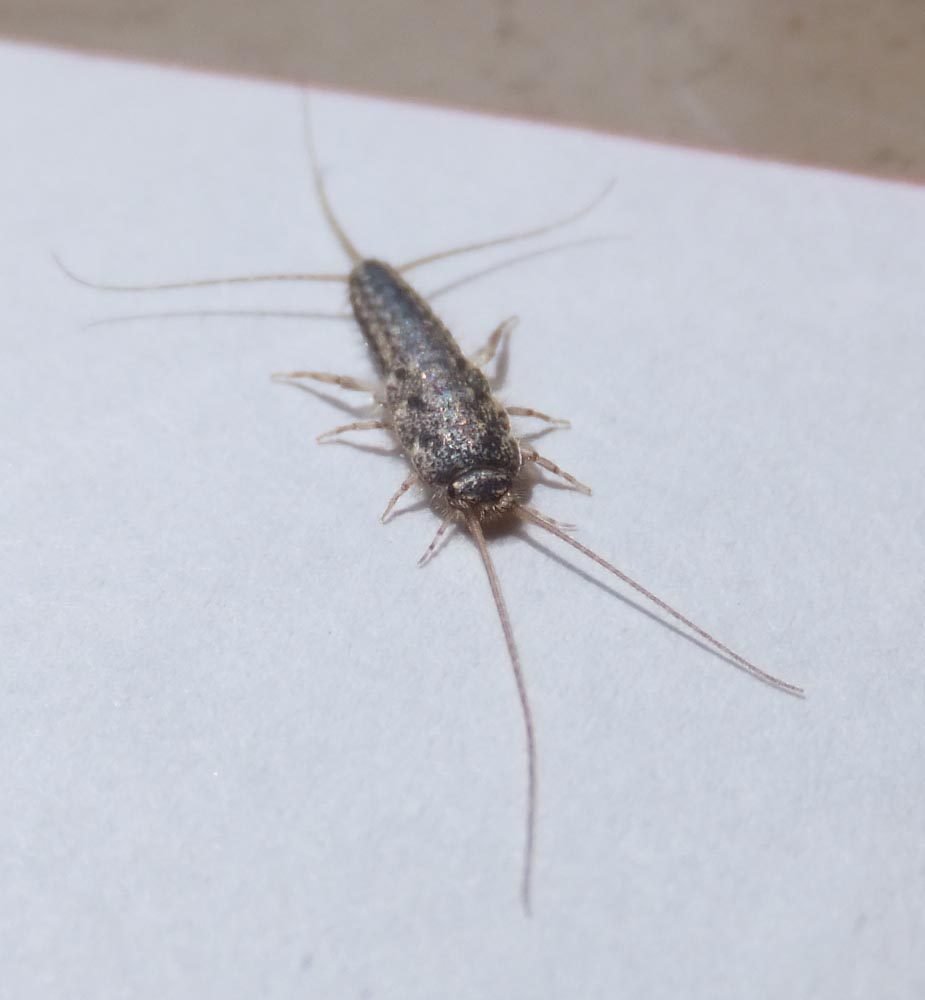
The common firebrat (Thermobia domestica) is a slim, flattened, wingless insect about 12 mm long. It is mottled gray or brown, with bands of dark scales, and it tapers from the front of the body to three long, thin tail filaments at the back. It also has two long, thread-like antennae. It moves fast, including sideways, and it can squeeze into very narrow cracks. Firebrats belong to the same ancient group of insects as silverfish, and they look enough alike that the difference is easiest to spot by where the insect is found.

Firebrat vs silverfish
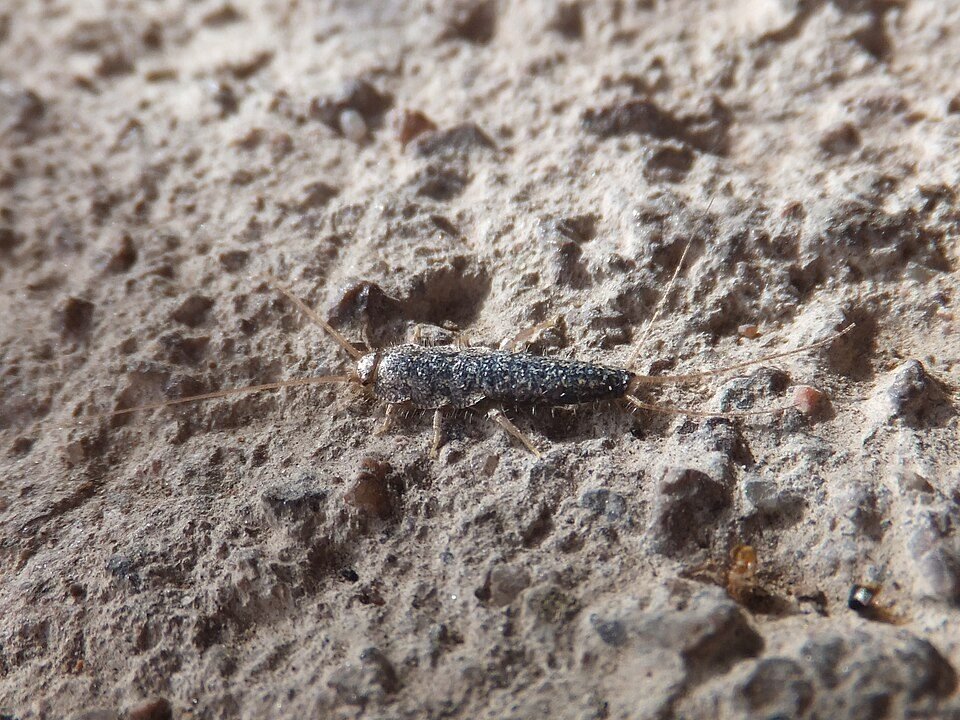
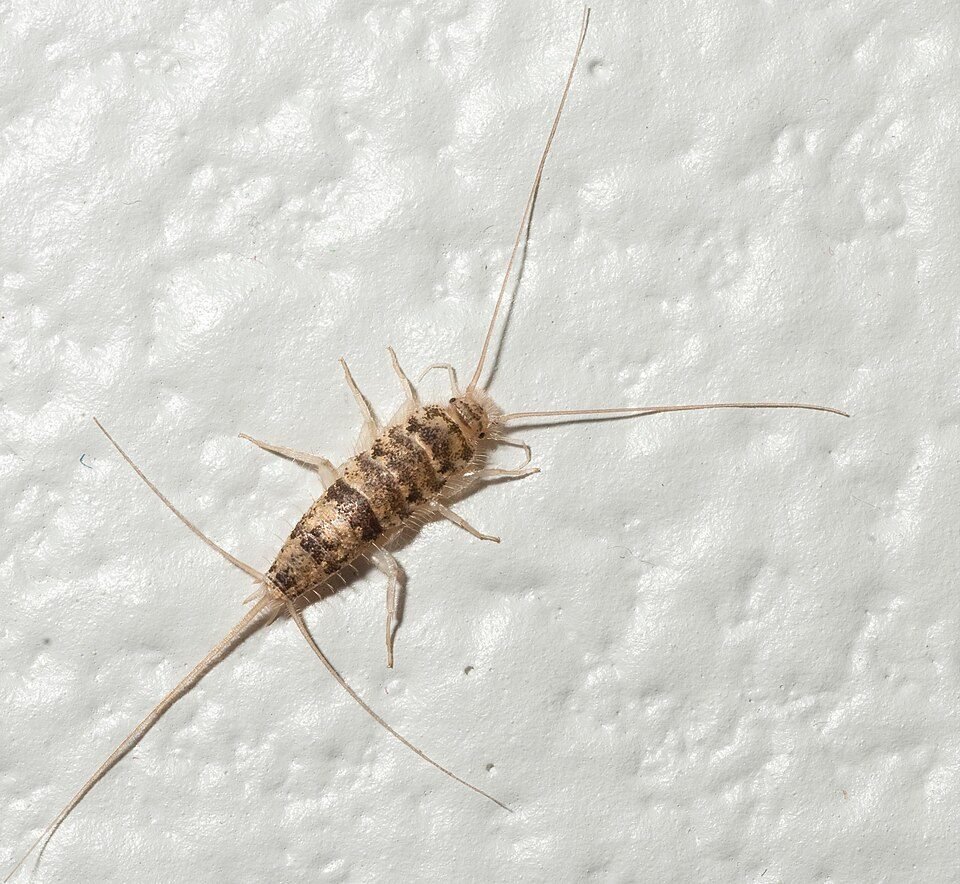
Firebrats and silverfish are close cousins and easily confused. Silverfish are the cool, damp-loving species that most people find in basements and bathrooms. Firebrats are the heat-loving ones. If the insect is in a hot spot, near the furnace or the water heater, or in an attic in summer, it is far more likely to be a firebrat.

| Feature | Firebrat | Silverfish | |
|---|---|---|---|
| Colour | Mottled gray or brown, with bands of dark scales | Shiny silver or pearl gray, with metallic scales | |
| Length | About 12 mm (1/2 inch) | About 12 mm, sometimes up to 19 mm | |
| Temperature it likes | Very warm: over 30 to 32 C is where it thrives | Cooler, roughly 21 to 32 C | |
| Humidity | Prefers humidity, but tolerates dry air much better than silverfish | Damp: about 75 to 95% humidity | |
| Where in the house | Around furnaces, water heaters, ovens, hot pipes, fireplaces and attics in summer | Basements, bathrooms, laundry rooms, under sinks | |
| Life span | About 1 to 2 years | About 2 to 3 years |
Published guidance differs on how much moisture firebrats need: they are described both as preferring humidity and as able to live in air as dry as about 30% humidity. All of it agrees that heat is the driver, and that they cope with dry conditions better than silverfish. Treat a hot, even slightly humid, hidden spot as the prime suspect.
Firebrat biology and life cycle
Firebrats are very old insects, and their way of life is different from that of most household pests. They never stop molting, so a firebrat continues to shed its skin as an adult. They are nocturnal and hide by day, gathering together in a central hiding place, where the females tend to lay their eggs. The insects release chemical signals that pull them together, and crowding in one spot helps keep temperature and humidity steady around the eggs and young.
Firebrat life cycle
Eggs in hidden crevices
The female lays eggs in cracks, on cloth, or buried in dust and food debris. A typical batch is around 50 eggs, though it can range from 1 to 200. Eggs are laid only when it is very warm.
Nymphs without scales
Eggs hatch in about two weeks. The tiny, plump, white nymphs have no scales and look nothing like the adults until they have molted several times.
Constant molting
Firebrats keep molting throughout their lives, passing through some 45 to 60 stages. Scale-covered nymphs then look like small versions of the adults.
Adults
In warm conditions egg to adult takes roughly six weeks to three months, depending on the source. Adults live roughly one to two years, and a female lays on the order of a hundred eggs in her life.
The breeding limit is temperature. Females lay eggs only when it is about 32 C or warmer, and the nymphs cannot survive temperatures below freezing or above about 44 C. That is why an infestation is tied to a warm spot in your building, and why it can be hard to spot: the insects are exactly where you do not look.
Where firebrats live in the house
Firebrats in the house are almost always near heat, so look for warm places first. They gather around furnaces, boilers, water heaters and hot water pipes, near ovens and fireplaces, and in attics during the summer. They can follow pipes from one level to another and travel through gaps in walls and floors, so an infestation in a warm mechanical room can spread to bedrooms and bathrooms. Outdoors, they live under rocks and bark, in leaf litter and in nests. Large numbers can move into new homes from surrounding wild areas, especially as those areas dry out over the summer, and they can also arrive on lumber, wallboard, and boxes.
Why firebrats get into your house
They follow food, heat and shelter. They hitchhike in on food, furniture, old books, papers and old starched clothing, and they slip in through gaps around pipes, foundations and window frames. Once inside, they are drawn to the warm places and stay there if there is something to eat. They eat almost anything with starch or protein: flour, cereal, pet food, paper with glue or paste, wallpaper, dried meats, dead insects, dust, and even the mould that grows in a damp bathroom.
Signs of a firebrat infestation
- Fast-moving, flattened gray-brown insects that dart away when you move a box or open a cupboard, especially near heat.
- Irregular, ragged holes or scraped patches in paper, cardboard, wallpaper, books or fabric.
- Tiny, dust-like scales and small dark specks around or beneath damaged items. Scales are a good sign of these pests.
- Yellowish stains on linen or paper.
- Insects trapped in the bathtub or sink. They cannot climb the smooth sides.
- Insects caught in a glass jar trap wrapped with tape on the outside.
Are firebrats harmful? Do firebrats bite?
Firebrats do not bite, sting or spread disease. Their jaws are weak, and they scrape surfaces rather than bite. They are a nuisance pest, but not a dangerous one. The damage is to your belongings: they can stain and chew paper, books, wallpaper and starched fabrics, and their droppings and scales can contaminate food. In a long, large infestation the damage can add up.
A couple of firebrats in the basement is a moisture and clutter problem, not an emergency. A steady population around the furnace or in the attic is a sign that they are breeding somewhere warm and hidden, and it needs a proper search.
Common myths about firebrats
- "They are just silverfish." Related, but different. Firebrats need much more heat, and are found in different parts of the house.
- "They are a sign of a dirty house." They live on dust, crumbs, paper and starch that every house has, and they arrive on boxes, books and lumber.
- "They start fires." The name reflects their love of heat. They pose no fire risk.
- "Cleaning alone will get rid of them." Cleaning and dehumidifying help, but on their own they rarely clear a real infestation.
- "They will come up the drain." They can fall into a sink or tub and get trapped, but they do not climb out of the drain.
How to get rid of firebrats yourself
- Monitor them first. Wrap masking tape around the outside of a small glass jar. The insects climb the tape, fall in and cannot climb the slick glass. Put jars along edges and corners, and count what you catch to find the worst area.
- Cool and dry the hot spots. Improve ventilation near the furnace, water heater and attic, and use a dehumidifier in damp spaces.
- Cut the food supply. Store flour, cereal, pasta and pet food in containers with tight lids, and vacuum regularly. Clear out old newspapers, boxes and books, or move them around periodically.
- Seal the gaps. Caulk cracks and holes around pipes, baseboards, window and door trim, and where pipes go through walls and floors.
- Fix moisture problems. Repair leaks and drips, and wrap or insulate pipes that sweat.
- Use a product carefully. Diatomaceous earth and boric acid dusts are sold for these pests. Choose a product with a Pest Control Products number from Health Canada, follow the label, and keep it away from children and pets. Boric acid dust is reported to work poorly on firebrats, so do not rely on it alone.
- Do not fill weep holes or vents with sealant, foam or mortar. The wall is hollow, and these openings let moisture and warm air out. Blocking them solid traps moisture in the wall and can lead to mould. Breathable mesh over them keeps pests out while the wall can still breathe.
How AstraHive Pest Control gets rid of firebrats
Firebrats hide in warm, hard-to-reach spots, so the first job is finding where they live. Then we treat those spots and the routes they use to get around the house.
How an AstraHive firebrats treatment works
Inspect first
We look at the furnace and water heater areas, hot pipes, attic, kitchen and oven surrounds, closets, bookshelves and stored boxes, and we place monitors to show where they are travelling.
Treat where it counts
We treat the exterior perimeter to stop insects coming in from outside, and we apply a targeted treatment, according to the product label, to the cracks and crevices where the firebrats hide and travel, including around pipes and baseboards.
Treat inside only when needed
When firebrats are established inside and the numbers are large, we add a broader interior treatment of the hiding places. We will tell you honestly if a few careful steps are enough.
Back it with a 90-day warranty
If firebrats come back within 90 days, we re-treat at no charge.
Our products are Health Canada approved and safe for kids and pets, and we apply every product according to its label. AstraHive is licensed by the Ontario Ministry of the Environment, Conservation and Parks. Ontario requires a ministry-approved certification course before it issues an exterminator licence, and that training is delivered through the University of Guelph, Ridgetown Campus.
Treatment works best alongside the fixes above: less heat and moisture where the insects live, fewer crumbs and paper clutter, and sealed gaps. Insects that have nowhere warm to hide and nothing to eat are far easier to control.
Firebrat control in Ontario: when to call an exterminator
An occasional firebrat is not a reason to call anyone. It is worth calling a licensed pest control company when you keep finding them despite cleaning and dehumidifying, when you cannot find where they are breeding, when they are damaging books, papers or stored goods, or when you see them in several rooms.
Why Choose AstraHive
- Licensed & Insured: Certified by the Ontario Ministry of Environment, Conservation and Parks.
- Fast response: Same-day service available, with a callback within 5 minutes.
- 90-Day Warranty: If pests come back within that window, we re-treat at no additional charge.
- Proven track record: 5.0 stars on Google across 200+ reviews.
- Family & pet safe: Health Canada approved products on every job.
Frequently Asked Questions
How do I get rid of firebrats?
Find where they hide using jar traps wrapped with tape. Cool and dry the warm areas, store food in tight containers, clear paper clutter, seal cracks around pipes and trim, and treat the hiding places. Sanitation alone rarely solves an established infestation.
What do firebrats look like?
They are flat, wingless, mottled gray or brown insects about 12 mm long, with two long antennae and three tail-like bristles. They move fast, including sideways.
What is the difference between a firebrat and a silverfish?
Silverfish are shiny silver or pearl gray and like cool, damp places such as basements and bathrooms. Firebrats are mottled gray-brown and like very warm places near furnaces, water heaters, ovens and attics.
Do firebrats bite?
No. Firebrats do not bite, sting or transmit diseases. Their jaws are weak and scrape rather than bite.
Are firebrats harmful?
Not to people. They can stain and chew paper, books, wallpaper and starched fabrics, and contaminate food, but they are mostly a nuisance.
Do I need a firebrat exterminator?
Not for a stray one. Call one if they keep coming back, if you cannot find where they are breeding, or if they are damaging paper goods or stored items.
Sources
- Health Canada: Silverfish and Firebrats (Pest control tips) — Just over 1 cm long, two antennae and three bristles; silverfish shiny silver scales, firebrats gray or brown with bands of dark scales; silverfish prefer damp cool places (75 to 95% humidity), firebrats prefer warm high temperatures and humidity, attics and around furnaces, ovens, water heaters; follow pipelines between floors; hitchhike on food, furniture, books, papers, starched clothing; eat crumbs, dead insects, starch, glue, wallpaper paste, paper; jar traps; check for Pest Control Products number.
- Ontario.ca: Pesticide licences and permits — Ontario's Ministry of the Environment, Conservation and Parks issues exterminator licences after a ministry-approved certification course, delivered through the University of Guelph, Ridgetown Campus.
- UC Statewide IPM Program: Pest Notes, Silverfish and Firebrats — Firebrat mottled gray or brown, about 1/2 inch; average clutch 50 eggs (1 to 200); firebrat eggs hatch in about 14 days; molt continuously through 45 to 60 stages; firebrats live about 2 years; as few as 40 days to adulthood above 75 F; thrive in very warm, dry places with humidity as low as 30%; weak jaws scrape rather than bite; monitor with jars and sticky traps; baits not successful; reserve chemical use for large infestations.
- Virginia Cooperative Extension: Silverfish and Firebrats (ENTO-24NP) — Firebrats prefer temperatures over 30 C, near boilers, furnaces and hot pipes; females lay eggs only above about 32 C; nymphs cannot survive below freezing or above about 44 C; egg to adult in 11 to 12 weeks under ideal conditions; harmless to humans, do not bite, sting or transmit diseases; feed on a wide range of starchy, protein and paper materials and mould; sanitation alone will probably not eliminate an infestation.
Areas We Serve
AstraHive Pest Control proudly serves 75+ communities across the following regions:
- Toronto: Toronto, North York, Scarborough, Etobicoke, East York, York, Leslieville, Lakeview
- Durham Region: Oshawa, Whitby, Ajax, Pickering, Clarington, Bowmanville, Courtice, Newcastle, Port Perry, Brooklin, Uxbridge, Scugog, Brock, Seaton
- York Region: Vaughan, Markham, Richmond Hill, Aurora, Newmarket, Thornhill, Woodbridge, Kleinburg, Maple, Stouffville, Unionville, Keswick, Holland Landing, East Gwillimbury, Georgina, King City, King Township, Nobleton, Berczy Village, Cathedraltown, Commerce Valley, Cornell, Wismer, Whitchurch-Stouffville, Sutton, Schomberg
- Peel Region: Mississauga, Brampton, Caledon, Malton, Port Credit, Streetsville, Meadowvale, Cooksville, Bolton, Palgrave
- Extended Service Area: Peterborough, Lindsay, Port Hope, Barrie, Bradford, Innisfil, Collingwood, Wasaga Beach, Orillia, Burlington, Oakville, Milton, Hamilton, Grimsby, St. Catharines, Welland, Niagara Falls
Don't see your city listed? Call us — we likely cover it.
Got a pest problem right now?
Call AstraHive for a free consultation. Licensed & insured, serving the GTA, Durham, York, Peel and Simcoe County.
Call 905-925-84275.0 Stars — 200+ Google Reviews | Licensed & Insured | Health Canada Approved