Fungus gnats are tiny, dark, long-legged flies, about 3 mm long, that hover around houseplants and breed in damp potting soil. The adults are harmless, but the larvae can damage roots. To get rid of fungus gnats, let the top of the soil dry out, clear debris from the pots and trap the adults.

What do fungus gnats look like?
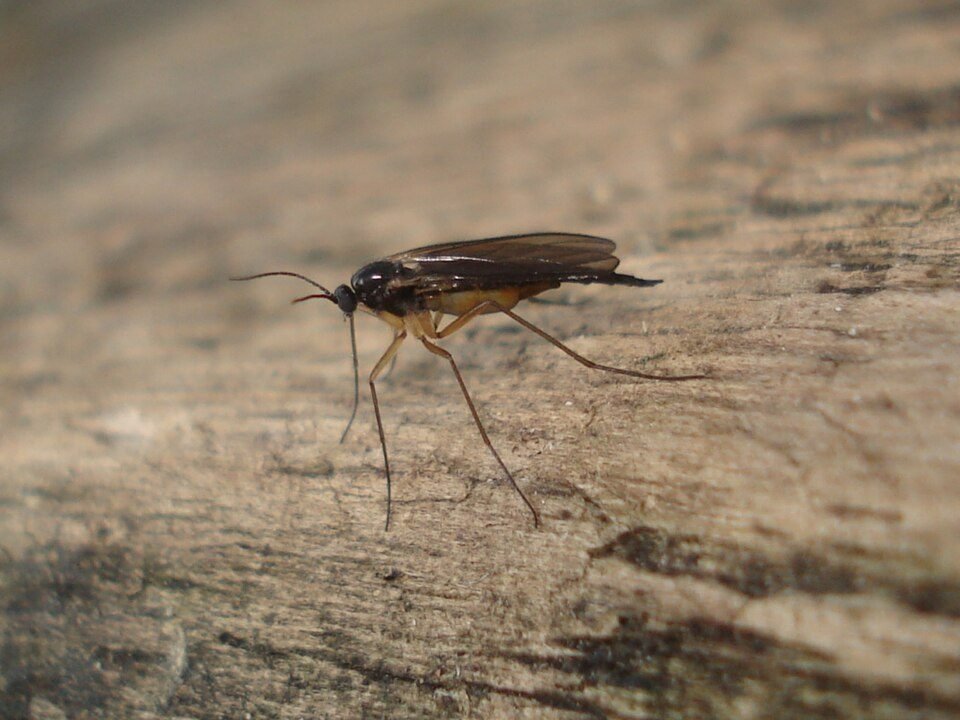
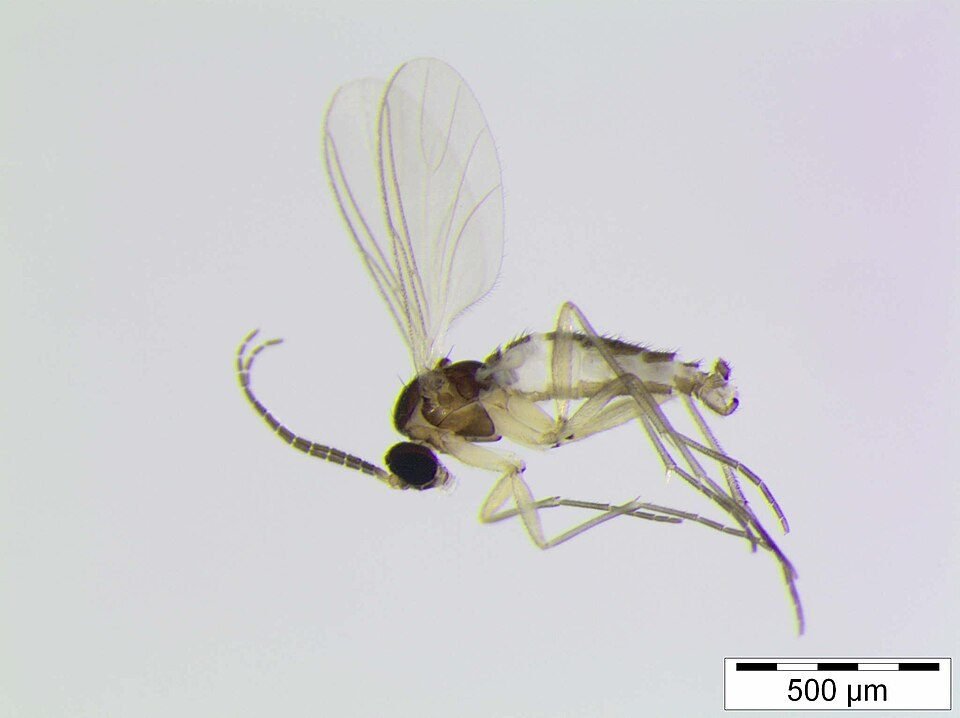
Fungus gnats (Bradysia and related genera) are small, delicate, grey to black flies, about 3 mm long, and up to 6 mm by some counts. They have long legs and antennae, and they look like a tiny mosquito. The wings are clear and carry a Y-shaped vein, which is one way to tell them from fruit flies. They are weak flyers, and they are drawn to light, including grow lights and computer screens.
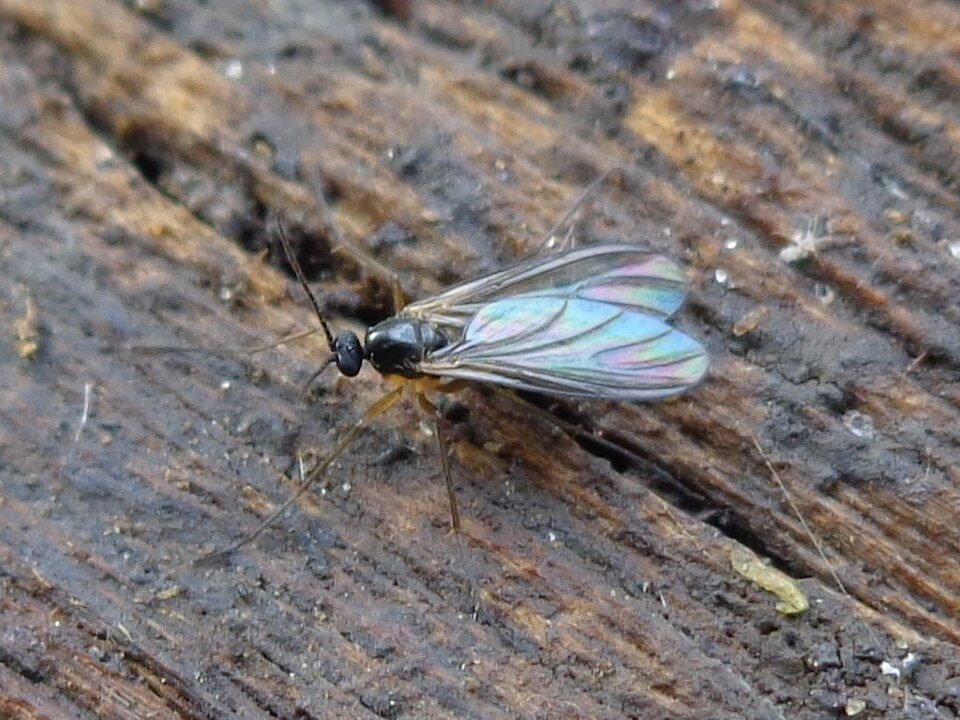

The larvae are easier to recognise. They are around 6 mm long, legless and pale, with a glossy black head.
Fungus gnat vs fruit fly vs drain fly
Fungus gnats live around plants. Fruit flies live around food. Drain flies live around drains. If you see the flies around a houseplant, especially near soil, they are almost certainly fungus gnats.
| Fungus gnat | Fruit fly | Drain fly (moth fly) | |
|---|---|---|---|
| What it looks like | About 3 mm, black to dark, with long legs and antennae and clear wings with a Y-shaped vein | Brown to yellowish, about 2 to 3 mm, with red eyes and clear wings | About 3 mm, dark and fuzzy, with hairy wings held like a roof over the body |
| Where it breeds | Damp potting soil and other moist growing media | Ripe or rotting fruit, spilled sweet liquids, compost and other moist, fermenting matter | The slimy film inside sink, shower and floor drains, and other wet organic matter |
| Where you see it | Around houseplants, seed trays and worm bins, and at windows and lights | Kitchens, around fruit bowls, bins and compost | Bathrooms, kitchens and basements, near drains |
| How it flies | Weak and drawn to light | A strong flier that hovers over food | A weak flyer with short hopping flights; rests on walls |
| First step | Let the top of the soil dry out and clear debris from the pot | Remove ripe fruit and food waste, empty bins daily and set a trap | Scrub the film out of the drain and fix slow drains |
Fungus gnat biology and life cycle
The adults are only the visible end of the cycle. Almost everything that matters happens in the top few millimetres of the soil, where the larvae feed and where the eggs are laid.
Fungus gnat life cycle
Eggs in damp soil
A female lays up to about 200 eggs in the crevices of moist potting soil or worm-bin bedding.
Larvae in the top of the soil
The larvae reach roughly 6 mm. Each has a glossy black head on a pale, see-through body with no legs. They stay in the top few millimetres of the soil, leave silvery trails, and feed on fungi, algae and rotting plant matter.
Pupae
In about two to three weeks the larvae pupate in the soil.
Adults
New adults appear at about four weeks. They no longer eat, but they fly, mate and lay more eggs. That is the cycle you see as a cloud of gnats around your plants.

Where fungus gnats come from
They are almost always introduced in potting soil or compost. A bag of soil, a new plant or a bin of worm compost can bring them home. Once there, they thrive wherever the top layer stays wet: overwatered houseplants, seedling trays under grow lights, pots with poor drainage and worm bins. Fallen leaves and old fruit on the soil surface give them food.
Why fungus gnats are in your house
Something is staying damp. Fungus gnats need moist growing media, so the real answer is usually overwatering. They also like organic debris on the soil surface, and the light from windows and grow lamps draws the adults to gather around plants and windows.
Fungus gnats in the house: plants, worm bins and grow lights
Fungus gnats in the house tend to cluster around three things. Houseplants come first, especially any pot that stays wet. Seedling trays under grow lights come next, since the light attracts the adults and the trays are kept damp. The third is the worm bin, where food scraps and moist bedding suit the larvae. For a worm bin, freeze fruit and vegetable scraps before adding them, keep the scraps buried under bedding, use sticky tape on the lid, and swap out the top layer of wet bedding if larvae build up.
Signs of a fungus gnat infestation
- Small dark flies rising from a plant when you water or brush it.
- Flies gathering at windows, lamps and screens near your plants.
- Tiny silvery trails on the soil surface, left by larvae.
- Stunted, yellowing or drooping young plants and seedlings.
- Larvae seen on the soil surface or on a potato slice you have left as bait.
Are fungus gnats harmful? Do fungus gnats bite?
Fungus gnats do not bite, and the adults are a harmless nuisance. They are the last stage of life and no longer eat. The larvae are the problem for plants: they can injure the roots of young plants and seedlings, which then look stunted and may drop their leaves. In severe cases a plant can die.
The larvae live in the top few millimetres of soil. Letting that layer dry out between waterings starves the eggs and larvae.
Common myths about fungus gnats
- "They are fruit flies." They look similar, but fruit flies breed in fruit. Fungus gnats breed in soil.
- "They eat the plant leaves." They mostly feed on fungi and decaying matter, though larvae can damage roots and leaves that touch the soil.
- "More water helps the plant recover." More water helps the gnats. Damp soil is what they need.
- "Swatting the adults solves it." The larvae in the soil keep producing new adults.
How to get rid of fungus gnats yourself
- Let the soil dry. Let the top layer, about the depth of your fingernail, dry between waterings, and check with your finger. Eggs and larvae do not survive in dry soil.
- Improve drainage and avoid overwatering. Empty saucers and use pots with drainage holes.
- Clear debris such as fallen leaves and old fruit from the soil surface.
- Use sticky traps. Yellow sticky cards in the pots catch adults and show how bad it is.
- Try a potato lure. Rest a thumb-sized piece of peeled raw potato on the soil. Larvae wriggle to the underside, where you can spot and remove them.
- Repot badly affected plants. Wash the roots and use fresh potting soil with better drainage. Do not reuse old potting mix.
- Use biological options if needed. Predatory mites, beneficial nematodes or diatomaceous earth on the soil surface can help.
- Freeze food scraps for worm bins, and cover them with bedding.
How AstraHive Pest Control gets rid of fungus gnats
Fungus gnats are a source problem, and the source is damp soil. We find where it is and help you cut the supply.
How an AstraHive fungus gnats treatment works
Inspect and find the source
We inspect houseplants, seedling trays, worm bins and any other damp organic matter to find where the gnats are breeding.
Dry out the source
We show you which pots, trays or bins are the source and how to change watering, drainage and debris so the larvae lose their habitat.
Treat inside only when needed
If a large number of fungus gnats are already flying through the house, we add an interior treatment, applied according to the label and kept away from plants and food.
Back it with a 90-day warranty
If fungus gnats come back within 90 days, we re-treat at no charge.
Our products are Health Canada approved and safe for kids and pets, and we apply every product according to its label. AstraHive is licensed by the Ontario Ministry of the Environment, Conservation and Parks. Ontario requires a ministry-approved certification course before it issues an exterminator licence, and that training is delivered through the University of Guelph, Ridgetown Campus.
Is overwatering the real cause?
Almost always. Fungus gnats do not appear in dry soil, so the most effective fix is also the cheapest: water less, let the top layer dry, make sure the pot drains freely, and empty saucers. Repotting into fresh, sterile potting mix with better drainage works when a plant has been badly affected, and you should not reuse potting soil from year to year because the eggs can carry over.
Fungus gnat control in Ontario: when to call an exterminator
Most fungus gnat problems end when the soil dries out. It is worth calling a licensed pest control company if gnats keep coming back after you have dealt with the plants, if they are in a large indoor garden or a food business, or if you are not sure whether the flies you see are fungus gnats, fruit flies or drain flies.
Why Choose AstraHive
- Licensed & Insured: Certified by the Ontario Ministry of Environment, Conservation and Parks.
- Fast response: Same-day service available, with a callback within 5 minutes.
- 90-Day Warranty: If pests come back within that window, we re-treat at no additional charge.
- Proven track record: 5.0 stars on Google across 200+ reviews.
- Family & pet safe: Health Canada approved products on every job.
Frequently Asked Questions
How do I get rid of fungus gnats?
Let the top 5 to 7 mm of the soil dry between waterings, improve drainage, remove debris from the soil surface and set yellow sticky traps. For a bad infestation, repot with fresh, well-draining potting soil, or use predatory mites, nematodes or diatomaceous earth.
Where do fungus gnats come from?
Usually from potting soil or compost brought into the house. They breed in damp soil, so overwatered plants, seedling trays and worm bins are the usual sources.
Do fungus gnats bite?
No. The adults are a harmless nuisance and do not feed. The larvae feed on fungi and decaying matter in the soil and can damage the roots of young plants.
Are fungus gnats harmful?
Not to people. To plants, the larvae can injure roots, leaving young plants stunted, with dropping leaves, and in severe cases dead.
What is the difference between fungus gnats and fruit flies?
Fungus gnats are darker and slimmer with long legs, and they hover around plants and soil. Fruit flies are tan with red eyes and hover around ripe or rotting food.
Do I need a fungus gnat exterminator?
Usually not. Drying the soil solves most problems. Call one if they keep returning, if the source is a large indoor garden or worm system, or if you are unsure what the flies are.
Sources
- University of Saskatchewan: Gardening at USask, Fungus gnats — Fungus gnats are about 3 mm, dark, long-legged, with clear wings and a Y-shaped vein; up to 200 eggs in potting soil; life cycle about four weeks; adults harmless and do not feed; larvae about 6 mm with a shiny black head live in the top 5 to 7 mm of moist soil; let soil dry; freezer kills fruit fly larvae in food waste.
- Government of British Columbia: Home and Garden Pest Management Guide, Pests of House Plants (fungus gnats) — Fungus gnats are grey or black and 3 to 6 mm; larvae are white maggots with black heads in decaying plant matter in moist soil; adults are a harmless nuisance; maggots can injure roots of young plants; repot in fresh soil with better drainage, reduce watering, yellow sticky traps, predatory mites, nematodes, insecticidal soap, diatomaceous earth.
- Ontario.ca: Pesticide licences and permits — Ontario's Ministry of the Environment, Conservation and Parks issues exterminator licences after a ministry-approved certification course, delivered through the University of Guelph, Ridgetown Campus.
Areas We Serve
AstraHive Pest Control proudly serves 75+ communities across the following regions:
- Toronto: Toronto, North York, Scarborough, Etobicoke, East York, York, Leslieville, Lakeview
- Durham Region: Oshawa, Whitby, Ajax, Pickering, Clarington, Bowmanville, Courtice, Newcastle, Port Perry, Brooklin, Uxbridge, Scugog, Brock, Seaton
- York Region: Vaughan, Markham, Richmond Hill, Aurora, Newmarket, Thornhill, Woodbridge, Kleinburg, Maple, Stouffville, Unionville, Keswick, Holland Landing, East Gwillimbury, Georgina, King City, King Township, Nobleton, Berczy Village, Cathedraltown, Commerce Valley, Cornell, Wismer, Whitchurch-Stouffville, Sutton, Schomberg
- Peel Region: Mississauga, Brampton, Caledon, Malton, Port Credit, Streetsville, Meadowvale, Cooksville, Bolton, Palgrave
- Extended Service Area: Peterborough, Lindsay, Port Hope, Barrie, Bradford, Innisfil, Collingwood, Wasaga Beach, Orillia, Burlington, Oakville, Milton, Hamilton, Grimsby, St. Catharines, Welland, Niagara Falls
Don't see your city listed? Call us — we likely cover it.
Got a pest problem right now?
Call AstraHive for a free consultation. Licensed & insured, serving the GTA, Durham, York, Peel and Simcoe County.
Call 905-925-84275.0 Stars — 200+ Google Reviews | Licensed & Insured | Health Canada Approved