A tick yard treatment can suppress ticks for weeks, but how long depends on the product, the habitat it reaches and how well the spray penetrates vegetation. Field studies found that synthetic products kept host-seeking blacklegged ticks down for at least 6 weeks, while natural products lasted only about 1 to 3 weeks. Habitat steps still matter.
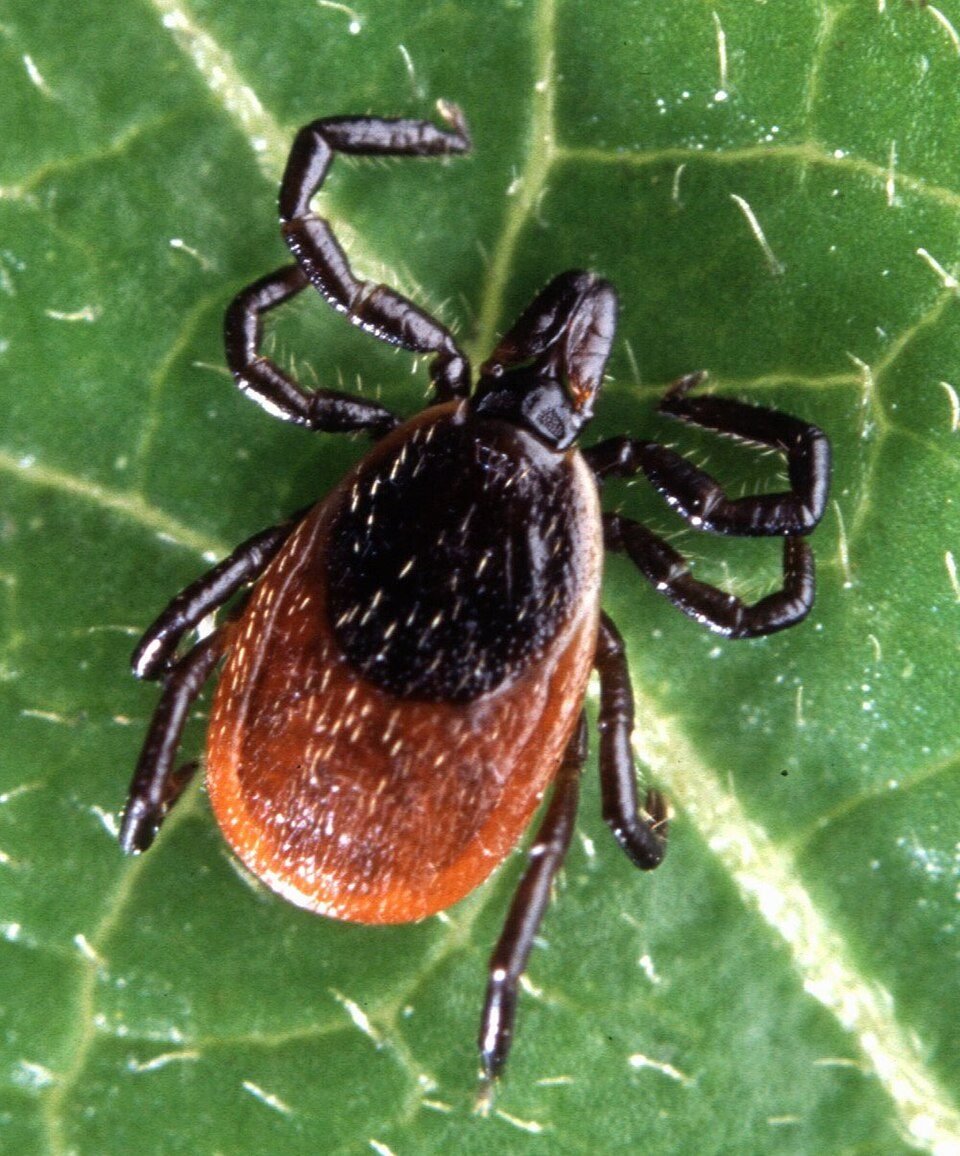

What a tick yard treatment is
A tick yard treatment applies a registered product to the places where ticks wait for a host, such as the lawn edge, leaf litter, shrubs and the border between the lawn and woodland. It targets ticks that are waiting on vegetation, which is why coverage of the plants and leaf litter matters as much as the product.
How long the effect lasts in field studies
| Result | |
|---|---|
| Synthetic pyrethroid products | Effectively suppressed host-seeking blacklegged ticks for at least 6 weeks |
| Best single-application example | Complete suppression of blacklegged tick nymphs for 9 weeks after one spray |
| Natural (minimum risk) products | Highly effective for only about 1 to 3 weeks, so they needed more frequent application |
Source: a review in Emerging Infectious Diseases (2024) of field studies of tick control products.
Why the same product lasts different amounts of time
The review notes that spray pressure may help products penetrate vegetation and the litter and duff layers where ticks wait, so coverage depends on the application. A lawn is easier to treat than a thick edge of tall plants and shrubs. Study conditions are also controlled, while a real yard is mowed, grows, gets rained on and is walked on by people, pets and wildlife, so duration in a yard varies from one property to the next. A pest control company may also schedule re-treatments of grass and vegetation more often than the longest durations seen in studies, so the treatment covers the tick season and is not applied once and forgotten.
The yard steps that work alongside a treatment
The City of Toronto's list for property owners: mow the lawn regularly, remove leaf litter, brush and weeds from the lawn edge, trim tree branches and shrubs to let in sunlight, move swing sets and sandboxes away from the woodland edge and consider a woodchip or mulch base, discourage rodents and deer, and keep bird feeders away from the house. These steps make the yard less suitable for ticks and for the animals that carry them.
Tick seasons and how a treatment plan follows them
| What is active | What it means for the property | |
|---|---|---|
| Spring | Adult ticks | Adults feed on larger animals such as deer, dogs and raccoons, and will bite people and pets in leaf litter and brush |
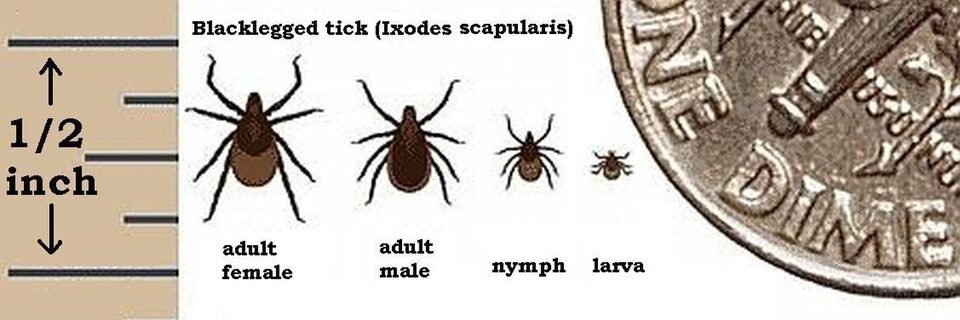
| Summer | Nymphs, the time of greatest risk to people | Nymphs are small and easy to miss, and they cause most summertime infections |
| Fall | Adult ticks again | The same wooded and brushy edges with leaf litter matter again, because adults are active in the fall |
Sources: Public Health Ontario and the Public Health Ontario study of Ontario cases. Ticks are active across several seasons and tick season runs long in Ontario now, so one treatment cannot cover the year, and a monthly option keeps grass and vegetation covered as the earlier treatment wears off.
How a professional treatment is set up
| What it covers | How long it lasts | |
|---|---|---|
| Full property assessment | Tall grass, shaded fence lines, wood piles, garden beds and the places pets and wildlife move through | Done first, so the treatment goes where ticks live and travel |
| ULV exterior perimeter fogging on exterior walls | Applied according to the product label | About 90 days |
| ULV exterior perimeter fogging on grass and vegetation | Applied according to the product label | About 30 days |
| Monthly protection option | Repeats the treatment through the season | Keeps grass and vegetation covered as the earlier treatment wears off |
| Service report | Every treated zone and product recorded | Follow-up visits know what has been covered |
This is how AstraHive works. The durations are the company's own, and they are shorter on grass and vegetation than on walls because those surfaces are mowed, grow, get rained on and are walked on.
What the field studies add
The studies described above lasted at least 6 weeks for synthetic products and 1 to 3 weeks for natural ones. Those results come from trial plots under controlled conditions. Put next to the 30 day figure for grass and vegetation, they point to the same practical conclusion: the treatment is designed for the season, and the most exposed parts of a yard need repeat visits.
Reducing the ticks' hosts
Blacklegged tick larvae and nymphs feed on mice, chipmunks and birds, and adults feed on deer, raccoons and dogs. The City of Toronto's yard advice includes discouraging rodents and deer. Public Health Ontario also notes that placing mulch between a property and an adjacent brushy or wooded area can reduce tick exposure. Mulch or wood chip borders, a mown lawn and a cleared edge give ticks less to live in and give a treatment less to cover.
What Ontario's pesticide rules say
Ontario restricts cosmetic pesticide use on lawns and gardens, and homeowners may only use products with active ingredients on the province's allowable list, such as borax, corn gluten meal, soap and sulphur. The rules do list exceptions to protect health or safety, including wasps or mosquitoes and fleas or ticks that bite pets. A licensed exterminator applies products according to the label, and it is worth checking the rules before buying a yard product yourself.
Questions to ask a tick treatment provider
Ask which zones will be treated and why, how long the treatment lasts on walls and on grass and vegetation separately, whether a monthly option is offered, what the warranty covers and whether it is in writing, and whether every treated zone and product is recorded in a service report. A provider who sprays the whole lawn evenly and leaves is treating the yard, not the places ticks actually live.
Common mistakes with tick treatments
- Treating only the lawn. Blacklegged ticks live in and along the edges of woodland and brush with leaf litter, so the edges matter more than the middle of the grass.
- Treating once. Natural products lasted about 1 to 3 weeks in studies, and even a professional treatment on grass and vegetation lasts about 30 days.
- Leaving the habitat alone. Leaf litter, brush and tall grass keep the ground damp and give ticks shelter and give their hosts places to live.
- Skipping personal protection. In the Ontario study, only about one in three people reported checking themselves for ticks and about one in four used repellent in tick habitat.
- Ignoring the pets. Ticks often attach to the head, neck and ears of dogs and cats, and pets can carry them into the house.

Personal protection still applies
No yard treatment makes a property tick-free. York Region advises repellent with DEET or icaridin, long sleeves, long pants and socks, and notes that permethrin-treated clothing may help. A tick must usually be attached for 24 hours or more to transmit Lyme disease, so checking for ticks after time outdoors and removing them promptly remains the most important step.
How AstraHive Pest Control gets rid of ticks
Ticks wait in tall grass, leaf litter, brush and along shaded edges where pets and wildlife travel, so a general yard spray misses most of them. We find the zones where ticks actually live and travel and treat those.
How an AstraHive ticks treatment works
Full property assessment
We walk the whole property to find where ticks are most likely to live and travel: tall grass, shaded fence lines, wood piles, garden beds and anywhere pets or wildlife move through.
Residual tick treatment of those zones
We apply a perimeter treatment aimed at those exact zones, not a general yard spray. We use ULV exterior perimeter fogging, applied according to the product label, which gives roughly 90 days of control on exterior walls and about 30 days on grass and vegetation.
Monthly protection options
Tick season runs long in Ontario now, so we offer ongoing monthly treatment so protection does not lapse mid-season.
Residential and commercial service
The process is the same for a backyard and for a commercial property.
Document every treated zone
Every treated zone and every product used goes in the service report, so follow-up visits know exactly what has already been covered.
Back it with a 90-day warranty
If ticks come back within 90 days, we re-treat at no charge.
Our products are Health Canada approved and safe for kids and pets, and we apply every product according to its label. AstraHive is licensed by the Ontario Ministry of the Environment, Conservation and Parks. Ontario requires a ministry-approved certification course before it issues an exterminator licence, and that training is delivered through the University of Guelph, Ridgetown Campus.
Treating the property does not replace personal protection: check yourself, your children and your pets after time outdoors.
Typical cost: Starting at $300 CAD, with final cost depending on property size and severity of infestation - there is no fixed upper limit. Call 905-925-8427 for an exact free quote.
Why Choose AstraHive
- Licensed & Insured: Certified by the Ontario Ministry of Environment, Conservation and Parks.
- Fast response: Same-day service available, with a callback within 5 minutes.
- 90-Day Warranty: If pests come back within that window, we re-treat at no additional charge.
- Proven track record: 5.0 stars on Google across 200+ reviews.
- Family & pet safe: Health Canada approved products on every job.
Frequently Asked Questions
How long does a tick yard treatment last?
Field studies found synthetic products suppressed host-seeking blacklegged ticks for at least 6 weeks, with one example lasting 9 weeks for nymphs. Natural products lasted only about 1 to 3 weeks. Real yards vary with coverage, habitat and weather.
Why does a tick treatment not last all season?
Products wear off over time, vegetation grows and lawns are mowed, and the spray may not have reached every area ticks wait in. That is why a treatment is repeated through the tick season.
Do natural tick sprays work?
In the studies reviewed, natural minimum risk products were highly effective for only about 1 to 3 weeks and needed more frequent applications than synthetic products.
What else reduces ticks in my yard?
The City of Toronto recommends mowing regularly, removing leaf litter and brush at the lawn edge, trimming trees and shrubs for sunlight, moving play structures away from woodland and discouraging rodents and deer.
Does a yard treatment mean I do not need to check for ticks?
No. A tick has to be attached for 24 hours or more to usually transmit Lyme disease, so checking and removing ticks promptly is still the most important protection.
Sources
- Public Health Agency of Canada: Lyme disease, spread, prevention and risks — Infected ticks usually need to be attached at least 24 hours to transmit Lyme bacteria; tick bites are usually painless and ticks are tiny; permethrin-treated clothing and repellents with DEET or Icaridin help, always following label directions; talk to a health care provider as soon as possible if you may have Lyme disease.
- City of Toronto: Lyme Disease — In Toronto the blacklegged tick is the only type of tick that can transmit the bacteria that causes Lyme disease; transmission usually requires the tick to be attached for 24 hours or more; a preventive antibiotic must be taken within 72 hours of tick removal; symptoms usually begin 3 days to 4 weeks after a bite; for yards: mow the lawn regularly, remove leaf litter, brush and weeds from the edge of the lawn, trim tree branches and shrubs to let in sunlight, move swing sets and sandboxes away from the woodland edge and consider a woodchip or mulch base, discourage rodents and deer, and keep bird feeders away from the house.
- York Region: Lyme Disease — To remove an attached tick, grasp it with tweezers as close to the skin as possible and pull slowly and straight out; do not squeeze it or apply substances; clean the bite site with rubbing alcohol or soap and water; a tick must be attached for 24 hours or more to transmit Lyme disease; etick.ca offers free tick identification; consult a physician if the tick was attached more than 24 hours or you feel unwell in the weeks after a bite, and antibiotics may be prescribed within 72 hours of removal; early symptoms usually occur within one to two weeks but can occur as soon as three days or as long as a month after a bite; York Region reported 85 Lyme disease cases in 2025 and 68 in 2024, and Ontario reported 2,740 in 2025 and 2,337 in 2024; use repellent with DEET or icaridin, wear long sleeves, long pants and socks, and consider permethrin-treated clothing.
- Public Health Ontario: The Ticks of Ontario — Blacklegged ticks and American dog ticks are the most common species associated with humans in Ontario, about 55% and 36% of ticks submitted through passive surveillance, which is biased towards ticks associated with humans; blacklegged tick larvae and nymphs feed on rodents and birds while nymphs and adults feed on humans, and it is the primary vector of the Lyme disease bacterium Borrelia burgdorferi and other pathogens including Anaplasma, Babesia and Powassan virus lineage II; American dog tick larvae and nymphs feed on mice and voles and adults feed on dogs, opossums, raccoons and humans, and it is a vector of tularemia and Rocky Mountain spotted fever and can cause tick paralysis; Lyme disease was once rare in Ontario but is now the most commonly reported vector-borne disease, and the province's climate has become more suitable for ticks.
- Ontario.ca: Pesticides (home lawns and gardens) — Ontario's rules permit pesticide use to protect health or safety from wasps or mosquitoes and fleas or ticks that bite pets, and for indoor pests, rodents or pests that can cause structural damage; for cosmetic uses on lawns and gardens homeowners may only use products with active ingredients on the allowable list, for example borax, corn gluten meal, soap and sulphur; products containing 2,4-D, diazinon and glyphosate are prohibited for cosmetic purposes.
- Public Health Agency of Canada: Protect your pets from ticks and Lyme disease — Check your pets for ticks after being outdoors because ticks often attach to the head, neck and ears of dogs and cats; remove attached ticks immediately with clean fine-point tweezers and wash the bite area with soap and water or alcohol-based sanitizer; talk with your veterinarian about tick-prevention products for pets and Lyme disease vaccines for dogs.
- Ontario.ca: Pesticide licences and permits — Ontario's Ministry of the Environment, Conservation and Parks issues exterminator licences after a ministry-approved certification course, delivered through the University of Guelph, Ridgetown Campus.
- Public Health Ontario (C. Russell): Blacklegged ticks in Ontario: a primer, Landscape Ontario (2016) — Blacklegged ticks have larva, nymph and adult stages; adults are typically found in spring and fall and nymphs in the summer months, the time of greatest risk for people; immature stages usually feed on small mammals such as the white-footed mouse and on migratory birds, adults typically on deer; they are predominantly found in and along the edges of deciduous or mixed deciduous forest with leaf litter, mainly along the north shores of Lake Ontario, Lake Erie, the St. Lawrence River and the Rainy River area; not all carry Lyme bacteria; a tick must feed for at least 24 hours before it can transmit the bacterium; placing mulch between the property and adjacent brushy or wooded areas can reduce exposure.
- Adams et al. (Public Health Ontario): Age- and Sex-Specific Differences in Lyme Disease Health-Related Behaviors, Ontario, Canada, 2015 to 2022, Emerging Infectious Diseases (2024) — 7,762 Lyme disease cases were reported in Ontario in 2015 to 2022, 92.9% confirmed and 7.1% probable; incidence increased 3-fold; the blacklegged tick range expanded northward by 50 km a year; blacklegged ticks were first detected on the northern shore of Lake Erie in the early 1970s, stayed isolated along the St. Lawrence, Lake Ontario and Lake Erie shores through the 2000s, and in the 2010s populations expanded or were established throughout the province; about half of Canada's cases are reported from Ontario; average yearly incidence per 100,000 peaked at 7.2 in children 5 to 9 and at 9.2, 11.8 and 10.8 in ages 50 to 59, 60 to 69 and 70 to 79; 56.3% of cases were male; of 4,108 who named exposure activities, 46.0% visited a secondary residence such as a cottage, 30.8% reported exposure to a tick habitat at their primary residence or a friend or relative's home, 11.5% visited a park, 4.1% camped, 3.7% used a hiking or cycling trail and 3.1% visited a conservation area; of those asked, 32.3% checked themselves for ticks, 27.9% wore adequate clothing and 25.5% used repellent in tick habitats; 41.9% shared a bed or living space with a companion animal that went outdoors; incidence rose in a biennial pattern that likely reflects the abundance of infected nymphs, which cause most summertime infections; in 2023 post-exposure prophylaxis became available to Ontario residents through pharmacists after an assessment of symptoms and tick exposure history.
- Efficacy of Unregulated Minimum Risk Products to Kill and Repel Ticks, Emerging Infectious Diseases (2024) — Synthetic pyrethroid products effectively suppressed host-seeking blacklegged ticks for at least 6 weeks in field studies, including one example of complete suppression of nymphs for 9 weeks after a single spray; minimum risk natural products were highly effective for only about 1 to 3 weeks and needed more frequent application; spray pressure may help products penetrate vegetation, litter and duff layers.
Areas We Serve
AstraHive Pest Control proudly serves 75+ communities across the following regions:
- Toronto: Toronto, North York, Scarborough, Etobicoke, East York, York, Leslieville, Lakeview
- Durham Region: Oshawa, Whitby, Ajax, Pickering, Clarington, Bowmanville, Courtice, Newcastle, Port Perry, Brooklin, Uxbridge, Scugog, Brock, Seaton
- York Region: Vaughan, Markham, Richmond Hill, Aurora, Newmarket, Thornhill, Woodbridge, Kleinburg, Maple, Stouffville, Unionville, Keswick, Holland Landing, East Gwillimbury, Georgina, King City, King Township, Nobleton, Berczy Village, Cathedraltown, Commerce Valley, Cornell, Wismer, Whitchurch-Stouffville, Sutton, Schomberg
- Peel Region: Mississauga, Brampton, Caledon, Malton, Port Credit, Streetsville, Meadowvale, Cooksville, Bolton, Palgrave
- Extended Service Area: Peterborough, Lindsay, Port Hope, Barrie, Bradford, Innisfil, Collingwood, Wasaga Beach, Orillia, Burlington, Oakville, Milton, Hamilton, Grimsby, St. Catharines, Welland, Niagara Falls
Don't see your city listed? Call us — we likely cover it.
Got a pest problem right now?
Call AstraHive for a free consultation. Licensed & insured, serving the GTA, Durham, York, Peel and Simcoe County.
Call 905-925-84275.0 Stars — 200+ Google Reviews | Licensed & Insured | Health Canada Approved