Mouse poison takes anywhere from one day to two weeks to kill a mouse, depending on the active ingredient. Fast-acting neurotoxins like bromethalin work within a day or two, while anticoagulant baits take longer, and in both cases mice almost never die out in the open.
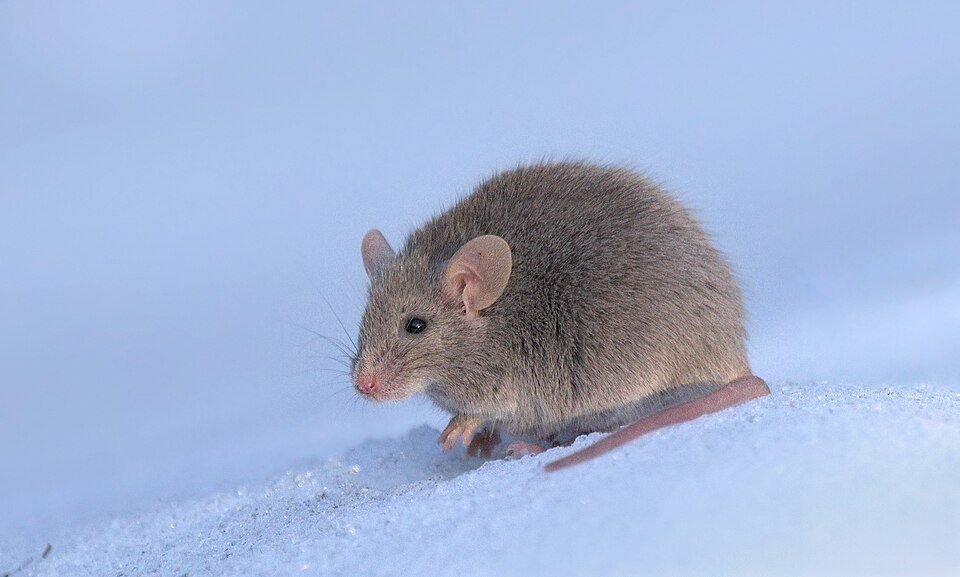

How Long Does Poison Take to Kill Mice?
The timeline comes down to which active ingredient sits in the bait. Anticoagulant rodenticides are the most widely sold type in Canada, and they work by cutting off the body's ability to recycle vitamin K, the nutrient blood needs to clot properly. Death usually follows somewhere between four days and two weeks after a mouse starts feeding. That delay is built in on purpose: a slower-acting bait means the mouse never links feeling unwell to the bait station, so it keeps feeding and the rest of the colony keeps feeding too.
Bromethalin runs on a different clock entirely. Rather than thinning the blood, it attacks the nervous system directly, and a lethal dose can kill a mouse in as little as 24 hours or take a few days. Non-toxic alternatives like RatX work through yet another mechanism, altering internal fluid balance instead of targeting blood or nerves, which means their time to death varies more and has no fixed window.
What Determines How Fast Mouse Poison Works
Three variables shape the timeline for any individual mouse: which active ingredient is used, how much bait it actually consumed, and how recently it last fed. Canada keeps tight limits on which rodenticides the general public can buy. Starting January 1, 2013, additional label restrictions took effect on several commercial and domestic class rodenticides as part of a broader push to reduce accidental exposure among children and wildlife.
That regulatory shift explains the gap between what a homeowner can purchase and what a licensed technician is permitted to use. Any domestic or commercial rodenticide placed somewhere children, pets or livestock could reach it has to sit inside a tamper-resistant bait station, and stations used outdoors carry extra weatherproofing and non-target animal safeguards on top of that.
If a mouse stops showing up at a bait station, that is not automatically a sign the poison didn't work. More often it means the mouse already ate a lethal dose and has gone somewhere quiet to rest while the poison does its job.
| How It Works | Typical Time to Kill a Mouse | Consumer Legal Status in Canada | |
|---|---|---|---|
| First-generation anticoagulants (warfarin, chlorophacinone, diphacinone) | Cuts off vitamin K recycling, leading to fatal internal bleeding | 4 days to 2 weeks after feeding begins | Legal for consumers, must come pre-loaded in tamper-resistant bait stations |
| Second-generation anticoagulants (brodifacoum, bromadiolone) | Same vitamin K blocking effect, but stronger and longer-lasting in the body | Similar window, roughly 4 days to 2 weeks | Commercial class only, limited to licensed applicators |
| Bromethalin | Fast-acting neurotoxin that disrupts nervous system function | As quick as 24 hours, up to a few days | Legal for consumers in tamper-resistant bait stations |
| RatX and similar non-toxic baits | Alters internal fluid balance rather than targeting blood or nerves | Variable, no set timeline | Legal for both consumer and professional use |
How Long Does Mouse Poison Take to Kick In?
Feeling the effects and dying are two separate timelines. With anticoagulants, a mouse can look completely normal for the first day or two after feeding, because its body has to burn through stored vitamin K before internal bleeding gets bad enough to cause visible weakness. Bromethalin moves faster on the symptom front, with coordination problems and lethargy sometimes showing up within the first day.
Either way, the mouse keeps moving, eating and returning to its nest for a stretch of time before it's too weak to function. That lag is exactly why bait is never a quick fix on its own. It's normal to still see or hear live mice for several days after they've started taking the bait.
Do Mice Take Poison Back to the Nest?
Mice don't haul bait back to feed the rest of the colony, despite that common assumption. What's really happening is more straightforward, and it's where the "back to the nest" idea comes from: as the poison sets in and the mouse grows weaker, survival instinct pushes it toward cover rather than out into the open. That's why mice almost always die inside walls, attics, subfloors or insulation, since those are the exact spots a weakening animal would normally retreat to for safety. Instead of wandering off to die outdoors, poisoned mice burrow further into the structure.
That instinct also explains why a dead mouse is so rarely spotted out in a room after poisoning. The animal heads for whatever hiding spot it would use to dodge a predator, which in a house typically means behind drywall or above a ceiling.
What Happens After a Mouse Eats Poison
1. Feeding begins
The mouse eats bait from a station, sometimes returning for multiple feedings depending on the active ingredient.
2. Internal effects build quietly
Bleeding from anticoagulants or nerve damage from bromethalin sets in with barely any visible behaviour change at first.
3. The mouse retreats toward the nest
As it weakens, instinct pushes it deeper into wall cavities, insulation, attics or subfloors instead of outdoors.
4. Death occurs inside the structure
Timing varies by poison type, from around 24 hours with bromethalin to up to two weeks with anticoagulants.
5. Odour rises and fades
One mouse's decomposition smell typically clears within two to three weeks; anything longer points to multiple mice or a rat.
How Long Does Poison Take to Kill Mice vs. Rats?
Mice and rats respond to the same active ingredients on roughly the same schedule, since both anticoagulant and bromethalin products carry label approval for either species. The real difference is size. A rat holds far more body mass and fluid, so when one dies inside a home, the resulting decomposition smell tends to be stronger and sticks around longer than it would for a single mouse.
Both species share one complicating factor: resistance. Warfarin resistance in rats and mice was documented as far back as 1960, and resistance to the stronger anticoagulants that followed showed up not long after, creating real headaches for pest control in certain locations. One genetic study examined the VKORC1 gene across more than 250 rats and mice captured in anticoagulant-exposed sites on four continents, turning up 18 new mutations plus five already on record, along with eight neutral variants, across 178 animals total. Practically speaking, a rodent population with a long exposure history to one anticoagulant may respond slowly, or barely at all, which is exactly why professional rodent programs cycle through different active ingredients instead of sticking with just one.
Distinguishing mice from rats also helps predict where a carcass is likely to end up. Mouse droppings run about 3 to 6 millimetres and are rod-shaped, while rat droppings are visibly bigger. Mice typically nest up high, in cabinets or wall voids, whereas rats prefer basements, crawlspaces and burrows close to the foundation. A smell drifting from a ceiling-level cold-air return usually points to a mouse, while one rising from under a basement slab or near a ground-level exterior wall usually points to a rat.
Why Mice Keep Coming Back After Poison Treatment
Poison by itself never fully resolves a mouse problem, since it only deals with the mice already inside when treatment happens. Outside mice keep finding the same unsealed cracks, gaps and utility openings to get in, and because mice breed roughly every three weeks, a single pair that slips through can rebuild a population fast. When mice show up again weeks after treatment, it's usually because bait or traps went down but nobody located and closed off the entry points, so fresh mice just walked through the same openings.
Lasting control means combining bait with exterior exclusion. Packing gaps tightly with steel wool or copper mesh, then locking it in with caulk or exterior sealant, stops mice from chewing their way back through, since plain caulk or plastic alone won't stand up to their teeth. Weep holes and foundation vents need breathable mesh specifically, never foam or solid sealant, because those openings have to keep letting moisture escape the wall cavity.
Pets, Kids and Cleanup: Handling Poisoned Mice Safely
Regulations require tamper-resistant bait stations in any residential setting children or pets can access. Stations placed where kids, pets or livestock might reach them must be built to resist destruction and designed so a child can't get at the bait inside. Secondary poisoning risk to pets stays low when stations are properly placed and secured, and since most cats hunt mice rather than eat them, getting a pet doesn't need to wait for a mouse problem to clear up first.
Cleanup calls for caution no matter how the mouse died. Droppings, urine, saliva and nesting material can harbour pathogens, and hantavirus ranks among the more serious concerns. People can contract hantavirus by inhaling airborne particles from infected rodent waste, which happens easily when that waste gets stirred up by sweeping or vacuuming. Any spot with droppings, urine or a carcass should be soaked with disinfectant before cleanup starts, with gloves on the whole time, rather than swept or vacuumed while dry.
The odour from a single dead mouse typically clears up within two to three weeks. If it hangs around longer than that, it usually signals either more than one mouse died nearby, or the culprit is actually a rat given its larger body mass and fluid volume.
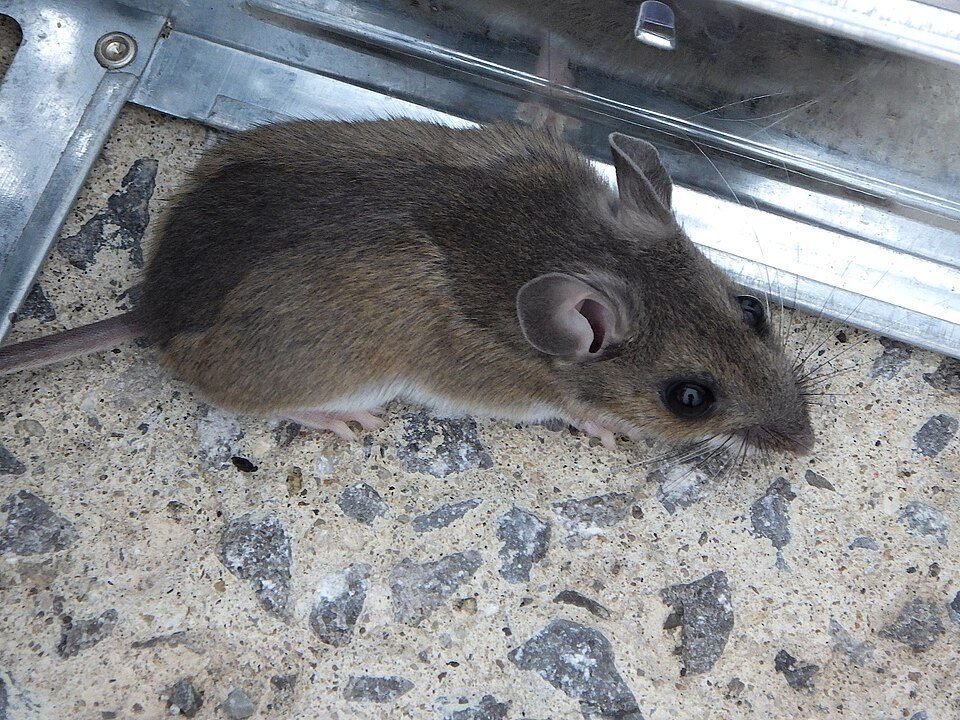

How AstraHive Pest Control gets rid of mice
Mice get in through small gaps, so the lasting fix is at the outer shell of the building. We find the entry points, close them from the outside and deal with the mice already inside.
How an AstraHive mice treatment works
Inspect and find the entry points
We inspect the outside and inside of the building for droppings, gnaw marks, runways and every gap. A single property usually has several entry points, not just the one you noticed.
Seal the exterior entry points
We seal the exterior only: foundation cracks, utility and pipe penetrations, vents, weep holes, rooflines and garage door corners. Gaps are packed with steel wool or copper mesh locked in with sealant or foam, and larger openings get hardware cloth. Foam or caulk alone is not a rodent barrier.
Trap and bait where needed
Mice already inside are removed with traps and with tamper-resistant bait stations, inside and outside where needed, using Health Canada approved products applied according to the product label.
Follow up and back it with a 90-day warranty
We return 4 to 6 weeks later to check that the seals are holding and that activity has stopped, and to refill or move the bait stations. If mice return within 90 days, we re-treat at no charge.
Our products are Health Canada approved and safe for kids and pets, and we apply every product according to its label. AstraHive is licensed by the Ontario Ministry of the Environment, Conservation and Parks. Ontario requires a ministry-approved certification course before it issues an exterminator licence, and that training is delivered through the University of Guelph, Ridgetown Campus.
Sealing is what ends repeat visits. Traps and bait only remove the mice that are already inside, and new mice keep coming for as long as an exterior entry point stays open.
Sealing lowers the risk a great deal, but it cannot make a house completely mouse-proof. Mice can chew new ways in through the softer parts of a building, such as the rubber seal on a garage door, weatherstripping, siding, wood trim and the plastic coating on wires, and a house keeps shifting and ageing, so gaps that did not exist on the day of the work can open later. Chewing can also damage the structure itself, including wiring, insulation and framing, and that wear and tear can continue after every entry point we found has been sealed. We record the damage we find so you can arrange repairs, we check at the follow-up visit that the seals are holding, and anything new that opens up afterward is a new entry point rather than a failure of the old work. If you see fresh gnaw marks or droppings, or hear scratching, call us early.
Typical cost: Starting at $300 CAD, with final cost depending on property size and severity of infestation - there is no fixed upper limit. Call 905-925-8427 for an exact free quote.
Why Choose AstraHive
- Licensed & Insured: Certified by the Ontario Ministry of Environment, Conservation and Parks.
- Fast response: Same-day service available, with a callback within 5 minutes.
- 90-Day Warranty: If pests come back within that window, we re-treat at no additional charge.
- Proven track record: 5.0 stars on Google across 200+ reviews.
- Family & pet safe: Health Canada approved products on every job.
Frequently Asked Questions
How long does poison take to kill mice?
Most mouse poisons act somewhere between 24 hours and two weeks. Bromethalin, a fast-acting neurotoxin, can finish the job in a day or a few days, while anticoagulant baits, the type most commonly sold in Canada, generally take four days to two weeks after feeding starts.
Do mice take poison back to the nest?
Mice don't physically carry bait back to share with others. What actually happens is that a poisoned mouse, as it weakens, retreats further into its nest area, such as a wall cavity or insulation, which is why they almost always die inside the structure instead of outdoors.
How long does rat poison take to kill mice?
The same anticoagulant and bromethalin products approved for rats are also approved for mice, so the timelines line up: about 24 hours to a few days for bromethalin, and four days to two weeks for anticoagulants. The main contrast is a dead rat's larger body mass produces a stronger, longer-lasting smell.
Why do mice keep coming back after poison is used?
Poison only clears out the mice present during treatment. If entry points like foundation gaps or openings around pipes and vents never get sealed, new mice from outside keep using those same openings, making it look like the problem never actually went away.
Is it safe to have pets while using mouse poison?
Yes, as long as bait stays inside tamper-resistant, properly secured stations, which regulations require wherever children or pets have access. Secondary poisoning risk stays low under those conditions, and most cats hunt mice rather than eat them.
Sources
- Health Canada: Rats and mice (Pest control tips) — Mice can squeeze through cracks as small as a dime; metal weather stripping, patching foundation cracks, steel wool around pipes before caulking; snap and electronic traps are very effective when well placed; poisoned baits need tamper-proof stations away from children and pets; wear rubber gloves and a dust mask and dampen droppings with a bleach solution, never vacuum them dry; look for a Pest Control Products number.
- Public Health Agency of Canada: Hantavirus, spread, prevention and risks — Hantaviruses are spread by rodents, most often through droppings, urine and saliva; infection can follow breathing in particles stirred up during cleaning; the deer mouse is a carrier in Canada; wear gloves and an N95-level respirator in confined spaces, spray droppings and nesting material with a bleach and water mixture and let it soak for 10 minutes; seal holes with wire screening, steel wool, metal flashing or cement.
- Health Canada - Pesticide Compliance and Enforcement Report 2015-2016 — As part of an overall risk-reduction strategy, use restrictions for several commercial and domestic class rodenticides came into effect on product labels as of January 1, 2013.
- Health Canada - Commercial Class Rodenticides Tamper-Resistant Bait Stations Requirements — Bait stations used where children, pets or livestock can access them must be resistant to destruction by children and have an entrance designed so children cannot reach the bait.
- Public Health Agency of Canada - Hantavirus — People can get hantavirus when they breathe in tiny particles of rodent waste that are infected with the virus, which can occur when the waste is stirred into the air through vacuuming or sweeping.
- Ontario.ca: Pesticide licences and permits — Ontario's Ministry of the Environment, Conservation and Parks issues exterminator licences after a ministry-approved certification course, delivered through the University of Guelph, Ridgetown Campus.
- US EPA - Restrictions on Rodenticide Products — Deaths from anticoagulant rodenticides typically occur between four days and two weeks after rodents begin feeding on the bait.
- NCBI PMC - Novel mutations in the VKORC1 gene of wild rats and mice — A study sequenced the VKORC1 genes of more than 250 rats and mice from anticoagulant-exposed areas on four continents, identifying 18 novel and five published mutations in 178 animals.
- NCBI PMC - Confirmation of warfarin resistance of VKORC1 variants — Resistance in rats and mice was first reported for warfarin in 1960, with resistance to more potent anticoagulants following a few years later.
Areas We Serve
AstraHive Pest Control proudly serves 75+ communities across the following regions:
- Toronto: Toronto, North York, Scarborough, Etobicoke, East York, York, Leslieville, Lakeview
- Durham Region: Oshawa, Whitby, Ajax, Pickering, Clarington, Bowmanville, Courtice, Newcastle, Port Perry, Brooklin, Uxbridge, Scugog, Brock, Seaton
- York Region: Vaughan, Markham, Richmond Hill, Aurora, Newmarket, Thornhill, Woodbridge, Kleinburg, Maple, Stouffville, Unionville, Keswick, Holland Landing, East Gwillimbury, Georgina, King City, King Township, Nobleton, Berczy Village, Cathedraltown, Commerce Valley, Cornell, Wismer, Whitchurch-Stouffville, Sutton, Schomberg
- Peel Region: Mississauga, Brampton, Caledon, Malton, Port Credit, Streetsville, Meadowvale, Cooksville, Bolton, Palgrave
- Extended Service Area: Peterborough, Lindsay, Port Hope, Barrie, Bradford, Innisfil, Collingwood, Wasaga Beach, Orillia, Burlington, Oakville, Milton, Hamilton, Grimsby, St. Catharines, Welland, Niagara Falls
Don't see your city listed? Call us — we likely cover it.
Got a pest problem right now?
Call AstraHive for a free consultation. Licensed & insured, serving the GTA, Durham, York, Peel and Simcoe County.
Call 905-925-84275.0 Stars — 200+ Google Reviews | Licensed & Insured | Health Canada Approved