There's no way to know the exact number of mice in your house from a single sighting, and anyone who tells you otherwise is guessing. What you can determine is whether the sighting represents an isolated visitor or ongoing activity, based on droppings, gnaw marks, nesting material, nighttime sounds and an active entry point. This is how a licensed AstraHive exterminator actually assesses it on an inspection call.


Why One Sighting Doesn't Equal One Mouse
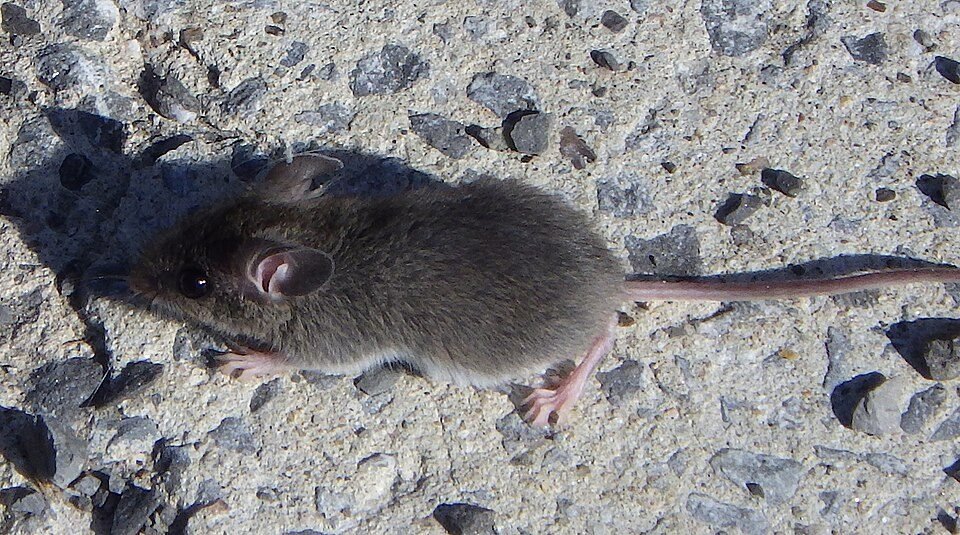
Mice are nocturnal and spend most of their active hours travelling along protected edges: baseboards, behind appliances, inside wall cavities. A daytime sighting in an open space, like the middle of a kitchen floor, is unusual behaviour and often means the population nearby is stressed or crowded enough to push individuals into exposed areas.
The mouse you saw is evidence of activity, not a headcount. If you're only counting sightings, you're almost certainly undercounting.
- A single dropping pile in one spot: possibly one mouse passing through
- Fresh droppings in three or more separated areas: multiple travel routes, likely more than one mouse
- Nesting material found in an attic or wall void: an established, breeding population
Where the Rest of the Population Hides
On most jobs, the areas homeowners never check are exactly where we find the most activity. Wall cavities, insulation, attic spaces, ceiling and floor voids, and behind large appliances all provide dark, undisturbed corridors mice prefer over open rooms.
Attics are particularly attractive because they stay warm, dark and largely undisturbed for months at a time. Once a nest is established there, mice use wall cavities as highways to reach kitchens, pantries and garages without ever crossing an open floor.
Reading Droppings Correctly: Fresh vs. Old, and Mouse vs. Rat
Droppings tell you more than a sighting ever will, but only if you know what you're looking at. Mouse droppings are typically 3-6mm long and rod-shaped with pointed ends, noticeably smaller than rat droppings. Fresh droppings are darker and have a slightly soft, moist appearance; older droppings dry out, harden and turn a duller grey-brown.
Distribution matters more than any single dropping. Finding fresh droppings under the sink, along a baseboard in the basement, and inside a garage cabinet all in the same week tells me mice are actively moving through at least three separate zones of the property, not just visiting one.
Never sweep or vacuum dry droppings. Public health guidance from Canada's National Microbiology Laboratory warns that disturbing dry droppings can release airborne particles that pose a hantavirus exposure risk. Lightly dampen droppings with a disinfectant before cleaning them up.
Coming into contact with mouse droppings can carry a real health risk, which is why Canada's National Microbiology Laboratory works on hantavirus prevention as part of protecting the public. Health guidance is consistent on this point: don't sweep or vacuum dry mouse droppings, urine, or nests before disinfecting them. The safer approach, per public health experts, is to wet droppings with a bleach solution first, since sweeping or vacuuming can send virus particles into the air.
Sounds, Travel Routes and What They Reveal
Scratching, scurrying or gnawing sounds after dark, especially coming from more than one part of the house, are one of the most reliable indicators we use. A single noise location might mean one mouse in one wall cavity. Noises from the attic, a wall near the kitchen, and behind a basement register in the same week usually mean an established travel network, not a lone visitor.
We map these routes during inspection because a trap placed only where the mouse was seen often misses the actual population. Mice reuse the same edges and corners repeatedly, so tracking where droppings and sounds cluster tells you more about total activity than any single sighting.
The Entry Point Matters More Than the Headcount
The more useful question isn't how many mice are inside, it's how they're getting in. A mouse's skull is the only rigid part of its body, which lets the rest of it compress and follow through any gap the head fits through, roughly 6-7 millimetres wide, about the diameter of a pencil or a dime.
Common entry points we check on every job:
- Foundation cracks and utility line penetrations
- Gaps around dryer vents and basement windows
- Garage-door corners, especially in colder months when mice seek warmer routes
- Door thresholds and exterior wall penetrations
Expanding foam or caulk alone isn't sufficient since mice can chew straight through it. We combine sealant with hardware cloth or copper mesh at vulnerable points like garage corners, larger gaps and pipe penetrations, since these materials resist gnawing far better than foam alone.
If It Really Is Just One Mouse
Sometimes a single sighting really is a single mouse. Even then, the opening it used to get inside is still open, and any other mouse in the area can use it too.
That's why we always treat the entry point as the priority, whether we find one mouse or clear evidence of several. Sealing it now is cheaper and simpler than dealing with a nesting population that's had weeks to establish itself in a wall void.
How Fast Numbers Can Grow
Mice reproduce quickly once they have consistent access to food, water, shelter and nesting material. An attic or wall void that provides all four can turn a single entry event into a breeding population well before most homeowners notice a pattern of activity, particularly as outdoor temperatures drop and mice seek warmer shelter indoors.
_2732.jpg)
How AstraHive Pest Control gets rid of mice
Mice get in through small gaps, so the lasting fix is at the outer shell of the building. We find the entry points, close them from the outside and deal with the mice already inside.
How an AstraHive mice treatment works
Inspect and find the entry points
We inspect the outside and inside of the building for droppings, gnaw marks, runways and every gap. A single property usually has several entry points, not just the one you noticed.
Seal the exterior entry points
We seal the exterior only: foundation cracks, utility and pipe penetrations, vents, weep holes, rooflines and garage door corners. Gaps are packed with steel wool or copper mesh locked in with sealant or foam, and larger openings get hardware cloth. Foam or caulk alone is not a rodent barrier.
Trap and bait where needed
Mice already inside are removed with traps and with tamper-resistant bait stations, inside and outside where needed, using Health Canada approved products applied according to the product label.
Flag structural damage and report
If we find structural damage that needs repair beyond what we can seal, we flag it in the service report, along with every observation, every entry point found and every product used.
Follow up and back it with a 90-day warranty
We come back to re-inspect, refill the bait stations and make sure everything is holding. If mice return within 90 days, we re-treat at no charge.
Our products are Health Canada approved and safe for kids and pets, and we apply every product according to its label. AstraHive is licensed by the Ontario Ministry of the Environment, Conservation and Parks. Ontario requires a ministry-approved certification course before it issues an exterminator licence, and that training is delivered through the University of Guelph, Ridgetown Campus.
Sealing is what ends repeat visits. Traps and bait only remove the mice that are already inside, and new mice keep coming for as long as an exterior entry point stays open.
Sealing lowers the risk a great deal, but it cannot make a house completely mouse-proof. Mice can chew new ways in through the softer parts of a building, such as the rubber seal on a garage door, weatherstripping, siding, wood trim and the plastic coating on wires, and a house keeps shifting and ageing, so gaps that did not exist on the day of the work can open later. Chewing can also damage the structure itself, including wiring, insulation and framing, and that wear and tear can continue after every entry point we found has been sealed. We record the damage we find so you can arrange repairs, we check at the follow-up visit that the seals are holding, and anything new that opens up afterward is a new entry point rather than a failure of the old work. If you see fresh gnaw marks or droppings, or hear scratching, call us early.
So, How Many Mice Do You Actually Have?
Without a proper inspection, there's no reliable way to put an exact number on it from one sighting. You could have one mouse, several, or an established population living almost entirely out of sight in your attic or wall cavities.
What matters is the pattern: droppings in multiple locations, nighttime sounds in more than one area, gnaw marks, nesting material and an identifiable entry point. Those signs tell you far more than the number of mice you've personally laid eyes on.
We inspect for evidence, trace travel routes, identify and seal entry points within scope using hardware cloth, copper mesh, steel wool, foam and appropriate sealants, and flag any structural issues that need a qualified contractor.
Typical cost: Starting at $300 CAD, with final cost depending on property size and severity of infestation - there is no fixed upper limit. Call 905-925-8427 for an exact free quote.
Why Choose AstraHive
- Licensed & Insured: Certified by the Ontario Ministry of Environment, Conservation and Parks.
- Fast response: Same-day service available, with a callback within 5 minutes.
- 90-Day Warranty: If pests come back within that window, we re-treat at no additional charge.
- Proven track record: 5.0 stars on Google across 200+ reviews.
- Family & pet safe: Health Canada approved products on every job.
Frequently Asked Questions
If I only saw one mouse, should I be worried?
Don't panic, but don't assume it's automatically the only one either. A single sighting is a good reason to check for droppings, gnaw marks, nesting material and possible entry points before deciding it's a one-off.
Can mice hide in walls without me ever knowing?
Yes. Wall cavities, insulation and ceiling or floor voids give mice protected travel routes they can use for weeks without crossing an open space where you'd see them. Droppings, scratching sounds and gnaw marks are usually the first sign, not a direct sighting.
How can I tell if droppings are fresh or old?
Fresh mouse droppings are darker with a slightly soft, moist appearance, while older droppings dry out and become harder, duller and more brittle. Location and spread matter too: fresh droppings in several separate areas suggest current, active travel rather than a one-time visit.
Is it safe to just sweep up mouse droppings myself?
No, sweeping or vacuuming dry droppings can send airborne particles into the air that public health agencies link to hantavirus exposure risk. Lightly dampen droppings with a disinfectant solution before cleaning them up, and ventilate the area first.
How fast can a single mouse turn into an infestation?
Faster than most homeowners expect, since mice reproduce quickly once they have steady access to food, water, shelter and nesting material. An unsealed entry point combined with a warm attic or wall void can allow a small problem to become an established, breeding population within weeks.
Sources
- Health Canada: Rats and mice (Pest control tips) — Mice can squeeze through cracks as small as a dime; metal weather stripping, patching foundation cracks, steel wool around pipes before caulking; snap and electronic traps are very effective when well placed; poisoned baits need tamper-proof stations away from children and pets; wear rubber gloves and a dust mask and dampen droppings with a bleach solution, never vacuum them dry; look for a Pest Control Products number.
- Public Health Agency of Canada: Hantavirus, spread, prevention and risks — Hantaviruses are spread by rodents, most often through droppings, urine and saliva; infection can follow breathing in particles stirred up during cleaning; the deer mouse is a carrier in Canada; wear gloves and an N95-level respirator in confined spaces, spray droppings and nesting material with a bleach and water mixture and let it soak for 10 minutes; seal holes with wire screening, steel wool, metal flashing or cement.
- Government of Canada - National Microbiology Laboratory — Contact with mouse droppings can pose a serious hantavirus health risk, which is why the National Microbiology Laboratory works on prevention.
- CBC News — Public health experts advise using a bleach solution on rodent droppings and caution against sweeping or vacuuming, which can release virus particles into the air.
- Ontario.ca: Pesticide licences and permits — Ontario's Ministry of the Environment, Conservation and Parks issues exterminator licences after a ministry-approved certification course, delivered through the University of Guelph, Ridgetown Campus.
- Hantavirus Maps (CDC-based guidance) — Dry mouse droppings, urine, or nests should not be swept or vacuumed before disinfection.
Areas We Serve
AstraHive Pest Control proudly serves 75+ communities across the following regions:
- Toronto: Toronto, North York, Scarborough, Etobicoke, East York, York, Leslieville, Lakeview
- Durham Region: Oshawa, Whitby, Ajax, Pickering, Clarington, Bowmanville, Courtice, Newcastle, Port Perry, Brooklin, Uxbridge, Scugog, Brock, Seaton
- York Region: Vaughan, Markham, Richmond Hill, Aurora, Newmarket, Thornhill, Woodbridge, Kleinburg, Maple, Stouffville, Unionville, Keswick, Holland Landing, East Gwillimbury, Georgina, King City, King Township, Nobleton, Berczy Village, Cathedraltown, Commerce Valley, Cornell, Wismer, Whitchurch-Stouffville, Sutton, Schomberg
- Peel Region: Mississauga, Brampton, Caledon, Malton, Port Credit, Streetsville, Meadowvale, Cooksville, Bolton, Palgrave
- Extended Service Area: Peterborough, Lindsay, Port Hope, Barrie, Bradford, Innisfil, Collingwood, Wasaga Beach, Orillia, Burlington, Oakville, Milton, Hamilton, Grimsby, St. Catharines, Welland, Niagara Falls
Don't see your city listed? Call us — we likely cover it.
Got a pest problem right now?
Call AstraHive for a free consultation. Licensed & insured, serving the GTA, Durham, York, Peel and Simcoe County.
Call 905-925-84275.0 Stars — 200+ Google Reviews | Licensed & Insured | Health Canada Approved