Integrated pest management (IPM) means preventing pests, monitoring for them, identifying exactly what is there, and using a combination of methods, with pesticides applied only when monitoring shows they are needed. York Region describes it as a combination of different techniques and products with the least risk to human health and the environment. In a home it replaces spraying on a schedule.

What IPM is
The University of California IPM program defines IPM as an ecosystem-based strategy that focuses on long-term prevention of pests or their damage through a combination of techniques. The key idea is that decisions follow evidence: monitoring first, then a decision on whether the pest can be tolerated or needs control.
The steps of IPM
| What it means | |
|---|---|
| Prevention | Remove what lets pests in or feeds them, such as food, moisture and entry points. |
| Monitoring | Check the site to find which pests are present, how many there are and what damage they have caused. |
| Identification | Know exactly which pest it is, because each one needs a different approach. |
| Assessment | Decide whether the pest can be tolerated or needs control. |
| Tactics | Use a variety of methods as needed, with pesticides only after monitoring indicates they are needed. |
| Evaluation | Check the result and adjust. |
Source: the University of California IPM program (see the sources below).
Action thresholds: when to treat and when to leave it
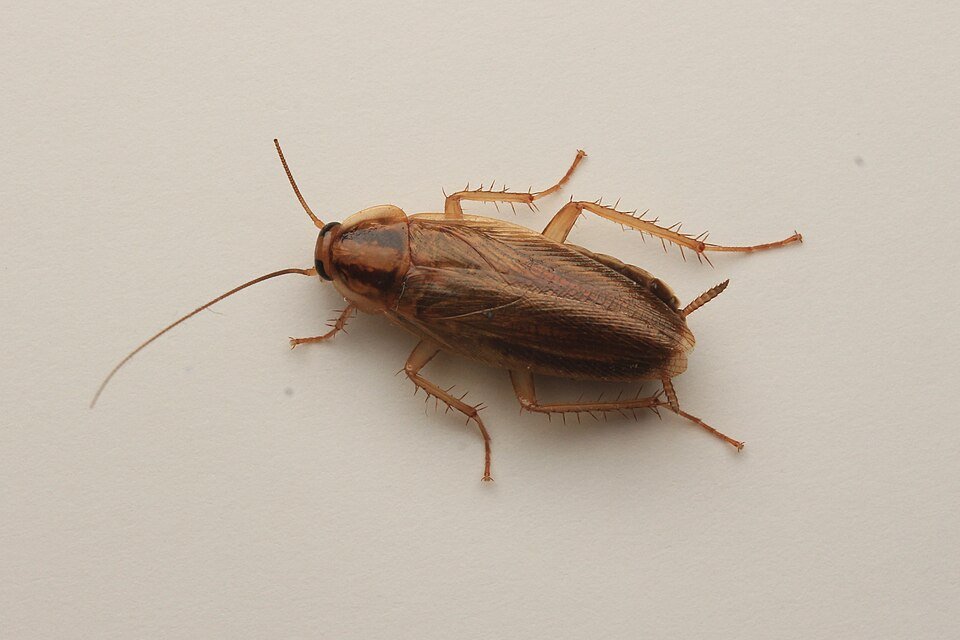
The University of California IPM program lists action guidelines among the six components of IPM: deciding at what point management becomes necessary. In a home the threshold differs by pest. A spider in a corner is not worth a treatment, and AstraHive leaves a few spiders alone. For pests that breed indoors the threshold is effectively any activity, because they multiply quickly: a female bed bug lays 200 to 500 eggs in her lifetime, and a single German cockroach female and her offspring can produce over 30,000 cockroaches in a year.
What IPM looks like for cockroaches
Health Canada's cockroach guidance is IPM in practice: sanitation (clean up spills immediately, store food in sealed containers, store garbage in sealed containers and take it out daily, and clean beneath and behind appliances) combined with baits, which kill cockroaches about 48 to 96 hours after they eat them. The University of California IPM program adds that sticky traps are the best way to detect and monitor cockroach populations, and that monitoring should continue after the population is under control to make sure re-infestation is not taking place. Sprays give a quick, temporary knockdown but no long-term control and may repel and disperse cockroaches.
What IPM looks like for bed bugs
York Region applies the same idea to bed bugs: a combination of physical steps such as daily vacuuming, hot washing and drying, mattress covers and traps, with an insecticide specific to bed bugs used if chemicals are chosen, the least toxic product available, and all label instructions followed. Health Canada says bed bug treatment is only effective when physical control methods and preventative measures are used together.
Choosing the least risky tool that works
| Monitoring | Preferred tools | |
|---|---|---|
| Ants | Follow trails to the entry point and the food source | Sanitation, soapy water on trails, caulking, bait at the entry point and outdoor stations. Indoor sprays are not usually necessary. |
| Cockroaches | Sticky traps at floor and wall junctions, behind appliances and in cabinets; check daily at first | HEPA vacuum, sealed food and garbage containers, sealed cracks, gel baits and dust. Sprays alone give only temporary knockdown. |
| Bed bugs | Interceptor cups under bed legs, which trapped six times more than visual searching | Vacuuming, hot laundering, steam, mattress encasements and a licensed professional's treatment, then continued monitoring. |
| Mice | Droppings, gnaw marks, sounds and tracks | Sealing gaps, snap traps placed one per metre along walls, and tamper-proof bait stations where bait is used. |
Sources: the University of California IPM program and Health Canada. The program's rule is to use the most selective, safest option available, to use bait stations instead of sprays, and to spot-treat instead of treating whole areas.
IPM is not the same as no pesticides
The principle is that pesticides are used only after monitoring indicates they are needed, and that treatments aim to remove only the target organism. When a pesticide is the right tool, it is used, but it is one part of a plan that also covers prevention and monitoring. That differs from applying products on a calendar whether or not pests are present.
IPM in apartment buildings
Toronto's RentSafeTO rules give building owners a formal version of IPM. Owners must inspect common areas at least once every 30 days and any area within 72 hours of receiving information about pests, take measures to eliminate pests and prevent their spread, hire a licensed pest control company if required, and keep pest management records, posting plans that include the pest control services schedule on the tenant notification board. Monitoring, records and follow-through are the elements of IPM that a calendar spray program leaves out.
How AstraHive's treatments follow IPM
The inspection comes first and decides the plan. AstraHive documents where pests were found, how many and every product used in the service report. It treats the interior only when needed, as with spiders, uses bait and dust where those reach the pest, such as ants and cockroaches, and returns 4 to 6 weeks later for bed bugs and cockroaches to confirm the result. Insect monitors left after a cockroach treatment show where activity is still turning up, so the next visit starts from evidence.


What to expect from a provider that uses IPM
A provider that practises IPM identifies the pest, inspects to find where it lives and how it gets in, explains the plan, uses methods suited to the pest, and returns to monitor and confirm the result. A licensed operator can explain each step and why it was chosen.
How AstraHive Pest Control gets rid of cockroaches
Cockroaches hide where sprays and traps cannot easily reach, so we open up the places they live and work through eight steps that reach the whole colony.
How an AstraHive cockroaches treatment works
Inspect, pulling out the appliances
We inspect kitchens, bathrooms, appliances, cabinets, wall voids and drains, and look for egg capsules, shed skins and droppings to see how far the problem has spread. We pull out the fridge, stove, dishwasher and the electrical outlet covers, because the colony lives behind the motors and insulation panels, and zones that are not opened up never get treated.
Interior residual spray where they travel
We apply a residual spray, according to the product label, along the interior edges cockroaches travel: baseboards, under sinks and appliances, and along plumbing lines. It stays active for about 90 days, and cockroaches that cross it carry it back to their hiding places and to the cockroaches they touch.
Flush them out
We inject a flushing agent (a ULV treatment where needed) into voids and behind cabinets, applied according to the product label, to force every cockroach hiding there out into the open and through the sprayed areas.
Dust the voids
We inject a pesticide dust into wall voids, electrical outlets, fridge compressor areas and plumbing voids, places the spray and the flushing agent cannot reach. The dust stays active for up to a year.
Gel bait that spreads through the colony
We place a professional gel bait inside cabinet hinges, behind appliances and near moisture and heat sources. Cockroaches eat each other's droppings and dead cockroaches, so the poison in the gel bait passes from one to the next through the whole colony, much like a disease spreading. Where needed we add an insect growth regulator, sometimes as a gel, to stop nymphs maturing into breeding adults.
Document everything
Where we found cockroaches, what we found and every product used goes in the service report, so the next visit shows exactly what changed.
Leave insect monitors
We leave insect monitors in place after treatment so we can track exactly where activity is still showing up.
Follow up in 4 to 6 weeks and back it with a 90-day warranty
We come back 4 to 6 weeks later to check the results, treat again where needed and finish the life cycle. If cockroaches return within 90 days, we re-treat at no charge.
Our products are Health Canada approved and safe for kids and pets, and we apply every product according to its label. AstraHive is licensed by the Ontario Ministry of the Environment, Conservation and Parks. Ontario requires a ministry-approved certification course before it issues an exterminator licence, and that training is delivered through the University of Guelph, Ridgetown Campus.
A real cockroach treatment takes about 1.5 to 3 hours, because the work is behind the appliances and inside the walls. A visit of 20 to 30 minutes cannot reach the colony.
Treatment works best with a change in the home itself: cleaning up food and water sources and storing food in sealed containers. Pest control products alone will not win the fight without those changes.
Typical cost: Starting at $350 CAD, with final cost depending on property size and severity of infestation - there is no fixed upper limit. Call 905-925-8427 for an exact free quote.
Why Choose AstraHive
- Licensed & Insured: Certified by the Ontario Ministry of Environment, Conservation and Parks.
- Fast response: Same-day service available, with a callback within 5 minutes.
- 90-Day Warranty: If pests come back within that window, we re-treat at no additional charge.
- Proven track record: 5.0 stars on Google across 200+ reviews.
- Family & pet safe: Health Canada approved products on every job.
Frequently Asked Questions
What does integrated pest management mean?
A strategy that focuses on long-term prevention through a combination of techniques, using monitoring to decide when control is needed and applying pesticides only when monitoring shows they are needed.
Does IPM mean no pesticides?
No. Pesticides are used when monitoring indicates they are needed, with the goal of removing only the target organism, alongside prevention and non-chemical steps.
What are the steps of IPM?
Prevention, monitoring, identification, assessing the problem, using a variety of tactics, and evaluating the result, according to the University of California IPM program.
How does IPM work for cockroaches?
Sanitation, baits and monitoring with sticky traps. Health Canada lists the sanitation steps and says baits kill cockroaches about 48 to 96 hours after they eat them.
How does IPM work for bed bugs?
York Region describes a combination of physical steps and, if chemicals are used, an insecticide specific to bed bugs, the least toxic product available, applied according to the label.
Sources
- York Region: Bed Bugs — Integrated pest management is a combination of different techniques and products with the least risk to human health and the environment; after treatment you may still see some living bed bugs for up to ten days, which is normal; if bed bugs persist beyond two weeks contact a professional pest control service; use an insecticide specific to bed bugs and the least toxic product available, following all label instructions; consider pillow and mattress bed bug covers; wash sheets in hot water and dry them in a hot dryer for 30 minutes.
- Health Canada: Cockroaches — Cockroaches contaminate food and spread disease by walking over and excreting on food or food preparation areas; people with asthma may react to their droppings and body parts; they are attracted to starches, sugars and protein and to warm, damp kitchens, bathrooms, basements and plumbing areas; prevention steps are to clean up spills immediately, not leave pet food and water out 24 hours a day, keep food in tightly sealed plastic or glass containers, store garbage in sealed plastic containers and dispose of it daily, and regularly clean dark or damp areas near food such as beneath and behind appliances; baits kill the insects about 48 to 96 hours after they eat the active ingredient.
- Health Canada: Bedbugs: how do I get rid of them? — Bedbugs are very hard to get rid of and a licensed professional pest control operator is strongly recommended; operators can use liquid and aerosol insecticide sprays, insecticidal dusts, diatomaceous earth, pressurized carbon dioxide snow, and steam and heat treatments; bedbugs perish at 50 degrees C and steam cleaners emit at least 100 degrees C; freezing needs 4 days of consistent cold at minus 19 degrees C and may not eliminate all bedbugs; a hot dryer needs 30 minutes or more; use only products with a Health Canada PCP registration number, never homemade pesticides, and never apply pesticides to people, pets, bedding, cribs, playpens or toys unless the label allows it; Health Canada warns against ozone generators; treatment is only effective if physical control methods and preventative measures are used together; preparation means emptying storage furniture, bagging belongings, washing all clothes and bedding and moving furniture from walls.
- Health Canada: Rats and mice — Mice can squeeze through cracks as small as a dime and rats through a quarter-sized hole; prevention includes metal weather stripping, patching foundation cracks, steel wool around pipes before caulking, fine mesh over vents and tight-fitting garbage lids; use 1 trap per metre along walls or 5 to 10 traps per visible mouse hole; poisoned baits must be used with a tamper-proof bait station in areas accessible to children and pets and anticoagulants are usually highly toxic, so keep them away from children and pets.
- City of Toronto: RentSafeTO building owner requirements — Apartment building owners must inspect the common areas at least once every 30 days and any area within 72 hours of receiving information about pests; they must post pest management plans including documentation of pest control services and the schedule, and service standards and product information related to pest control activity, on the tenant notification board; they must keep pest management records, hire licensed pest control companies if required, take measures to eliminate pests and prevent their spread, and stop renting units with active pest infestations to new tenants.
- Ontario.ca: Pesticide licences and permits — Ontario's Ministry of the Environment, Conservation and Parks issues exterminator licences after a ministry-approved certification course, delivered through the University of Guelph, Ridgetown Campus.
- UC IPM: Cockroaches (University of California Statewide IPM Program) — A German cockroach female carries an egg case for about 30 days and drops it about the time the eggs hatch, each case holds about 30 young and a female may produce a new case every few weeks; one female and her offspring can produce over 30,000 individuals in a year; sprays give a quick temporary knockdown but no long-term control and may repel and disperse cockroaches; baits may take 7 days or longer; when populations are under control keep monitoring with traps to make sure re-infestation is not taking place, and sticky traps are the best way to detect and monitor.
- UC IPM: What Is Integrated Pest Management (IPM)? — IPM is an ecosystem-based strategy that focuses on long-term prevention of pests or their damage through a combination of techniques; monitoring means checking a site to identify which pests are present, how many there are or what damage they have caused; after monitoring you decide whether the pest can be tolerated or warrants control; pesticides are used only after monitoring indicates they are needed, and treatments aim to remove only the target organism; the steps include prevention, monitoring, identification, assessing the problem, using a variety of tactics and evaluating the result.
- UC IPM: Bed Bugs (University of California Statewide IPM Program) — Bed bug eggs hatch in about 10 to 15 days at room temperature; bed bugs can go without feeding for 20 to 400 days depending on temperature and humidity, and adults survived more than 400 days without food in the laboratory at low temperatures; some populations have developed resistance to pyrethroid insecticides; over-the-counter total-release foggers are ineffective for bed bug control and potentially harmful to residents; heat treatment needs at least 140 degrees F for two hours or 130 degrees F for three hours (the minimum lethal temperature is 113 degrees F); bugs trapped inside encasements eventually die of starvation; chilling to 32 degrees F or lower for several days also kills bed bugs.
- UC IPM: Ants (University of California Statewide IPM Program) — Spraying ants indoors with pesticides will not prevent more ants from entering; spraying around the foundation kills only foraging ants without killing the colony and queens, and ants quickly build back up and invade again; barrier sprays can make the situation worse by trapping ants indoors; baits are taken back to the nest where the entire colony including queens can be killed, and workers pass the material mouth to mouth to other workers, larvae and queens; it can take 5 to 10 days to see fewer ants; do not use insecticide sprays while using baits.
Areas We Serve
AstraHive Pest Control proudly serves 75+ communities across the following regions:
- Toronto: Toronto, North York, Scarborough, Etobicoke, East York, York, Leslieville, Lakeview
- Durham Region: Oshawa, Whitby, Ajax, Pickering, Clarington, Bowmanville, Courtice, Newcastle, Port Perry, Brooklin, Uxbridge, Scugog, Brock, Seaton
- York Region: Vaughan, Markham, Richmond Hill, Aurora, Newmarket, Thornhill, Woodbridge, Kleinburg, Maple, Stouffville, Unionville, Keswick, Holland Landing, East Gwillimbury, Georgina, King City, King Township, Nobleton, Berczy Village, Cathedraltown, Commerce Valley, Cornell, Wismer, Whitchurch-Stouffville, Sutton, Schomberg
- Peel Region: Mississauga, Brampton, Caledon, Malton, Port Credit, Streetsville, Meadowvale, Cooksville, Bolton, Palgrave
- Extended Service Area: Peterborough, Lindsay, Port Hope, Barrie, Bradford, Innisfil, Collingwood, Wasaga Beach, Orillia, Burlington, Oakville, Milton, Hamilton, Grimsby, St. Catharines, Welland, Niagara Falls
Don't see your city listed? Call us — we likely cover it.
Got a pest problem right now?
Call AstraHive for a free consultation. Licensed & insured, serving the GTA, Durham, York, Peel and Simcoe County.
Call 905-925-84275.0 Stars — 200+ Google Reviews | Licensed & Insured | Health Canada Approved