Pet-safe and child-safe pest control starts with the label and the timing. Health Canada says to use only registered products, follow the label directions, keep children out of treated areas until they are dry, remove pets and their gear before an application, and ventilate the home afterwards. If a pet or child shows signs of poisoning, call a veterinarian, a health care provider or Poison Control.


Start with the label
Health Canada says to choose only products registered by Health Canada, which you can recognize by the Pest Control Product (PCP) number on the label, and to make sure the label names the pest you are trying to control. It also says to always read, understand and follow all the label directions and precautions, never mix pesticides unless the instructions say to, and never use a pesticide indoors if it is intended for outdoor use only.
Children: keep them out until the area is dry
Health Canada's rule is to keep children out of treated areas while pesticides are being applied and until the areas are dry, and to read the label to find out when it is safe to enter. For indoor uses, ventilate the home before returning. Pesticides should be stored in their original container and kept out of sight and reach of children.
Pets: what to do before, during and after
| What Health Canada says | |
|---|---|
| Before | Remove pets, cages, pet toys, chew bones, food bowls and bedding from the area to be treated. Cover fish tanks, and turn off the pump if a fogger is used. |
| During and after | Keep pets out of treated areas while pesticides are being applied and until the areas are dry. Read the label for when it is safe to enter. |
| Lawn products | Granular lawn products may require keeping pets off the treated area for 24 hours or longer. |
| Indoor uses | Ventilate the home before returning. |
Source: Health Canada, Keep your pets safe when using pesticides.
Flea and tick products for pets
Health Canada advises asking a veterinarian about the best flea treatment, which can depend on the type of animal, its age and whether it is pregnant, and using the product that the label says is for your dog or cat.
Foggers and the exposure data
Total-release foggers deserve a section of their own, because they put the most pesticide where families live. A study of low-income apartments in Raleigh, North Carolina measured residues after fogger use. Four to six hours after discharge, residues were a median of 85 times higher than baseline, and 27 of 32 insecticide and location combinations on horizontal surfaces such as floors and counters were significantly elevated. A month later, 34% of horizontal surface samples were still elevated. Walls were generally not elevated. The authors point to heavy deposits on kitchen floors where children play. The foggers did not reduce cockroach trap counts, while gel baits did. Health Canada's pet guidance adds that if you use a fogger, you must turn off fish tank pumps and cover the tanks.
Mouse bait, traps and children and pets
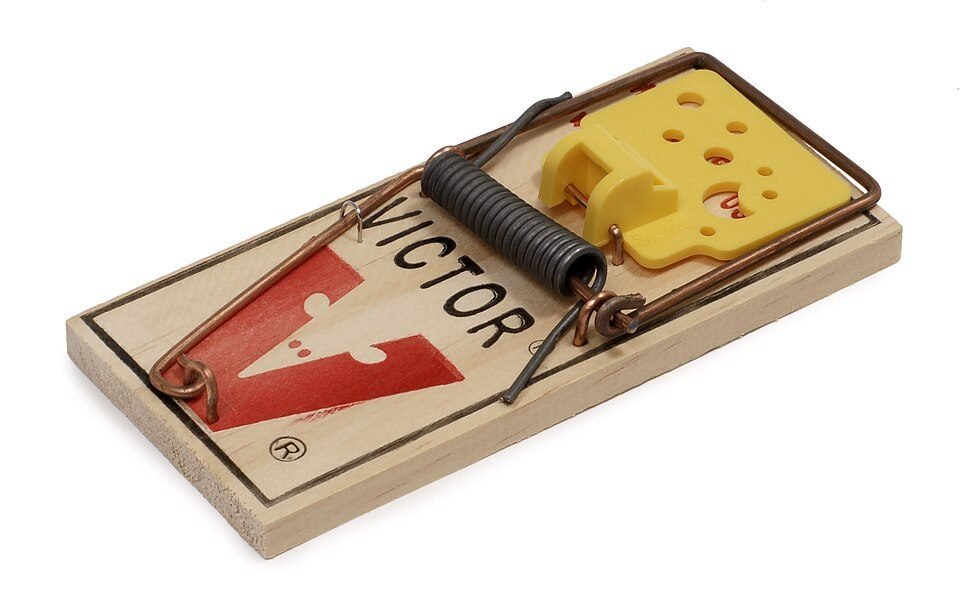
Health Canada says poisoned baits must be used with a tamper-proof bait station in areas accessible to children and pets, and that anticoagulant baits are usually highly toxic and must be kept away from them. For homes with children or pets, traps are the lower-risk starting point: snap, electronic and live traps are recommended, with one trap per metre along walls. Sealing the gaps mice use, which can be as small as a dime, solves the problem at the source. AstraHive seals entry points from the outside and uses interior trapping and tamper-resistant bait stations only where bait is needed.
Dusts, diatomaceous earth and boric acid around pets
Health Canada says diatomaceous earth is non-toxic to humans and pets, but you should be careful not to breathe the dust when applying it, and that boric acid baits are generally of low toxicity to other animals. As a homeowner DIY step, both can be applied lightly in cracks and crevices for cockroaches and ants: boric acid is ingested and attacks the nervous system and stomach, while diatomaceous earth abrades the outer shell and dries the insect out. Keep dust in places children and pets cannot reach, apply a very thin film, keep it dry, and avoid breathing it. It supports professional treatment and does not replace it.
Bed bug treatments need extra care
Health Canada says never to apply pesticides to people, pets, bedding, baby cribs, playpens or toys unless the product label specifically says so, and never to use homemade pesticides. Only products with a Health Canada registration number should be used.
Signs of poisoning and who to call
Health Canada lists trembling, vomiting and gastro-intestinal disturbances as signs of pesticide poisoning in pets, and says to contact a veterinarian and have the name of the product the pet was exposed to. For people, call 911 if immediate medical attention is needed, and contact a health care provider or your provincial Poison Control Centre, using the first aid instructions on the product label.
Phone numbers to keep handy
For people, call 911 if immediate medical attention is needed. Otherwise call the Ontario Poison Centre at 1-800-268-9017 (416-813-5900 in Toronto), 24 hours a day, every day of the year. The Canada-wide number, 1-844-POISON-X (1-844-764-7669), also connects you to your local poison centre from anywhere in the country. Health Canada also says to follow the first aid instructions on the product label. For a pet, contact a veterinarian right away with the product name, how much the pet was exposed to, the symptoms and when it happened, and bring the container or label. Adverse events can be reported to the manufacturer or to Health Canada with its incident report form.

What to ask a pest control company
Before a visit, ask which products will be used and where, how long people and pets must stay out, what should be removed or covered beforehand, and how bait or traps will be placed out of reach of children and pets. A licensed company can answer each question clearly and in writing.
How AstraHive Pest Control gets rid of mice
Mice get in through small gaps, so the lasting fix is at the outer shell of the building. We find the entry points, close them from the outside and deal with the mice already inside.
How an AstraHive mice treatment works
Inspect and find the entry points
We inspect the outside and inside of the building for droppings, gnaw marks, runways and every gap. A single property usually has several entry points, not just the one you noticed.
Seal the exterior entry points
We seal the exterior only: foundation cracks, utility and pipe penetrations, vents, weep holes, rooflines and garage door corners. Gaps are packed with steel wool or copper mesh locked in with sealant or foam, and larger openings get hardware cloth. Foam or caulk alone is not a rodent barrier.
Trap and bait where needed
Mice already inside are removed with traps and with tamper-resistant bait stations, inside and outside where needed, using Health Canada approved products applied according to the product label.
Flag structural damage and report
If we find structural damage that needs repair beyond what we can seal, we flag it in the service report, along with every observation, every entry point found and every product used.
Follow up and back it with a 90-day warranty
We come back to re-inspect, refill the bait stations and make sure everything is holding. If mice return within 90 days, we re-treat at no charge.
Our products are Health Canada approved and safe for kids and pets, and we apply every product according to its label. AstraHive is licensed by the Ontario Ministry of the Environment, Conservation and Parks. Ontario requires a ministry-approved certification course before it issues an exterminator licence, and that training is delivered through the University of Guelph, Ridgetown Campus.
Sealing is what ends repeat visits. Traps and bait only remove the mice that are already inside, and new mice keep coming for as long as an exterior entry point stays open.
Sealing lowers the risk a great deal, but it cannot make a house completely mouse-proof. Mice can chew new ways in through the softer parts of a building, such as the rubber seal on a garage door, weatherstripping, siding, wood trim and the plastic coating on wires, and a house keeps shifting and ageing, so gaps that did not exist on the day of the work can open later. Chewing can also damage the structure itself, including wiring, insulation and framing, and that wear and tear can continue after every entry point we found has been sealed. We record the damage we find so you can arrange repairs, we check at the follow-up visit that the seals are holding, and anything new that opens up afterward is a new entry point rather than a failure of the old work. If you see fresh gnaw marks or droppings, or hear scratching, call us early.
Typical cost: Starting at $300 CAD, with final cost depending on property size and severity of infestation - there is no fixed upper limit. Call 905-925-8427 for an exact free quote.
Why Choose AstraHive
- Licensed & Insured: Certified by the Ontario Ministry of Environment, Conservation and Parks.
- Fast response: Same-day service available, with a callback within 5 minutes.
- 90-Day Warranty: If pests come back within that window, we re-treat at no additional charge.
- Proven track record: 5.0 stars on Google across 200+ reviews.
- Family & pet safe: Health Canada approved products on every job.
Frequently Asked Questions
How long should pets and children stay out after pest control?
Until the treated area is dry, at minimum, according to Health Canada, and longer if the label says so. Granular lawn products may require keeping pets off for 24 hours or longer.
What should I remove before a pest treatment?
Health Canada says to remove pets, cages, pet toys, chew bones, food bowls and bedding from the area, and to cover fish tanks, turning off the pump if a fogger is used.
How can I tell if a pest product is registered in Canada?
Look for the Pest Control Product (PCP) number on the label. Health Canada advises choosing only registered products that name the pest you are trying to control.
What are signs of pesticide poisoning in a pet?
Health Canada lists trembling, vomiting and gastro-intestinal disturbances. Contact a veterinarian and know the name of the product the pet was exposed to.
Can I use bed bug sprays on bedding or a child's crib?
Only if the label specifically allows it. Health Canada says not to apply pesticides to people, pets, bedding, baby cribs, playpens or toys unless the label permits, and not to use homemade pesticides.
Sources
- Public Health Agency of Canada: Hantavirus, spread, prevention and risks — Hantaviruses are spread by rodents, most often through droppings, urine and saliva; infection can follow breathing in particles stirred up during cleaning; the deer mouse is a carrier in Canada; wear gloves and an N95-level respirator in confined spaces, spray droppings and nesting material with a bleach and water mixture and let it soak for 10 minutes; seal holes with wire screening, steel wool, metal flashing or cement.
- Health Canada: Keep your family safe when using pesticides — Choose only products registered by Health Canada, identified by the Pest Control Product (PCP) number on the label, and make sure the label names the pest you want to control; always read, understand and follow all label directions and precautions; store pesticides in the original container out of sight and reach of children; never mix pesticides unless the instructions say to; never use a pesticide indoors that is intended for outdoor use only; keep children out of treated areas while pesticides are being applied and until areas are dry, and read the label to find out when it is safe to enter; ventilate the home before returning after indoor uses; call 911 if immediate medical attention is needed, and contact a health care provider or the provincial Poison Control Centre.
- Health Canada: Keep your pets safe when using pesticides — Before an application remove pets, cages, pet toys, chew bones, food bowls and bedding from the area, and cover fish tanks (turn off the pump if a fogger is used); keep pets out of treated areas while pesticides are being applied and until areas are dry, and read the label for when it is safe to enter; granular lawn products may require keeping pets off for 24 hours or longer; ask a veterinarian about the best flea treatment, which can depend on the animal's type, age and whether it is pregnant, and use the product labelled for your dog or cat; signs of poisoning include trembling, vomiting and gastro-intestinal disturbances, and a veterinarian needs the name of the product the pet was exposed to.
- Health Canada: Bedbugs: how do I get rid of them? — Bedbugs are very hard to get rid of and a licensed professional pest control operator is strongly recommended; operators can use liquid and aerosol insecticide sprays, insecticidal dusts, diatomaceous earth, pressurized carbon dioxide snow, and steam and heat treatments; bedbugs perish at 50 degrees C and steam cleaners emit at least 100 degrees C; freezing needs 4 days of consistent cold at minus 19 degrees C and may not eliminate all bedbugs; a hot dryer needs 30 minutes or more; use only products with a Health Canada PCP registration number, never homemade pesticides, and never apply pesticides to people, pets, bedding, cribs, playpens or toys unless the label allows it; Health Canada warns against ozone generators; treatment is only effective if physical control methods and preventative measures are used together; preparation means emptying storage furniture, bagging belongings, washing all clothes and bedding and moving furniture from walls.
- Health Canada: Rats and mice — Mice can squeeze through cracks as small as a dime and rats through a quarter-sized hole; prevention includes metal weather stripping, patching foundation cracks, steel wool around pipes before caulking, fine mesh over vents and tight-fitting garbage lids; use 1 trap per metre along walls or 5 to 10 traps per visible mouse hole; poisoned baits must be used with a tamper-proof bait station in areas accessible to children and pets and anticoagulants are usually highly toxic, so keep them away from children and pets.
- Ontario Poison Centre: National Poison Prevention Week — The Ontario Poison Centre can be reached at 1-844-POISON-X (1-844-764-7669), 24 hours a day, every day of the year.
- Health Canada: Ants — Chemicals, sprays and dusts can be used as barrier and nest treatments; a bait system must work slowly enough for the poison to be fed to all members of the nest, which is a highly effective way of getting rid of nests; do not use chemical sprays to kill ants while using a bait system or the bait will not work; keep baits available for at least two weeks and repeat if needed; place bait stations directly in the path of foraging ants but out of reach of children and pets; use plenty of bait stations, and two different baits at the same time give better results; repair and seal cracks in the foundation and exterior walls and caulk along baseboards.
- Health Canada: Cockroaches — Cockroaches contaminate food and spread disease by walking over and excreting on food or food preparation areas; people with asthma may react to their droppings and body parts; they are attracted to starches, sugars and protein and to warm, damp kitchens, bathrooms, basements and plumbing areas; prevention steps are to clean up spills immediately, not leave pet food and water out 24 hours a day, keep food in tightly sealed plastic or glass containers, store garbage in sealed plastic containers and dispose of it daily, and regularly clean dark or damp areas near food such as beneath and behind appliances; baits kill the insects about 48 to 96 hours after they eat the active ingredient.
- Ontario.ca: Pesticide licences and permits — Ontario's Ministry of the Environment, Conservation and Parks issues exterminator licences after a ministry-approved certification course, delivered through the University of Guelph, Ridgetown Campus.
- Exposure risks and ineffectiveness of total release foggers for cockroach control in residential settings, BMC Public Health (2019) — A study in five apartment complexes compared total release foggers with gel baits for cockroach control; trap counts in homes treated with foggers did not change significantly while both gel baits reduced counts significantly.
- Ontario Poison Centre — The Ontario Poison Centre lists the toll-free number 1-800-268-9017 and is available by phone 24 hours a day, every day of the year.
- Health Canada: Canada launches new toll-free 1-844 POISON-X number for poison centres (20 March 2023) — 1-844-POISON-X (1-844-764-7669) re-routes callers to their local poison centre from anywhere in the country; the current provincial numbers remain in service.
Areas We Serve
AstraHive Pest Control proudly serves 75+ communities across the following regions:
- Toronto: Toronto, North York, Scarborough, Etobicoke, East York, York, Leslieville, Lakeview
- Durham Region: Oshawa, Whitby, Ajax, Pickering, Clarington, Bowmanville, Courtice, Newcastle, Port Perry, Brooklin, Uxbridge, Scugog, Brock, Seaton
- York Region: Vaughan, Markham, Richmond Hill, Aurora, Newmarket, Thornhill, Woodbridge, Kleinburg, Maple, Stouffville, Unionville, Keswick, Holland Landing, East Gwillimbury, Georgina, King City, King Township, Nobleton, Berczy Village, Cathedraltown, Commerce Valley, Cornell, Wismer, Whitchurch-Stouffville, Sutton, Schomberg
- Peel Region: Mississauga, Brampton, Caledon, Malton, Port Credit, Streetsville, Meadowvale, Cooksville, Bolton, Palgrave
- Extended Service Area: Peterborough, Lindsay, Port Hope, Barrie, Bradford, Innisfil, Collingwood, Wasaga Beach, Orillia, Burlington, Oakville, Milton, Hamilton, Grimsby, St. Catharines, Welland, Niagara Falls
Don't see your city listed? Call us — we likely cover it.
Got a pest problem right now?
Call AstraHive for a free consultation. Licensed & insured, serving the GTA, Durham, York, Peel and Simcoe County.
Call 905-925-84275.0 Stars — 200+ Google Reviews | Licensed & Insured | Health Canada Approved