Wasps build nests inside eavestroughs and gutters because the enclosed channel offers a dry, sheltered cavity with a ready-made entrance, protection from rain and wind, and proximity to roofline gaps that lead into your attic. Signs of an early-stage nest include a handful of wasps repeatedly flying in and out of one gutter section, faint papery rustling sounds along the roofline, and small grey paper flecks in the gutter itself. Catching this in June or July, before the colony grows, is far safer than dealing with it in September.
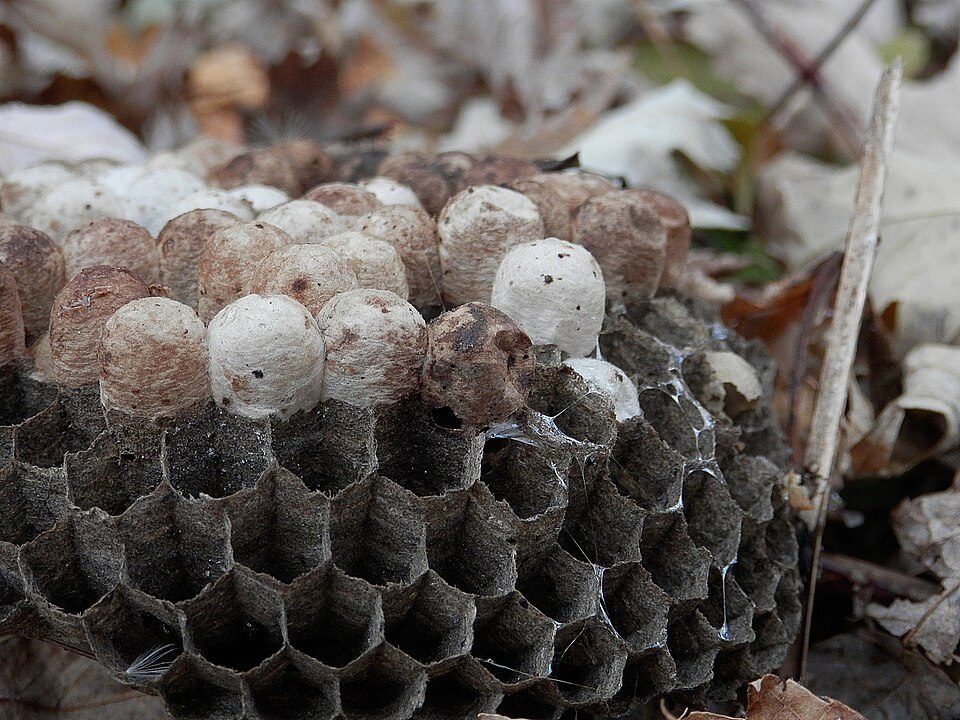

Why Wasps Choose Gutters and Eavestroughs Specifically
Gutters give paper wasps and yellowjackets three things they're hunting for in spring: a rigid overhead surface to anchor a nest, a narrow protected entry point, and shade from direct sun that would otherwise dry out and weaken the paper nest structure.
The downspout junctions and the corners where gutter sections meet are the most common starting points. These spots are structurally stable and already partially enclosed, so the founding queen doesn't have to build much before she has a defensible cavity.
- Corner joints where two gutter runs meet
- Areas directly above downspout openings
- Sections shaded by overhanging tree branches
- Gutters near soffit gaps that connect to attic voids
Early Warning Signs Before It Becomes a Softball-Sized Colony
A nest that starts with one queen in spring can grow to hundreds of workers by late summer. The earlier you catch it, the smaller and less defensive the colony will be when it's removed.
- Consistent flight path: Wasps flying in and out of the exact same gutter spot every few minutes, not just passing through.
- Papery debris: Grey, wood-pulp flecks in the gutter trough or on the ground below - this is nest-building material.
- Faint buzzing or scratching: Audible from inside the gutter, especially in the early morning when the colony is most active near the nest.
- Increased wasp activity near the roofline: More wasps circling that section of roof than anywhere else on the property.
Field tip: If you see wasps entering a gutter section but can't see an exposed nest, assume there's one built inside the channel or just behind the fascia board. Don't remove the gutter guard or reach in to check - that's exactly how stings happen.
Why DIY Removal From a Ladder Is a Bad Idea
We understand the instinct to knock it down with a can of spray and call it done, but gutter-height nest removal is one of the most common ways homeowners end up with multiple stings or a fall injury. A few reasons we tell clients not to attempt it themselves:
- You're standing on a ladder with your hands full. If wasps swarm, your instinct is to swat and step back - both are dangerous at height.
- Aerosol sprays provoke before they kill. Off-the-shelf wasp sprays often take several seconds to knock down a wasp, giving the colony time to mobilize and defend the nest.
- You often can't see the full nest. Nests inside gutters and behind fascia boards are partially hidden, so you may only be treating the visible portion while the rest of the colony remains active.
Given the ladder risk and the chance of an incomplete treatment, that's a small cost against a trip to urgent care.
The Fall Gutter-Cleaning Trap
This is the scenario we get called about most in September and October. A homeowner goes up to clear leaves before winter, sticks a gloved hand into the gutter, and disturbs a nest they didn't know was there. By fall, that colony has had all summer to grow, so a disturbance at this stage often means a defensive swarm response rather than a few curious wasps.
Unlike spring and early summer, wasps in fall are also more aggressive generally - natural food sources are declining and the colony is under stress, which lowers their tolerance for disturbance.
- Inspect gutters visually from the ground with binoculars before climbing up, especially near downspouts and corner joints
- Watch for 2-3 minutes at dusk, when returning foragers are easiest to spot entering one specific area
- If you see any activity at all, don't proceed with cleaning - call for an inspection first
- Never assume a nest is inactive just because you don't see wasps in daylight hours
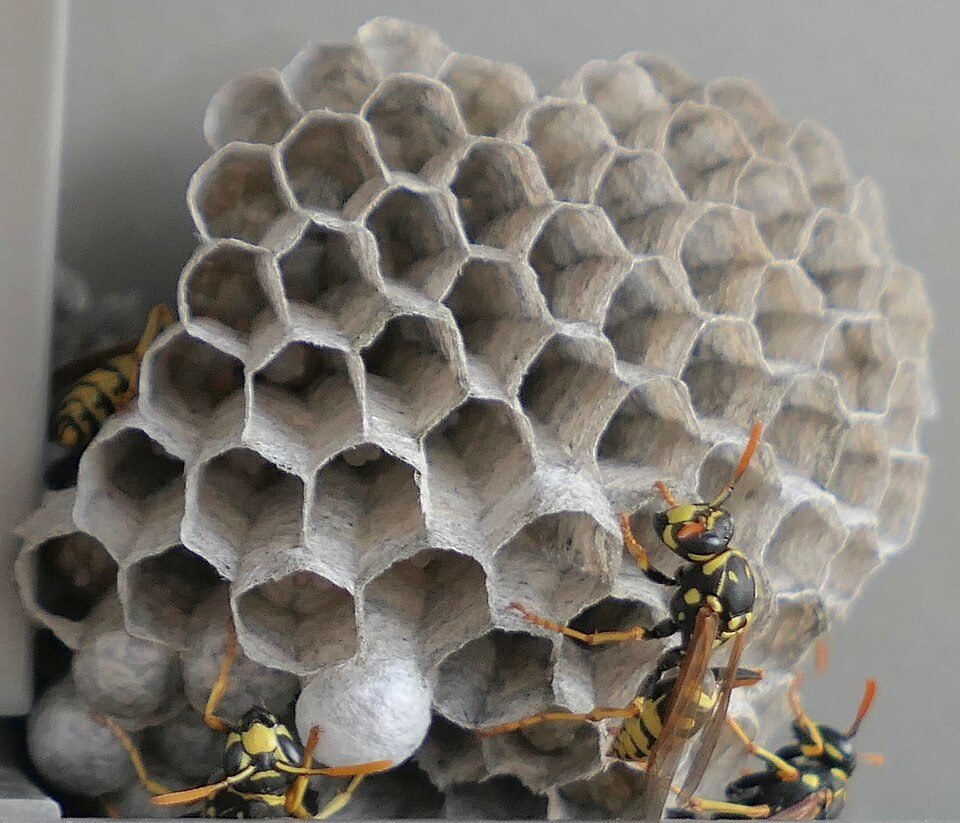

How AstraHive Pest Control gets rid of wasps and hornets
The nest is usually not where the wasps are going in and out. It can be deep in a wall, ceiling or the ground, so the treatment has to reach the nest itself.
How an AstraHive wasps and hornets treatment works
Remove the nest if it is accessible
If the nest is visible and reachable, we remove it completely, so there is no structure for the colony to rebuild around.
Dust into the wall void
If the nest is inside a wall, ceiling void or other structure, we use a professional pump to push pesticide dust through the entry point. The dust travels through the void: workers carry it back to the queen, and wasps that touch it die. It works as both a bait and a contact kill.
Knockdown treatment if there is immediate risk
If someone in the home has a severe allergy or the colony is highly aggressive, we use a knockdown ULV treatment to bring the active population down at once.
Document, and back it with a 30-day warranty
Every product used and every zone treated goes in the service report. If wasps return to the treated spot within 30 days, we re-treat at no charge.
Our products are Health Canada approved and safe for kids and pets, and we apply every product according to its label. AstraHive is licensed by the Ontario Ministry of the Environment, Conservation and Parks. Ontario requires a ministry-approved certification course before it issues an exterminator licence, and that training is delivered through the University of Guelph, Ridgetown Campus.
Spraying the entry point kills a few workers, leaves the queen untouched and can leave the survivors more aggressive. Large nests, nests inside walls or attics, and households with someone allergic to stings are best left to a professional.
Frequently Asked Questions
How do I know if there's a wasp nest inside my gutter without touching it?
Watch the gutter from the ground for a few minutes, ideally at dusk when foraging wasps return for the night. If you see wasps consistently entering and exiting the same section of gutter, or notice grey papery debris in the trough, treat that as strong evidence of an active nest inside. Never reach into or tap on a gutter section to test for activity.
Is it safe to clean gutters in the fall if I suspect wasps are inside?
No, you should not clean a gutter section where you suspect wasp activity, since fall colonies are at their largest and most defensive after a full summer of growth. Disturbing a hidden nest while clearing leaves is one of the most common ways homeowners get multiple stings. Have the section inspected and treated first, then clean the gutters once it's confirmed clear.
Why shouldn't I just spray the nest myself from a ladder?
Standing on a ladder while spraying an aerosol at a defensive colony is risky because most consumer sprays take several seconds to work, giving wasps time to swarm before you can safely descend. Gutter nests are also often partially hidden behind fascia boards, so a DIY spray may only hit the visible portion and leave the rest of the colony active. Professional treatment uses Health Canada approved products applied at the full nest location, not just what's visible.
How much does professional wasp nest removal cost in Ontario?
Gutter and eavestrough nests are usually within this range since they don't require attic entry in most cases.
Can a small wasp nest in a gutter turn into a big problem quickly?
Yes, a single founding queen in spring can grow a colony to hundreds of workers by late summer if left undisturbed. The nest itself also expands throughout the season, so a nest that's the size of a golf ball in June can be much larger and far more defensive by early fall. Catching early signs like consistent flight paths or papery debris lets you deal with a smaller, less risky colony.
Typical cost: Starting at $150 CAD, with final cost depending on property size and severity of infestation - there is no fixed upper limit. Call 905-925-8427 for an exact free quote.
Why Choose AstraHive
- Licensed & Insured: Certified by the Ontario Ministry of Environment, Conservation and Parks.
- Fast response: Same-day service available, with a callback within 5 minutes.
- 30-Day Warranty: If pests come back within that window, we re-treat at no additional charge.
- Proven track record: 5.0 stars on Google across 200+ reviews.
- Family & pet safe: Health Canada approved products on every job.
Frequently Asked Questions
Why do wasps build nests in gutters and eavestroughs?
An eavestrough offers a dry, sheltered cavity with a ready-made entrance, protection from rain and wind, and a rigid overhead surface to anchor a nest, often close to gaps that lead to the attic.
How can I tell if wasps are nesting in my gutter?
Look for a few wasps flying in and out of the same gutter section, faint papery rustling along the roofline and small gray paper flecks in the gutter or on the ground below.
Is it safe to remove a gutter wasp nest myself?
It is risky. Working from a ladder with wasps swarming invites stings and falls, sprays can take seconds to work, and part of a nest inside a gutter or behind a fascia board is hidden. Health Canada recommends professional help for active nests.
What is the best time to deal with a gutter nest?
As early as possible, in late spring or early summer, when the colony is small and less defensive. A nest disturbed in late summer or fall, for example during gutter cleaning, can produce a defensive swarm.
Sources
- Health Canada: Wasps (Pest control tips) — Yellow jackets and hornets are 10 to 25 mm with black and yellow or white bands; nests are made of paper and some are hidden; wasps can sting more than once; seek care for unusual swelling, dizziness or shortness of breath after a sting; most active in late summer; spraying a nest after nightfall is recommended because wasps are less active; professional help is recommended for active nests.
- Ontario.ca: Pesticide licences and permits — Ontario's Ministry of the Environment, Conservation and Parks issues exterminator licences after a ministry-approved certification course, delivered through the University of Guelph, Ridgetown Campus.
Areas We Serve
AstraHive Pest Control proudly serves 75+ communities across the following regions:
- Toronto: Toronto, North York, Scarborough, Etobicoke, East York, York, Leslieville, Lakeview
- Durham Region: Oshawa, Whitby, Ajax, Pickering, Clarington, Bowmanville, Courtice, Newcastle, Port Perry, Brooklin, Uxbridge, Scugog, Brock, Seaton
- York Region: Vaughan, Markham, Richmond Hill, Aurora, Newmarket, Thornhill, Woodbridge, Kleinburg, Maple, Stouffville, Unionville, Keswick, Holland Landing, East Gwillimbury, Georgina, King City, King Township, Nobleton, Berczy Village, Cathedraltown, Commerce Valley, Cornell, Wismer, Whitchurch-Stouffville, Sutton, Schomberg
- Peel Region: Mississauga, Brampton, Caledon, Malton, Port Credit, Streetsville, Meadowvale, Cooksville, Bolton, Palgrave
- Extended Service Area: Peterborough, Lindsay, Port Hope, Barrie, Bradford, Innisfil, Collingwood, Wasaga Beach, Orillia, Burlington, Oakville, Milton, Hamilton, Grimsby, St. Catharines, Welland, Niagara Falls
Don't see your city listed? Call us — we likely cover it.
Got a pest problem right now?
Call AstraHive for a free consultation. Licensed & insured, serving the GTA, Durham, York, Peel and Simcoe County.
Call 905-925-84275.0 Stars — 200+ Google Reviews | Licensed & Insured | Health Canada Approved