Bed bug bites are typically itchy red bumps on exposed skin such as the face, neck and arms, often in a line or cluster, but they look like many other skin problems. A rash cannot confirm bed bugs on its own: the only sure test is finding the insect or its signs. This is general information, not medical advice. See a health care provider about any rash.
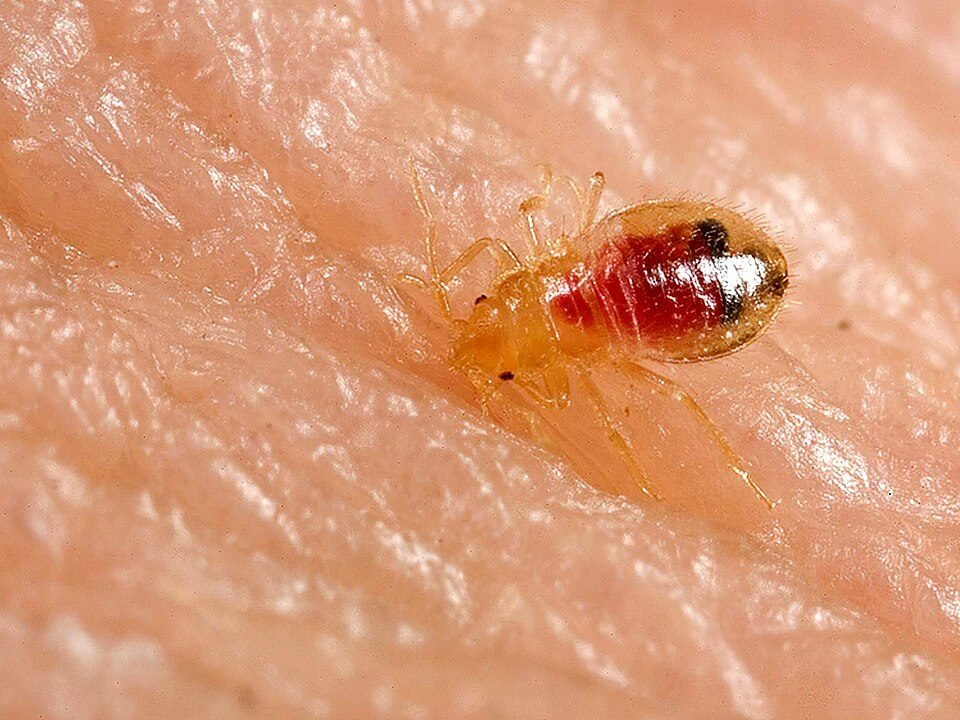

What bed bug bites look like
The City of Toronto's guidance for health professionals describes bed bug bites as typically erythematous (red) or urticarial (hive-like) papules, with less common reactions such as blisters. The classic pattern is a line of three, known as the "breakfast, lunch and dinner" sign. Bite reactions occur on exposed skin such as the face, neck and extremities, most often the arms and shoulders. Health Canada says bites are often found on the face, neck, arms, legs and chest.
Why the bites can be hard to read
Two facts make bites unreliable as evidence. First, Health Canada says a bite can take as long as 14 days to appear, so the bite you see today may not have happened where you think. Second, some people do not react at all while others have small skin reactions, and in rare cases a severe allergic reaction. Two people in the same bed can have different signs.
Ottawa Public Health notes that bed bugs are not known to spread disease and their bites generally do not require medical attention, but a severe reaction, or anxiety and insomnia from the infestation, is worth discussing with a health care professional.
Bed bug bites compared with other causes
| Possible cause | Where it tends to show up | Note | |
|---|---|---|---|
| Bed bug bites | Exposed skin: face, neck, arms and shoulders, often in a line of three | Can be delayed by up to 14 days; some people do not react | |
| Scabies | Covered skin such as the armpits and around the navel | Rarely affects the face | |
| Flea bites | Extremities, usually of pet owners | Rarely affect the face | |
| Other insect bites | Varies | Listed with scabies and drug eruptions as conditions that can look like bed bug bites | |
| Drug eruptions and other skin conditions | Varies | A health care provider can assess these |
The guidance lists the conditions a clinician considers alongside bed bug bites: dermatitis herpetiformis, drug eruptions, ecthyma, other insect bites, pemphigus herpetiformis and scabies. Only a health care provider can tell you what a rash is. Only finding the insect tells you whether bed bugs are involved.
How to confirm bed bugs
The City of Toronto says that definitive diagnosis depends on identification of the bed bug, which can be done through a pest control company. Ottawa Public Health lists what to look for:
- a sweet, musty odour;
- reddish or rust-coloured stains on bed sheets, sleepwear or nearby objects, which are what bed bugs excrete after feeding;
- shed exoskeletons;
- live bed bugs in the folds of bedsheets, mattresses and box springs.
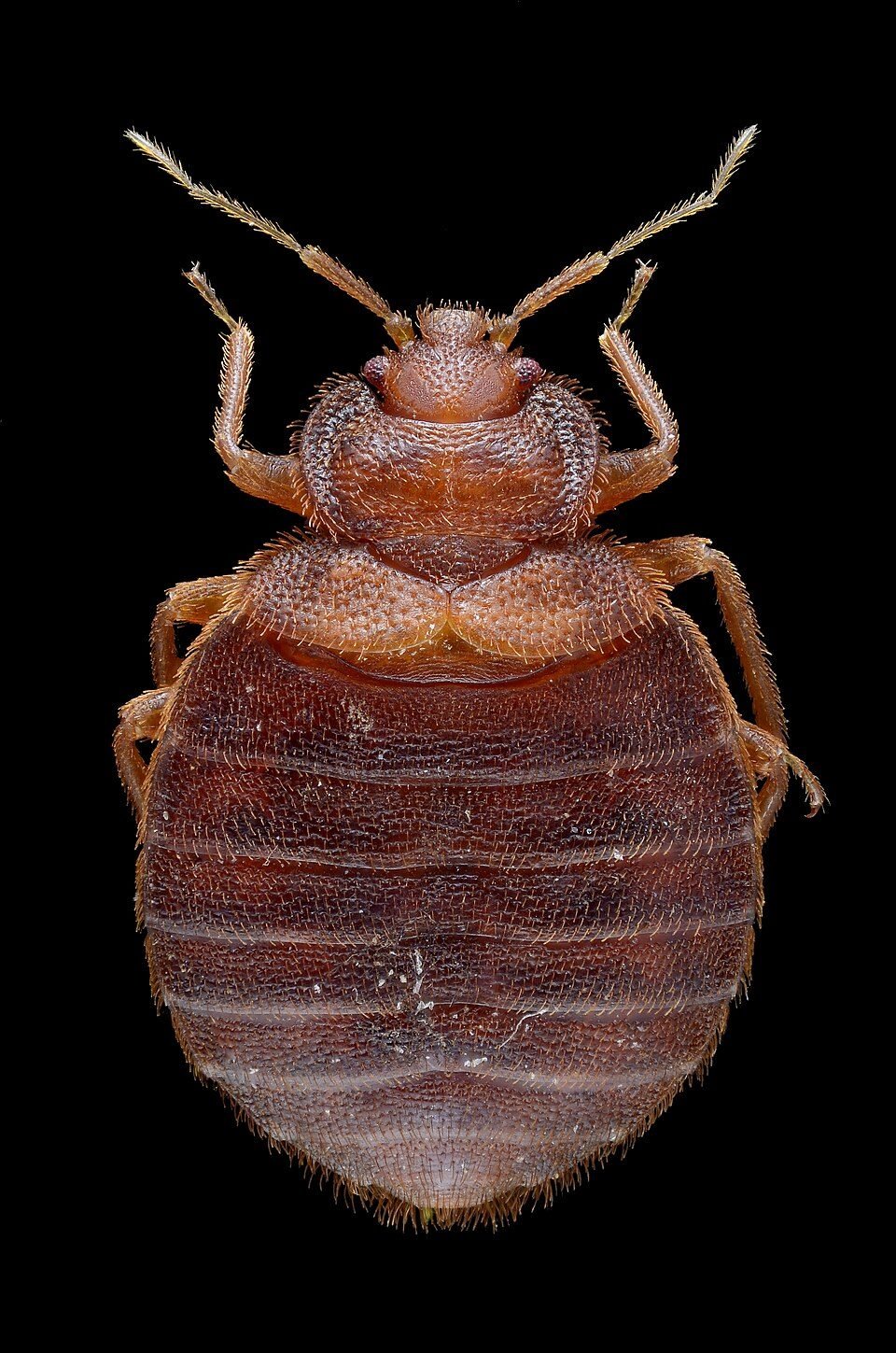
Use a flashlight along mattress seams, box spring edges, the bed frame and headboard, and behind night tables and picture frames. Adult bed bugs are up to 10 mm, oval and flat, reddish brown and blood red after feeding, according to Health Canada.
What to do about the bites themselves
The City of Toronto says bed bug bites do not usually require any medical treatment, and that corticosteroid creams and oral antihistamines may be advised in more severe cases. Talk to your health care provider or pharmacist about what is right for you, particularly if there is swelling, a spreading rash, signs of infection or trouble breathing.

If you find bed bugs
Do not try to treat the room with homemade pesticides, which Health Canada warns against. Follow the preparation steps in our guide to getting rid of bed bugs in a Toronto condo, and read why bed bugs keep showing up in basement apartments if you live in a building with shared walls.
How many people never react to a bed bug bite?
Not everyone reacts, which is one reason a rash alone proves so little. When results from several clinical studies were combined, about 75% of patients developed a reaction, which leaves roughly one in four who never show a visible mark. A survey of emergency department patients in Cleveland found about a third had never had an itchy rash after being fed on by bed bugs. In a small volunteer study, more than half had no reaction to their first bites, but almost all reacted after repeated exposure. Because a reaction can also take up to 14 days to appear, Health Canada's advice stands: look for the insect or its signs, not only the skin.
How AstraHive Pest Control gets rid of bed bugs
Bed bugs hide in seams, joints, box spring frames, plumbing voids, wall voids and behind electrical outlets, so every treatment starts with a careful inspection. We offer two treatments and choose between them by situation: Aprehend is our first choice for homes where people live and sleep and for severe infestations, and the standard chemical treatment is the right choice for Airbnbs, hotel rooms and vacant units.
How an AstraHive bed bugs treatment works
Inspect and confirm
We inspect the bed, furniture seams, baseboards, outlets and surrounding areas, confirm the insect and tell you which treatment fits, with the preparation list for that treatment.
Aprehend: for homes where people live and sleep
Aprehend is our premium bed bug treatment, a biopesticide built on a naturally occurring fungus. We apply it with a dedicated machine as a continuous band along baseboards, bed frames, box springs and the pathways bed bugs travel, and we put Drione dust into wall voids and outlets. Bed bugs pick up the spores as they cross the barrier and carry them back to the colony, where the fungus reaches the bugs a spray cannot, including pyrethroid-resistant bed bugs. It takes real knowledge to apply well, so only our experienced, trained technicians do it. Preparation is light: strip the beds, move them a little away from the walls and clear under the bed.
Standard chemical treatment: for empty units
For Airbnbs, hotel rooms and vacant units we take the bed apart, steam every seam and joint, vacuum with a HEPA vacuum, apply a residual spray (Temprid SC, which combines two active ingredients) according to its label, which stays active for about 90 days, and put Drione dust into wall voids and outlets. Nobody, pets included, stays inside during the treatment or for at least 6 hours afterwards, and the preparation is thorough, so it suits spaces nobody is living in. Mattress encasements are available as an optional extra.
Follow up 4 to 6 weeks later
We return 4 to 6 weeks after treatment to check the results and re-treat where needed. It is normal to still see live bed bugs for up to about 6 weeks, because bed bugs spread slowly, hide well and eggs laid before treatment keep hatching. If you still see live bed bugs after 6 weeks, call us.
Document everything and back it with a 90-day warranty
Where we found bed bugs, what we found and every product used goes in the service report. If bed bugs come back within 90 days, we re-treat at no charge.
Our products are Health Canada approved and safe for kids and pets, and we apply every product according to its label. AstraHive is licensed by the Ontario Ministry of the Environment, Conservation and Parks. Ontario requires a ministry-approved certification course before it issues an exterminator licence, and that training is delivered through the University of Guelph, Ridgetown Campus.
We choose one treatment per home, so you only prepare once. The two are not steps in one job: the standard residual spray is water-based, and water or steam deactivates Aprehend, so surfaces treated with Aprehend should not be wiped, mopped or steamed afterwards. In our experience live bed bugs drop in stages after Aprehend, roughly 50 to 55 percent fewer by week 3, 80 to 85 percent fewer by week 4 and 90 to 95 percent fewer by weeks 5 to 6. These figures are our own experience, not from the product label, and results vary.
In condos and apartments, neighbouring units and the building manager should be told early, because bed bugs travel through shared walls, ducts and plumbing chases.
Typical cost: Starting at $450 CAD, with final cost depending on property size and severity of infestation - there is no fixed upper limit. Call 905-925-8427 for an exact free quote.
Why Choose AstraHive
- Licensed & Insured: Certified by the Ontario Ministry of Environment, Conservation and Parks.
- Fast response: Same-day service available, with a callback within 5 minutes.
- 90-Day Warranty: If pests come back within that window, we re-treat at no additional charge.
- Proven track record: 5.0 stars on Google across 200+ reviews.
- Family & pet safe: Health Canada approved products on every job.
Frequently Asked Questions
What do bed bug bites look like?
They are typically red or hive-like bumps on exposed skin such as the face, neck and arms, often in a line of three or a cluster, according to the City of Toronto's health guidance. Reactions vary from person to person.
How can I tell bed bug bites from a rash?
You cannot reliably tell from the skin alone. Scabies tends to affect covered skin such as the armpits, and flea bites usually affect the extremities, but only finding a bed bug or its signs confirms bed bugs. See a health care provider for any rash.
Can bed bug bites take days to show up?
Yes. Health Canada says a bite can take as long as 14 days to appear, depending on the person.
Do bed bug bites always itch?
Not always. Health Canada says some people do not react at all, others have small skin reactions, and in rare cases some have severe allergic reactions.
When should I see a doctor about bites?
See a health care provider if you have severe swelling, a spreading rash, signs of infection, breathing trouble, or anxiety and insomnia from the infestation. Bites do not usually need medical treatment, but creams or antihistamines may be advised in more severe cases.
Sources
- Health Canada: Bedbugs, what are they? — Adult bedbugs are up to 10 mm, oval, flat, brown and blood red after feeding; a bite can take up to 14 days to appear; some people do not react at all; bites are often on the face, neck, arms, legs and chest; bedbugs hide under wallpaper, behind picture frames, in electrical outlets, inside box springs and in night tables; not known to spread disease.
- City of Toronto: Bed Bug Information for Health Professionals — Bites are typically erythematous or urticarial papules; the classic pattern is a linear group of three; reactions occur on exposed skin such as the face, neck and arms; the differential includes scabies, other insect bites and drug eruptions; definitive diagnosis depends on identification of the bed bug; bites do not usually need treatment, and corticosteroid creams or oral antihistamines may be advised in more severe cases.
- Ottawa Public Health: Bed Bugs — Signs are a sweet musty odor, rust-coloured stains, shed exoskeletons and live bugs in mattress and box spring folds; bed bugs can live a long time without feeding, cannot fly or jump, and are often introduced on used furniture, used clothing and luggage; hiring a licensed professional is strongly recommended; dry bedding on hot for at least 30 minutes; make the bed an island.
- City of Toronto: Bed Bugs — Anyone can have bed bugs regardless of income or housing; they can be found in apartments, condos and private homes; homeowners, tenants and landlords each have a role in treatment; treatment is effective only if physical control methods and preventative measures are used together.
- Ontario.ca: Pesticide licences and permits — Ontario's Ministry of the Environment, Conservation and Parks issues exterminator licences after a ministry-approved certification course, delivered through the University of Guelph, Ridgetown Campus.
- Doggett et al., Clinical Microbiology Reviews (2012): Bed bugs, clinical relevance and control options — Volunteer study: 13 of 24 (54.2%) had no reaction to first bites and 18 of 19 (94.7%) reacted after repeated exposures; pooled studies 249 of 331 (75%) reacted; some people never react even with repeated exposure.
- Sheele et al., Cureus (2019): Bed bug exposure and reactions among emergency department patients, Cleveland — Of 253 emergency department patients who had been fed on by bed bugs, 68% reported an itchy rash and about a third (32%) did not.
Areas We Serve
AstraHive Pest Control proudly serves 75+ communities across the following regions:
- Toronto: Toronto, North York, Scarborough, Etobicoke, East York, York, Leslieville, Lakeview
- Durham Region: Oshawa, Whitby, Ajax, Pickering, Clarington, Bowmanville, Courtice, Newcastle, Port Perry, Brooklin, Uxbridge, Scugog, Brock, Seaton
- York Region: Vaughan, Markham, Richmond Hill, Aurora, Newmarket, Thornhill, Woodbridge, Kleinburg, Maple, Stouffville, Unionville, Keswick, Holland Landing, East Gwillimbury, Georgina, King City, King Township, Nobleton, Berczy Village, Cathedraltown, Commerce Valley, Cornell, Wismer, Whitchurch-Stouffville, Sutton, Schomberg
- Peel Region: Mississauga, Brampton, Caledon, Malton, Port Credit, Streetsville, Meadowvale, Cooksville, Bolton, Palgrave
- Extended Service Area: Peterborough, Lindsay, Port Hope, Barrie, Bradford, Innisfil, Collingwood, Wasaga Beach, Orillia, Burlington, Oakville, Milton, Hamilton, Grimsby, St. Catharines, Welland, Niagara Falls
Don't see your city listed? Call us — we likely cover it.
Got a pest problem right now?
Call AstraHive for a free consultation. Licensed & insured, serving the GTA, Durham, York, Peel and Simcoe County.
Call 905-925-84275.0 Stars — 200+ Google Reviews | Licensed & Insured | Health Canada Approved