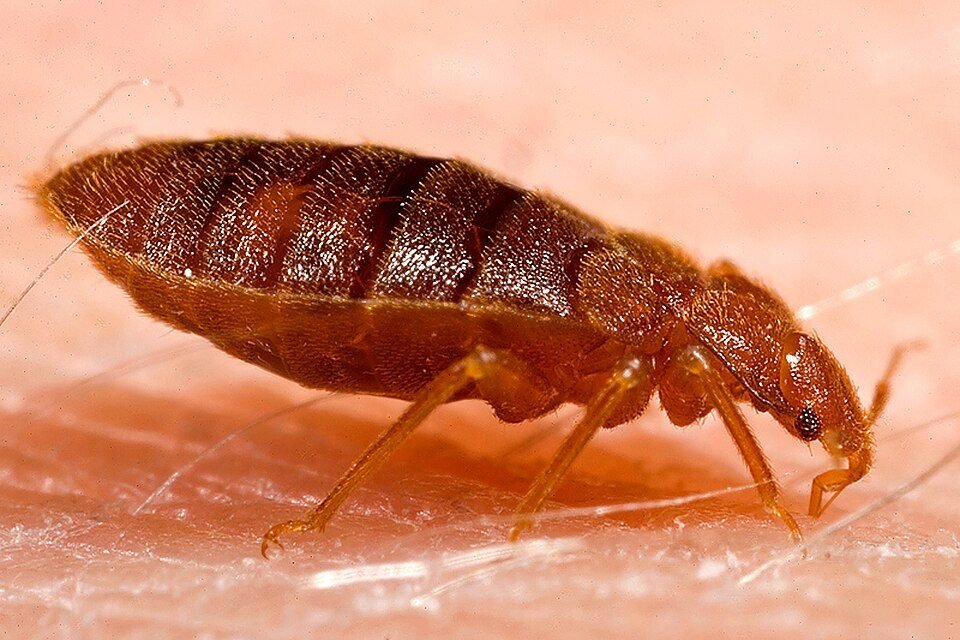
Bed bug heat treatment works when every place bed bugs hide reaches a lethal temperature for long enough. Research shows adults die at 48.3 degrees C and eggs need 54.8 degrees C, and eggs tolerate heat much longer than adults. Where the heat does not reach, bed bugs survive, so results depend on how evenly a room is heated.

What bed bug heat treatment is
Health Canada lists steam and heat treatments among the tools professional pest control operators use, next to sprays, dusts, diatomaceous earth and carbon dioxide snow. Whole-room heat treatments raise the air temperature of a room until the items in it reach a lethal temperature. Steam is a spot-heat tool applied to the surfaces and seams it touches.
How hot and how long it takes
| Adults | Eggs | |
|---|---|---|
| Temperature for 99 percent mortality | 48.3 degrees C | 54.8 degrees C |
| Time at a constant 45 degrees C | 94.8 minutes | 428.5 minutes (over 7 hours) |
Sources: Kells and colleagues, Insects (2011). The University of California IPM program gives a practical target of at least 140 degrees F (60 degrees C) for two hours or 130 degrees F (54 degrees C) for three hours, with 113 degrees F (45 degrees C) as the minimum lethal temperature.
Why eggs and cold spots matter
Eggs are the stage that sets the heat requirement. At 45 degrees C an egg needed more than four times as long as an adult to reach 99 percent mortality in the study, and at 48 degrees C eggs still needed 71.5 minutes. Commercial treatments target 45 to 52 degrees C, but the researchers note there may be places in the heated area above and below that range, and that the final temperature bed bugs experience depends on the insulation and thermal mass of the materials around them.
In practice, a bed bug inside a thick mattress, a wall void or a stack of books heats more slowly than the room air, which may reach 55 to 65 degrees C for efficient heat transfer. That gap is why heat treatments rely on circulation and temperature monitoring, and why untreated pockets can leave survivors.
Steam: spot heat for specific items
Health Canada reports that bedbugs perish at 50 degrees C and that steam cleaners emit at least 100 degrees C. Health Canada says to apply steam slowly to maximize penetration. The US EPA says steam must be at least 130 degrees F (54 degrees C). Steam acts on the surfaces and seams it touches.
For washable items, Health Canada and Ottawa Public Health recommend a hot dryer for at least 30 minutes.
Heat, steam, the dryer and the freezer compared
| Tool | What it does and its limit | |
|---|---|---|
| Whole-room heat | At least 140 degrees F (60 degrees C) for two hours or 130 degrees F (54 degrees C) for three hours, minimum lethal 113 degrees F (University of California IPM); limit: cold spots and insulated items. | |
| Steam | Health Canada: bedbugs perish at 50 degrees C and steam cleaners emit at least 100 degrees C. University of California IPM: kills all life stages if it penetrates the hiding places. Limit: only the surfaces and seams it reaches. | |
| Hot dryer or hot wash | Health Canada and Ottawa Public Health: at least 30 minutes on hot; University of California IPM: wash in 120 degrees F water and dry at the hottest setting for at least 10 to 15 minutes. Limit: only washable items, and heat can damage some fabrics. | |
| Freezer | Minus 17.8 degrees C for at least 3.5 days for bagged items (2013 study). Limit: needs sustained cold; Health Canada notes it may not eliminate all bedbugs. |
Sources as shown (see the sources below).
Why heat alone is not a plan
The University of California IPM program says insecticide applications alone will not control an infestation, and the same logic applies to heat: it must be combined with removal and cleaning of infested items, non-chemical tactics such as steam or heat, and an ongoing detection program that confirms the result. Whole-room heat leaves nothing behind once the room cools, so a bed bug that survived in a cold pocket, or that arrives later, meets no residual treatment. That is the reason a layered approach, with steam, vacuuming, a residual spray and dust in the voids, is described elsewhere in this guide as professional practice.
Questions to ask a heat treatment provider
Because the temperature a bed bug actually experiences depends on the insulation and thermal mass around it, ask how the provider measures temperature in the thickest, coldest places, such as inside mattresses, behind furniture and along exterior walls; how long those places are held at the target; what is done about heat-sensitive items, since the University of California IPM program says to consider whether heat will damage fabric; whether there is a follow-up inspection; and what the warranty covers and whether it is in writing.

Heat does not replace follow-up
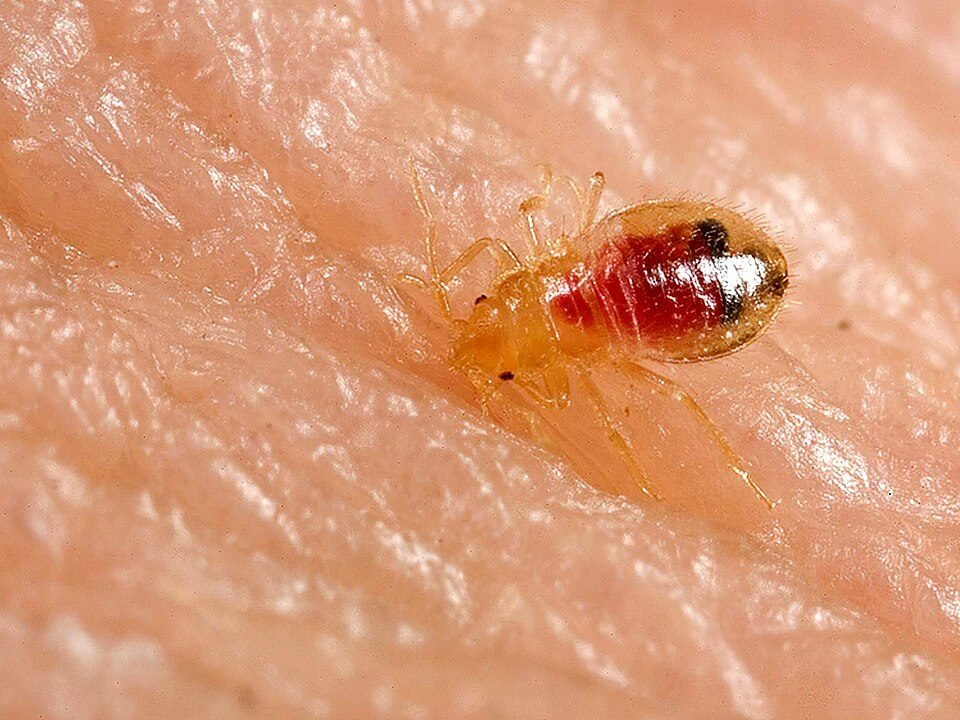
Even a successful heat treatment does not remove the need to monitor. Health Canada says treatment is only effective when physical control methods and preventative measures are used together, advises monitoring carefully and often for surviving bedbugs, and suggests keeping a zippered mattress encasement for a full year.
How AstraHive Pest Control gets rid of bed bugs
Bed bugs hide in seams, joints, box spring frames, plumbing voids, wall voids and behind electrical outlets, so every treatment starts with a careful inspection. We offer two treatments and choose between them by situation: Aprehend is our first choice for homes where people live and sleep and for severe infestations, and the standard chemical treatment is the right choice for Airbnbs, hotel rooms and vacant units.
How an AstraHive bed bugs treatment works
Inspect and confirm
We inspect the bed, furniture seams, baseboards, outlets and surrounding areas, confirm the insect and tell you which treatment fits, with the preparation list for that treatment.
Aprehend: for homes where people live and sleep
Aprehend is our premium bed bug treatment, a biopesticide built on a naturally occurring fungus. We apply it with a dedicated machine as a continuous band along baseboards, bed frames, box springs and the pathways bed bugs travel, and we put Drione dust into wall voids and outlets. Bed bugs pick up the spores as they cross the barrier and carry them back to the colony, where the fungus reaches the bugs a spray cannot, including pyrethroid-resistant bed bugs. It takes real knowledge to apply well, so only our experienced, trained technicians do it. Preparation is light: strip the beds, move them a little away from the walls and clear under the bed.
Standard chemical treatment: for empty units
For Airbnbs, hotel rooms and vacant units we take the bed apart, steam every seam and joint, vacuum with a HEPA vacuum, apply a residual spray (Temprid SC, which combines two active ingredients) according to its label, which stays active for about 90 days, and put Drione dust into wall voids and outlets. Nobody, pets included, stays inside during the treatment or for at least 6 hours afterwards, and the preparation is thorough, so it suits spaces nobody is living in. Mattress encasements are available as an optional extra.
Follow up 4 to 6 weeks later
We return 4 to 6 weeks after treatment to check the results and re-treat where needed. It is normal to still see live bed bugs for up to about 6 weeks, because bed bugs spread slowly, hide well and eggs laid before treatment keep hatching. If you still see live bed bugs after 6 weeks, call us.
Document everything and back it with a 90-day warranty
Where we found bed bugs, what we found and every product used goes in the service report. If bed bugs come back within 90 days, we re-treat at no charge.
Our products are Health Canada approved and safe for kids and pets, and we apply every product according to its label. AstraHive is licensed by the Ontario Ministry of the Environment, Conservation and Parks. Ontario requires a ministry-approved certification course before it issues an exterminator licence, and that training is delivered through the University of Guelph, Ridgetown Campus.
We choose one treatment per home, so you only prepare once. The two are not steps in one job: the standard residual spray is water-based, and water or steam deactivates Aprehend, so surfaces treated with Aprehend should not be wiped, mopped or steamed afterwards. In our experience live bed bugs drop in stages after Aprehend, roughly 50 to 55 percent fewer by week 3, 80 to 85 percent fewer by week 4 and 90 to 95 percent fewer by weeks 5 to 6. These figures are our own experience, not from the product label, and results vary.
In condos and apartments, neighbouring units and the building manager should be told early, because bed bugs travel through shared walls, ducts and plumbing chases.
Typical cost: Starting at $450 CAD, with final cost depending on property size and severity of infestation - there is no fixed upper limit. Call 905-925-8427 for an exact free quote.
Why Choose AstraHive
- Licensed & Insured: Certified by the Ontario Ministry of Environment, Conservation and Parks.
- Fast response: Same-day service available, with a callback within 5 minutes.
- 90-Day Warranty: If pests come back within that window, we re-treat at no additional charge.
- Proven track record: 5.0 stars on Google across 200+ reviews.
- Family & pet safe: Health Canada approved products on every job.
Frequently Asked Questions
How hot does it need to be to kill bed bugs?
Adults reached 99 percent mortality at 48.3 degrees C and eggs at 54.8 degrees C in a heat treatment study. The University of California IPM program gives at least 140 degrees F (60 degrees C) for two hours or 130 degrees F (54 degrees C) for three hours as a practical target.
Does heat kill bed bug eggs?
Yes, but eggs are the hardest stage. At a constant 45 degrees C they needed 428.5 minutes for 99 percent mortality, compared with 94.8 minutes for adults.
Can I heat treat my home with a dryer or steamer?
A hot dryer for at least 30 minutes works for washable items, according to Health Canada. A steam cleaner acts on the surfaces and seams it touches, so it supports a treatment rather than replacing one.
Why does a heat treatment sometimes fail?
Because some places never reach the lethal temperature. The final temperature a bed bug experiences depends on insulation and thermal mass, and there may be places in a heated room below the target range.
Is heat better than chemical treatment?
The sources here do not rank them. Health Canada lists sprays, dusts, diatomaceous earth, carbon dioxide snow, and steam and heat as professional tools, and York Region describes combining techniques as integrated pest management.
Sources
- Health Canada: Bedbugs, what are they? — Adult bedbugs up to 10 mm, oval, flat, brown and blood red after feeding; feed on blood while people sleep; a bite can take up to 14 days to appear; bites often on the face, neck, arms, legs and chest; not known to spread disease; eggs are white, about 1 mm, in cracks and crevices.
- Health Canada: Bedbugs: how do I get rid of them? — Bedbugs are very hard to get rid of and a licensed professional pest control operator is strongly recommended; operators can use liquid and aerosol insecticide sprays, insecticidal dusts, diatomaceous earth, pressurized carbon dioxide snow, and steam and heat treatments; bedbugs perish at 50 degrees C and steam cleaners emit at least 100 degrees C; freezing needs 4 days of consistent cold at minus 19 degrees C and may not eliminate all bedbugs; a hot dryer needs 30 minutes or more; use only products with a Health Canada PCP registration number, never homemade pesticides, and never apply pesticides to people, pets, bedding, cribs, playpens or toys unless the label allows it; Health Canada warns against ozone generators; treatment is only effective if physical control methods and preventative measures are used together; preparation means emptying storage furniture, bagging belongings, washing all clothes and bedding and moving furniture from walls.
- Health Canada: Bedbugs: how do I make sure they don't come back? — After treatment, keep using the same bedroom, monitor carefully and often for surviving bedbugs, and vacuum daily, throwing out the vacuum bag right away for the first few weeks; keep the mattress enclosed in a zippered encasement for a full year; as long as the encasement stays intact bedbugs cannot get through it to bite and will eventually die; use white or light-coloured sheets and commercially available bed leg interceptors to spot bedbugs.
- Ottawa Public Health: Bed Bugs — Licensed operators can identify and control bed bugs and usually give specific instructions to prepare for an inspection or treatment; control may involve more than one pest control treatment; place bedding and pillows in the dryer on a hot setting for at least 30 minutes; place the mattress and box spring in a zippered mattress cover.
- York Region: Bed Bugs — Integrated pest management is a combination of different techniques and products with the least risk to human health and the environment; use an insecticide specific to bed bugs and the least toxic product available, following all label instructions; consider pillow and mattress bed bug covers; wash sheets in hot water and dry them in a hot dryer for 30 minutes.
- Ontario.ca: Pesticide licences and permits — Ontario's Ministry of the Environment, Conservation and Parks issues exterminator licences after a ministry-approved certification course, delivered through the University of Guelph, Ridgetown Campus.
- UC IPM: Bed Bugs (University of California Statewide IPM Program) — Females lay 200 to 500 eggs, usually two to five a day; eggs hatch in about 10 to 15 days at room temperature; there are five nymphal stages that each need a blood meal; the life cycle takes five weeks to four months and is fastest at 70 to 82 degrees F; up to four generations a year; adults feed every 5 to 7 days but can survive many months and 20 to 400 days without feeding; about 85% of bed bugs are in or near the bed and common hiding places are within 6 feet of where people sleep (mattress seams, box spring wood joints, bed frame cracks, behind baseboards and headboards, under loose wallpaper, behind picture frames, inside furniture, appliances and electronics), they can use crevices as thin as a credit card, and they prefer wood, paper and fabric to metal or plastic; eggs need a hand lens to see; interceptors under bed legs trapped six times more bed bugs than visual searches; a single vacuuming rarely gets all bugs and eggs and should be repeated; wash bedding and clothes in hot (120 degrees F) water and dry on the hottest setting for at least 10 to 15 minutes; steam can kill all life stages if it penetrates the hiding places; commercial heat needs at least 140 degrees F for two hours or 130 degrees F for three hours (minimum lethal 113 degrees F); encasements are effective in laboratory research and bugs inside die of starvation; dusts cling to the cuticle and wear away the wax or poison the insect when it grooms, but bed bugs may not groom as much as cockroaches so dusts that must be eaten, including borates, may be less effective than anticipated; the most effective bed bug pesticides are available only to commercial applicators; insecticide alone will not control an infestation and must be combined with cleaning, nonchemical tactics such as steam or heat and ongoing monitoring; after professional treatment keep monitoring daily, keep clutter down and vacuum regularly; never use bite symptoms to diagnose; confirm only by finding the bugs or their signs; if you remove an infested mattress do not leave it on the curb; renters should contact the landlord and tenants have rights; it is much easier to manage a small infestation.
- US EPA: Do-it-yourself Bed Bug Control — Success of do-it-yourself bed bug control depends on how many bed bugs there are, how much clutter provides hiding places, whether neighbours have bed bugs and whether everyone in the building takes part; foggers will not reach the cracks and crevices where bed bugs hide and should not be the only method; treating bed bugs is complex and can take weeks to months depending on the extent of the infestation; protective covers that seal mattresses and box springs trap bed bugs and they die; steam must be at least 130 degrees F; sealed bags of items need three days in a freezer at 0 degrees F.
- Temperature and Time Requirements for Controlling Bed Bugs under Commercial Heat Treatment Conditions, Insects (2011) — Adult bed bugs reached 99 percent mortality (LTemp99) at 48.3 degrees C and eggs at 54.8 degrees C; at a constant 45 degrees C adults needed 94.8 minutes and eggs 428.5 minutes (over 7 hours) for 99 percent mortality, and eggs needed 71.5 minutes at 48 degrees C; commercial heat treatments target 45 to 52 degrees C, though there may be places in the heated area above and below this range; room air may reach 55 to 65 degrees C for efficient heat transfer; the final temperature bed bugs experience depends on the insulative and thermal mass properties of the heated materials.
- Cold Tolerance of Bed Bugs and Practical Recommendations for Control, Journal of Economic Entomology (2013) — The mean supercooling point of bed bug life stages ranged from minus 21.3 to minus 30.3 degrees C, with eggs lowest, and the lower lethal temperature (LLT99) was minus 31.2 degrees C; temperatures below minus 15 degrees C control all life stages after 3.5 days and below minus 20 degrees C take 48 hours; survival was estimated above minus 12 degrees C even after a week of continuous exposure; infested items should be bagged and held in a freezer at minus 17.8 degrees C (0 degrees F) for a minimum of 3.5 days; bed bugs feed every 2.5 days on average but may go weeks or months between blood meals; sublethal cold did not stop later feeding in survivors.
Areas We Serve
AstraHive Pest Control proudly serves 75+ communities across the following regions:
- Toronto: Toronto, North York, Scarborough, Etobicoke, East York, York, Leslieville, Lakeview
- Durham Region: Oshawa, Whitby, Ajax, Pickering, Clarington, Bowmanville, Courtice, Newcastle, Port Perry, Brooklin, Uxbridge, Scugog, Brock, Seaton
- York Region: Vaughan, Markham, Richmond Hill, Aurora, Newmarket, Thornhill, Woodbridge, Kleinburg, Maple, Stouffville, Unionville, Keswick, Holland Landing, East Gwillimbury, Georgina, King City, King Township, Nobleton, Berczy Village, Cathedraltown, Commerce Valley, Cornell, Wismer, Whitchurch-Stouffville, Sutton, Schomberg
- Peel Region: Mississauga, Brampton, Caledon, Malton, Port Credit, Streetsville, Meadowvale, Cooksville, Bolton, Palgrave
- Extended Service Area: Peterborough, Lindsay, Port Hope, Barrie, Bradford, Innisfil, Collingwood, Wasaga Beach, Orillia, Burlington, Oakville, Milton, Hamilton, Grimsby, St. Catharines, Welland, Niagara Falls
Don't see your city listed? Call us — we likely cover it.
Got a pest problem right now?
Call AstraHive for a free consultation. Licensed & insured, serving the GTA, Durham, York, Peel and Simcoe County.
Call 905-925-84275.0 Stars — 200+ Google Reviews | Licensed & Insured | Health Canada Approved