Picking up a bed bug at the movie theatre is possible, but it is not how most infestations get started. Bed bugs ride in on coats, bags and clothing rather than appearing because a venue is dirty. The real question is how likely one trip to the cinema is to bring a bug home, and what actually proves an infestation instead of just an itch that showed up later.

Why Bed Bugs Turn Up in Cinema Seats and Other Public Seating
Bed bugs have no wings and cannot jump, and smooth or metal surfaces stop them cold, so any bug found in a theatre got there by riding in on something a person was carrying. These insects are frequent hitchhikers, clinging to luggage, purses, clothing and books, and they have been documented in plenty of non-residential settings, including offices, waiting rooms, retail shops, theatres and libraries.
A moviegoer who already picked up a bug elsewhere, say a hotel stay, an apartment, or a rideshare trip, can unknowingly transfer it onto a sleeve or backpack strap and leave it behind in the seat fabric without ever realizing it happened.
Reclining theatre seats with cloth covers and stitched seams offer the same kind of hiding spot a stray bug would find in a mattress seam or a couch cushion fold at home. A seat attracts bed bugs for the same reasons a bed does: warmth from a body, exhaled carbon dioxide, and a narrow, dark crack nearby. None of that is connected to how clean a venue appears. Infestations do not discriminate by income or housing type, and bed bugs show up in hotels, motels, dormitories, apartments, condos and private homes, along with some public settings like businesses and offices. Essentially, any environment with people can end up with bed bugs.
Can You Get Bed Bugs at the Movie Theatre? Here's the Real Risk
Most bed bug problems do not originate in public venues. These pests have been found in homes, healthcare facilities, shelters, hotels, prisons, dormitories, office buildings and occasionally on public transit. They tend to be most active at night and concentrated wherever people sleep, although they can also turn up in any public space where people gather, including workplaces and businesses. A theatre, where patrons rotate through every one to three hours instead of staying overnight, falls near the bottom of that risk range.
That does not make cinema seats completely risk-free, only that picking up a single hitchhiker is far more likely than walking into an established colony. The same reasoning applies to public seating in general: waiting rooms, transit seats and office chairs all combine fabric upholstery with constant foot traffic, yet none of them provide what a bed bug population actually needs to expand, which is one host sleeping in the exact same spot night after night.
| Typical dwell time | How bugs usually arrive | Infestation risk | |
|---|---|---|---|
| Movie theatre seats | 1 to 3 hours per visit | Hitchhiking on a patron's coat or bag | Low: isolated bugs possible, breeding colonies rare |
| Public transit seats | Minutes to under an hour | Hitchhiking on clothing or luggage | Low: similar to theatres |
| Waiting room or office chairs | Minutes to a few hours, repeated daily | Hitchhiking on clients' or staff bags and coats | Low to moderate with very high repeat traffic |
| Home bed or sofa | Hours, every night, same spot | Brought in via luggage, used furniture or visitors | High: this is where colonies actually establish |
Why a Full Infestation Rarely Starts With One Trip to the Theatre
Under good indoor conditions, a bed bug can progress from egg to an egg-laying adult in roughly five weeks, with eggs generally hatching within 10 to 15 days at room temperature. Establishing a breeding population inside a theatre seat would require consistent blood meals across that entire timeline, something that is hard to achieve when the person sitting there changes with every screening.
A lone bug that falls off someone's sleeve can go without feeding for a surprisingly long time, somewhere between roughly 20 days and well over a year depending on the temperature and humidity. That survival trait explains how a stray bug could still be found in the same seat weeks after it first showed up without ever growing into a colony.
This same resilience is why reports of bed bugs in public seating tend to involve a single bug spotted once, not a recurring problem in the same location. A bug surviving on its own between feedings is a completely different scenario from a female laying two to four eggs daily and a colony taking hold, something that happens in bedrooms far more often than in cinema auditoriums.
Bed Bug Bites After a Show: Why Bites Alone Don't Prove Anything
A bed bug bite typically does not hurt right away, and the itchy red welt it leaves behind usually does not appear until 24 to 48 hours afterward, sometimes taking as long as 14 days. That lag makes it nearly impossible to pin an itch on one particular theatre visit with any certainty.
Bites are also easy to mistake for mosquito bites, flea bites or eczema, and plenty of people show no reaction whatsoever. One volunteer study found that just over half of participants had no visible reaction to their first bed bug bites, though most eventually reacted after being bitten repeatedly, and a small group never developed a reaction at all.
Genuinely confirming bed bug activity requires finding a live insect, a shed skin, or rust-coloured spotting rather than an unexplained itchy patch that appeared a day or two after a movie.
What to Do After a Theatre Bed Bug Scare
Check before you sit
Look over the seat seams, armrest crevices and the gap behind the cushion for rust-coloured stains, dark specks or shed skins before the show starts.
Keep belongings off the seat and floor
Hold bags and coats on your lap or hang them away from the fabric rather than letting them rest against the upholstery.
Inspect and isolate after the show
Shake out coats and bags before carrying them past the entryway, and bag anything that cannot be washed right away.
Run washables through a hot dryer
A dryer cycle of at least 30 minutes on high heat kills bed bugs at every life stage on fabric that can take it.
Watch for signs over the next two weeks
Bites can take up to 14 days to appear, so check the mattress, box spring and nearby furniture instead of relying on itching alone.
What to Check Before You Sit Down, and After You Get Home
A brief inspection before taking a seat catches most issues early. Look along the seat seams, inside the armrest crevices and in the gap where the cushion meets the seat back for rust-coloured stains, tiny dark fecal specks or shed skins, the same signs public health units recommend checking for at home.
Keep bags, coats and purses off the floor and away from the seat fabric itself. Holding them on a lap or hanging them somewhere away from the upholstery avoids giving a bug anything to climb onto.
If a seat looks questionable, switch seats and flag it to theatre staff before the film starts rather than waiting to see if bites show up days later.
After returning home, shake out coats and bags before carrying them past the entryway, checking pockets, seams and linings as you go. Washable clothing worn to the theatre can be run through a dryer on high heat for at least 30 minutes, which is enough to kill bed bugs at every life stage on fabric that can handle the heat, without needing to wash it first.
If You Think You Brought a Bed Bug Home From the Theatre
Set aside anything not ready for the wash, seal it in a bag, and keep it away from bedrooms and upholstered furniture until it can go through a hot dryer cycle. Check the mattress and box spring seams over the following couple of weeks instead of relying purely on itching, since bites can take up to 14 days to show and any eggs laid during that stretch will not hatch for roughly another 10 to 15 days.
A zippered cover on the mattress and box spring makes fresh activity easier to spot, since it pushes bugs that would normally hide in the seams out into the open.
Finding a live bug, a shed skin or rust-coloured spotting is reason enough to act without waiting for more bites as confirmation. A licensed pest control professional can inspect the space, identify exactly what is present, and recommend treatment scaled to how confirmed and how widespread the activity turns out to be.

How AstraHive Pest Control gets rid of bed bugs
Bed bugs hide in seams, joints, box spring frames, plumbing voids, wall voids and behind electrical outlets, so every treatment starts with a careful inspection. We offer two treatments and choose between them by situation: Aprehend is our first choice for homes where people live and sleep and for severe infestations, and the standard chemical treatment is the right choice for Airbnbs, hotel rooms and vacant units.
How an AstraHive bed bugs treatment works
Inspect and confirm
We inspect the bed, furniture seams, baseboards, outlets and surrounding areas, confirm the insect and tell you which treatment fits, with the preparation list for that treatment.
Aprehend: for homes where people live and sleep
Aprehend is our premium bed bug treatment, a biopesticide built on a naturally occurring fungus. We apply it with a dedicated machine as a continuous band along baseboards, bed frames, box springs and the pathways bed bugs travel, and we put Drione dust into wall voids and outlets. Bed bugs pick up the spores as they cross the barrier and carry them back to the colony, where the fungus reaches the bugs a spray cannot, including pyrethroid-resistant bed bugs. It takes real knowledge to apply well, so only our experienced, trained technicians do it. Preparation is light: strip the beds, move them a little away from the walls and clear under the bed.
Standard chemical treatment: for empty units
For Airbnbs, hotel rooms and vacant units we take the bed apart, steam every seam and joint, vacuum with a HEPA vacuum, apply a residual spray (Temprid SC, which combines two active ingredients) according to its label, which stays active for about 90 days, and put Drione dust into wall voids and outlets. Nobody, pets included, stays inside during the treatment or for at least 6 hours afterwards, and the preparation is thorough, so it suits spaces nobody is living in. Mattress encasements are available as an optional extra.
Follow up 4 to 6 weeks later
We return 4 to 6 weeks after treatment to check the results and re-treat where needed. It is normal to still see live bed bugs for up to about 6 weeks, because bed bugs spread slowly, hide well and eggs laid before treatment keep hatching. If you still see live bed bugs after 6 weeks, call us.
Document everything and back it with a 90-day warranty
Where we found bed bugs, what we found and every product used goes in the service report. If bed bugs come back within 90 days, we re-treat at no charge.
Our products are Health Canada approved and safe for kids and pets, and we apply every product according to its label. AstraHive is licensed by the Ontario Ministry of the Environment, Conservation and Parks. Ontario requires a ministry-approved certification course before it issues an exterminator licence, and that training is delivered through the University of Guelph, Ridgetown Campus.
We choose one treatment per home, so you only prepare once. The two are not steps in one job: the standard residual spray is water-based, and water or steam deactivates Aprehend, so surfaces treated with Aprehend should not be wiped, mopped or steamed afterwards. In our experience live bed bugs drop in stages after Aprehend, roughly 50 to 55 percent fewer by week 3, 80 to 85 percent fewer by week 4 and 90 to 95 percent fewer by weeks 5 to 6. These figures are our own experience, not from the product label, and results vary.
In condos and apartments, neighbouring units and the building manager should be told early, because bed bugs travel through shared walls, ducts and plumbing chases.
Typical cost: Starting at $450 CAD, with final cost depending on property size and severity of infestation - there is no fixed upper limit. Call 905-925-8427 for an exact free quote.
Why Choose AstraHive
- Licensed & Insured: Certified by the Ontario Ministry of Environment, Conservation and Parks.
- Fast response: Same-day service available, with a callback within 5 minutes.
- 90-Day Warranty: If pests come back within that window, we re-treat at no additional charge.
- Proven track record: 5.0 stars on Google across 200+ reviews.
- Family & pet safe: Health Canada approved products on every job.
Frequently Asked Questions
Can you get bed bugs at the movie theatre?
Yes, it is possible, since any public place with fabric seating and heavy foot traffic can see an occasional hitchhiking bed bug. It is uncommon compared to homes, apartments and hotels, because a theatre seat does not offer the steady, same-spot host a bed bug population needs to grow.
Are cinema seats a common source of bed bug infestations?
No. Bed bugs mainly infest homes, hotels, shelters and similar places where people sleep in the same spot repeatedly, with public venues like theatres and offices showing up only occasionally. A single theatre visit is far more likely to produce a stray bug than a true infestation.
How can I tell if a theatre or public seat has bed bugs?
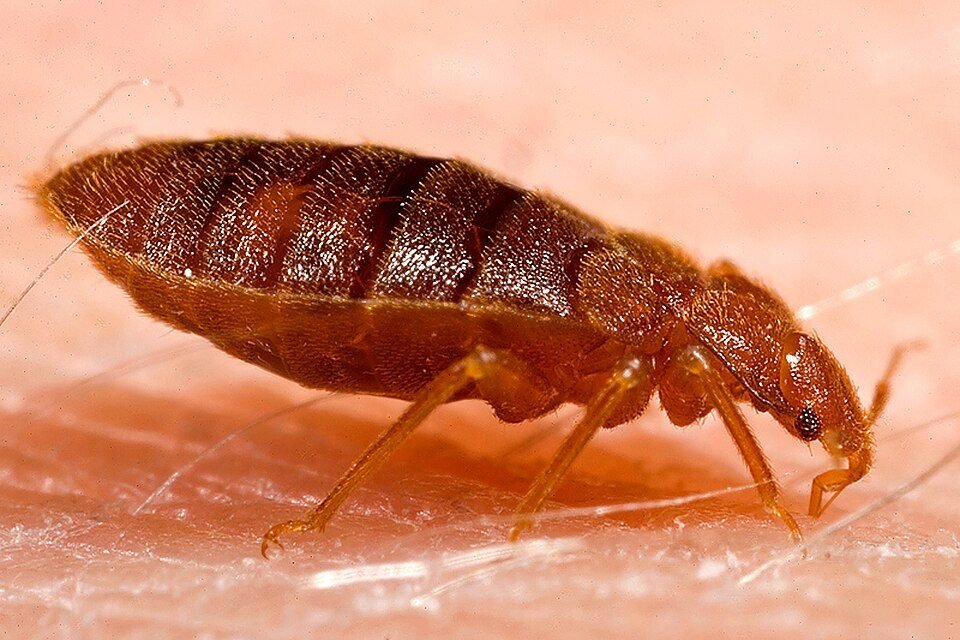
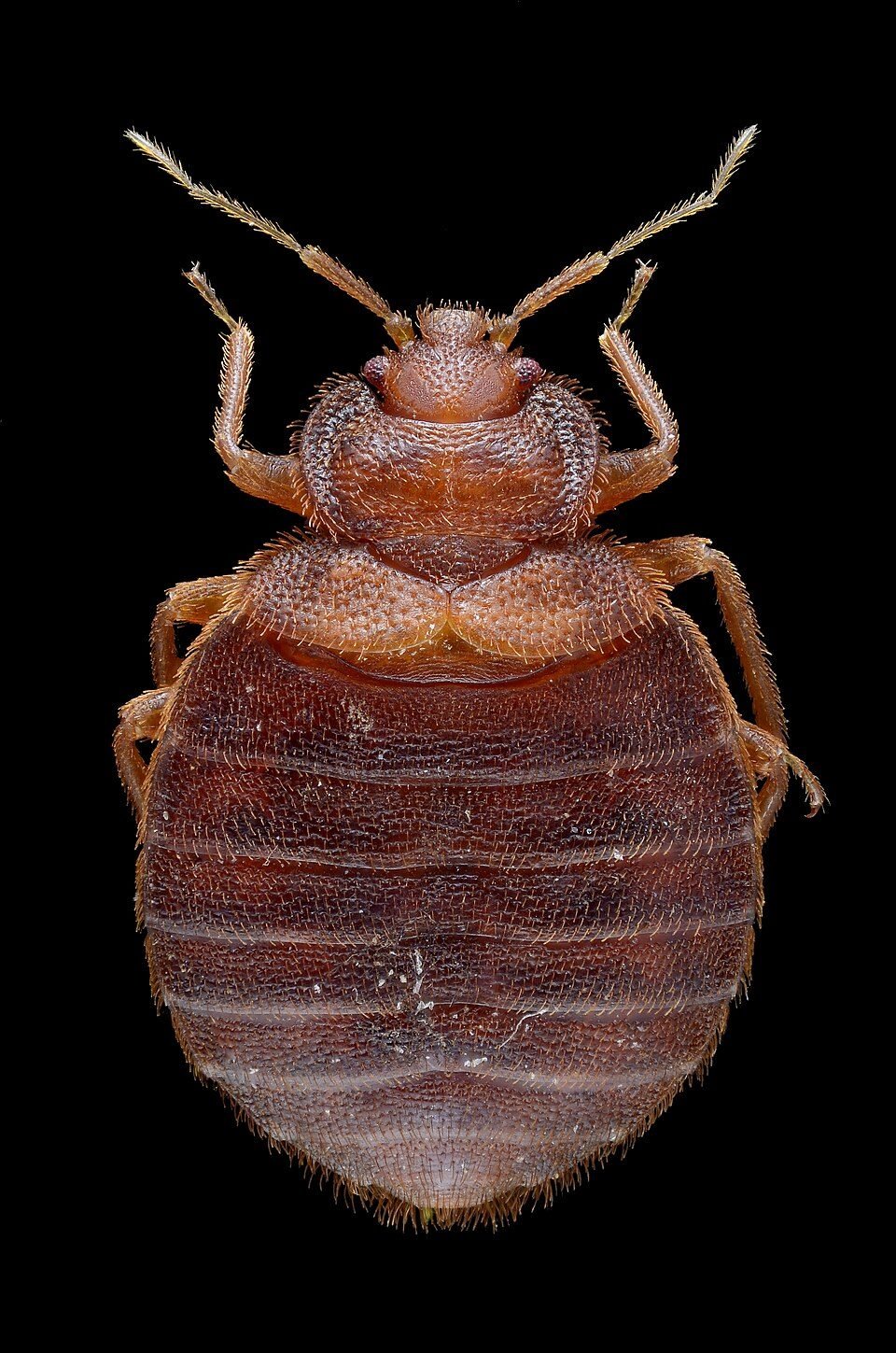
Look for small rust-coloured stains, tiny dark fecal spots, shed skins or a sweet musty odour around the seat seams and armrests. A live bug is about the size of an apple seed, flattened and reddish-brown, and it will crawl rather than jump or fly.
Can bed bug bites show up days after visiting a theatre?
Yes, bites can take up to 14 days to appear, and some people never react to them at all. That delay means bites alone cannot confirm whether a theatre, a bus, a hotel or something at home was the source.
What should I do if I spot a bed bug on a theatre seat?
Move to a different seat, keep your bag and coat off the affected seat, and tell theatre staff before you leave. At home, inspect and isolate what you were carrying and run washable items through a hot dryer for at least 30 minutes as a precaution.
Sources
- Health Canada: Bedbugs, what are they? — Adult bedbugs up to 10 mm, oval, flat, brown and blood red after feeding; feed on blood while people sleep; a bite can take up to 14 days to appear; bites often on the face, neck, arms, legs and chest; not known to spread disease; eggs are white, about 1 mm, in cracks and crevices.
- City of Toronto: Bed Bugs — Bed bugs can be found in hotels, motels, dormitories, apartments, condos, private homes, and even in some public places such as businesses and offices, and anyone can get them regardless of income or housing.
- City of Hamilton: Bed Bugs — Bed bugs are most active at night and usually found where people sleep, but can also be found in any public space such as businesses, offices and areas where people gather.
- National Collaborating Centre for Environmental Health (NCCEH): Bed bugs — Bed bugs can infest settings ranging from homes to healthcare facilities, shelters, hotels, prisons, dormitories and office buildings, and occasionally public transportation.
- Canadian Centre for Occupational Health and Safety (CCOHS): Health and Safety Report — Bed bugs hitch rides on luggage, purses, clothing and books and have shown up in non-residential environments such as offices, waiting rooms, retail stores, theatres and libraries.
- Ottawa Public Health: Bed Bugs — Signs of bed bugs include a sweet musty odour, rust-coloured stains and shed exoskeletons, and a hot dryer cycle of at least 30 minutes helps kill bed bugs on washable items.
- Ontario.ca: Pesticide licences and permits — Ontario's Ministry of the Environment, Conservation and Parks issues exterminator licences after a ministry-approved certification course, delivered through the University of Guelph, Ridgetown Campus.
Areas We Serve
AstraHive Pest Control proudly serves 75+ communities across the following regions:
- Toronto: Toronto, North York, Scarborough, Etobicoke, East York, York, Leslieville, Lakeview
- Durham Region: Oshawa, Whitby, Ajax, Pickering, Clarington, Bowmanville, Courtice, Newcastle, Port Perry, Brooklin, Uxbridge, Scugog, Brock, Seaton
- York Region: Vaughan, Markham, Richmond Hill, Aurora, Newmarket, Thornhill, Woodbridge, Kleinburg, Maple, Stouffville, Unionville, Keswick, Holland Landing, East Gwillimbury, Georgina, King City, King Township, Nobleton, Berczy Village, Cathedraltown, Commerce Valley, Cornell, Wismer, Whitchurch-Stouffville, Sutton, Schomberg
- Peel Region: Mississauga, Brampton, Caledon, Malton, Port Credit, Streetsville, Meadowvale, Cooksville, Bolton, Palgrave
- Extended Service Area: Peterborough, Lindsay, Port Hope, Barrie, Bradford, Innisfil, Collingwood, Wasaga Beach, Orillia, Burlington, Oakville, Milton, Hamilton, Grimsby, St. Catharines, Welland, Niagara Falls
Don't see your city listed? Call us — we likely cover it.
Got a pest problem right now?
Call AstraHive for a free consultation. Licensed & insured, serving the GTA, Durham, York, Peel and Simcoe County.
Call 905-925-84275.0 Stars — 200+ Google Reviews | Licensed & Insured | Health Canada Approved