A library book can carry bed bugs, but the chances are slim. Bed bugs cannot eat paper or live off a book; they only tuck into the tight crease of a spine or cover while waiting to latch onto a person, a far rarer route into a home than the pathways that actually cause most infestations.
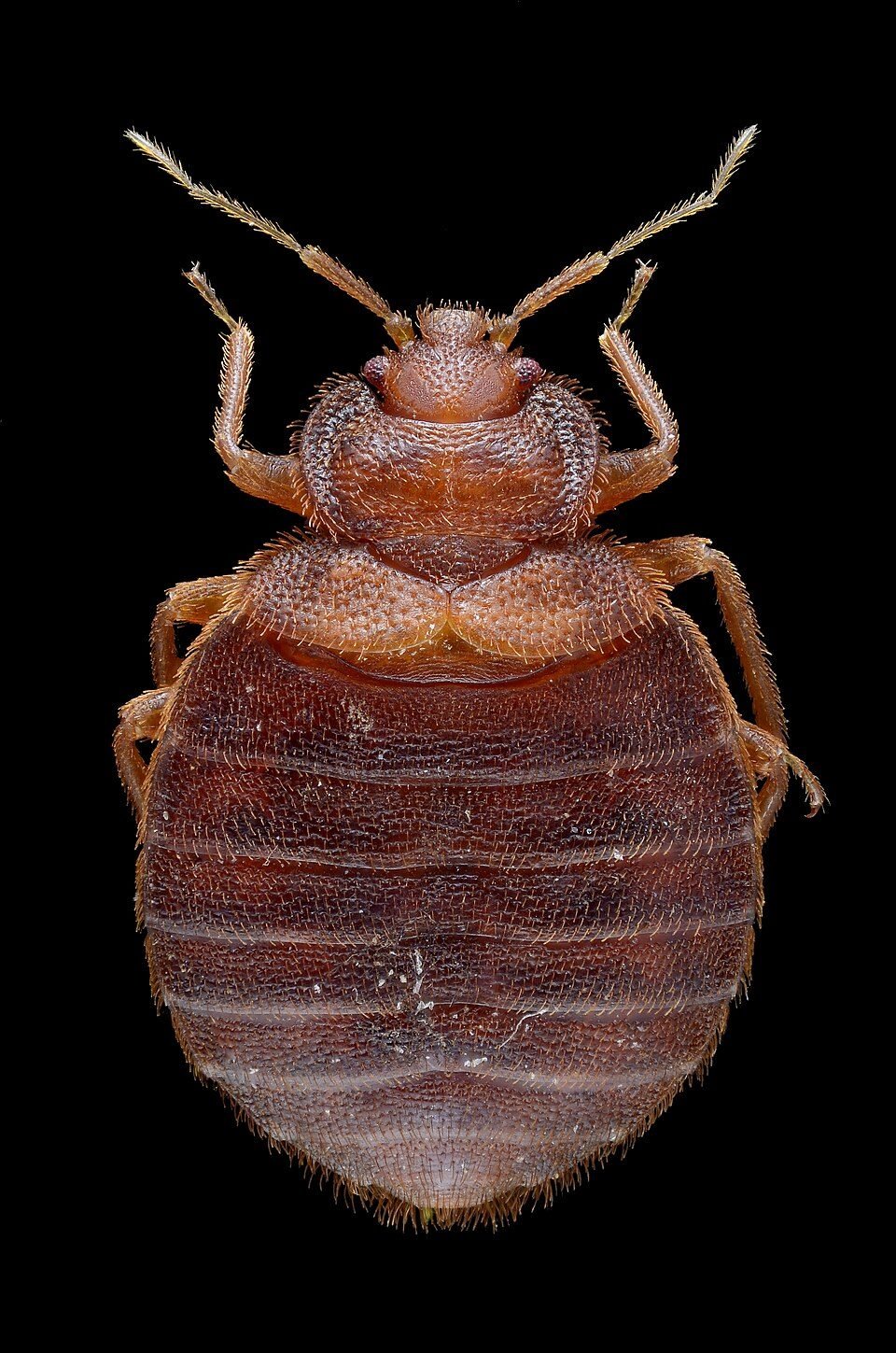

Can You Get Bed Bugs From a Library Book?
Bed bugs get around almost entirely by riding along on people and their belongings. They cannot fly and cannot jump from place to place. In theory, a book that recently rested on a nightstand in an infested home might pick up a wandering bug or egg before being returned. Once that reader brings the book home, the insect has an opening to crawl out somewhere near a bed, sofa, or armchair.
Still, one borrowed book is a small contributor next to the pathways responsible for most new infestations:
- Luggage brought back from a trip
- Hotel stays, where bags and clothes end up near beds or furniture used by many previous guests
- Used furniture purchased through online listings such as Facebook Marketplace or Kijiji
Library books rarely move between households as often, or sit as close to bedding, as suitcases, hotel rooms, and secondhand upholstered furniture do.
Do Bed Bugs Live in Books? What Their Biology Says
Paper, glue, and binding material hold no nutritional value for bed bugs. Blood is their only food source, so a book is never anything they consume. What a book offers instead is cover: the seam between the spine and the pages, the hollow space inside a hardcover binding, and the narrow gutter where pages meet the spine all mirror the dark, tight crevices bed bugs naturally retreat to between feedings.
Given warm indoor conditions, a bed bug can progress from egg to egg-laying adult in roughly five weeks, and eggs generally hatch within 6 to 17 days of being laid. So a stray egg or bug resting inside a book near a bed has enough time to start multiplying if nobody disturbs it. The upside is that this timeline is not instant, so a quick inspection matters far more than an overreaction.
| Relative Risk Level | Why It Happens | |
|---|---|---|
| Secondhand furniture (Marketplace, Kijiji) | High | Pieces sit for weeks inside infested rooms before being carried straight into bedrooms and living rooms |
| Hotel stays | High | Luggage and clothing sit close to beds and furniture used by a steady stream of different guests |
| Travel and luggage generally | High | Bags get packed and unpacked across multiple rooms and vehicles, giving hitchhikers repeated chances to transfer |
| Borrowed or used library books | Low | Books get handled briefly, stay on shelves rather than bedding, and items with heavy infestation are usually pulled from circulation |
Bed Bugs in Library Books: How Real Is the Risk?
Libraries move a huge volume of books through countless households every week, which fuels the worry people have about picking up bed bugs this way. Even so, confirmed cases of bugs transferring from a circulating book are rare set against how many books are checked out. Spotting one live bed bug inside a returned book does not automatically point to a widespread infestation in that book or the building; it just calls for a closer look.
If something suspicious turns up, resist the urge to squash it. A sealed container or a clear photo preserves it for identification far better than a smear ever could.
Can Books Spread Bed Bugs Between Rooms or Homes?
Once a bed bug is already inside a home, a book left near a bed or couch works the same way a sock or jacket pocket does: it is just another surface for the insect to grip onto. Carry that book to a different bedroom, toss it in a bag, or hand it off to someone else, and the bug goes along for the ride. That is the identical long-distance spread pattern seen with any infested item, be it furniture, luggage, or clothing, whenever it changes location.
Within apartment buildings, bed bugs also travel between units on their own, slipping through shared walls, outlets, and plumbing gaps, moving both up and down and side to side. A book is a much weaker vehicle for this kind of spread than those built-in structural routes, but it demonstrates the same basic rule: bed bugs go wherever people and their things go.
Warning Signs to Check on Borrowed or Secondhand Books
Before placing a borrowed or used book on a nightstand, scan the spine, inside cover, and page gutter for the same markers that confirm bed bugs anywhere else in a home:
- Black or brown spotting, which is dried blood or waste
- White specks, which are eggs and can be overlooked without a close inspection
- Live or dead bed bugs
- Shed skins left over from nymphs growing larger
Bites alone prove little. Some people show no reaction whatsoever, others develop itchy swelling, and a mark can take as long as 14 days to surface depending on the individual. The physical evidence on the book itself carries more weight than whatever shows up on skin afterward.
What to Do If You Find a Bed Bug in a Book
One bug does not confirm an infestation, but it does mean the surrounding space needs a real look.
- Leave it intact. Trap it in a small sealed container or snap a photo so it can be identified properly.
- Bag the book separately in sealed plastic, keeping it away from beds, sofas, and other upholstered furniture until it has been checked more thoroughly.
- Check mattress seams, the box spring, and nearby furniture for the same clues: spotting, eggs, shed skins, or live bugs.
- If signs turn up anywhere beyond the book, bring in a licensed pest control provider for a complete inspection instead of treating the book as the only piece of evidence.
Temperatures above roughly 48 degrees Celsius kill bed bugs at every stage of life, which is why professional treatment often leans on controlled heat and steam instead of sprays alone to reach eggs tucked into tight spots like book spines or mattress seams.
Common Myths About Bed Bugs and Paper
A handful of misconceptions keep circulating around this topic:
- Myth: bed bugs chew through paper or cardboard. Reality: they live on blood alone and treat paper items strictly as hiding places.
- Myth: a library book carries the same risk as used furniture. Reality: secondhand upholstered pieces, luggage, and hotel stays are far more common sources of home infestations.
- Myth: a certain bite pattern proves a book is the culprit. Reality: clustered or lined-up bites often get blamed on bed bugs, but they are not conclusive since other insects and unrelated bites can look the same.
So, Can You Get Bed Bugs From a Library Book? The Bottom Line
A library book can technically pass along bed bugs, but that risk sits well under the real culprits: travel luggage, hotel stays, and secondhand furniture from online listings. Treat any borrowed or used book like anything else arriving from an unfamiliar home, checking it before it ever reaches the bed. If solid physical evidence shows up rather than just a suspicion or a bite, a licensed pest control provider can confirm what is actually there and map out the right treatment.
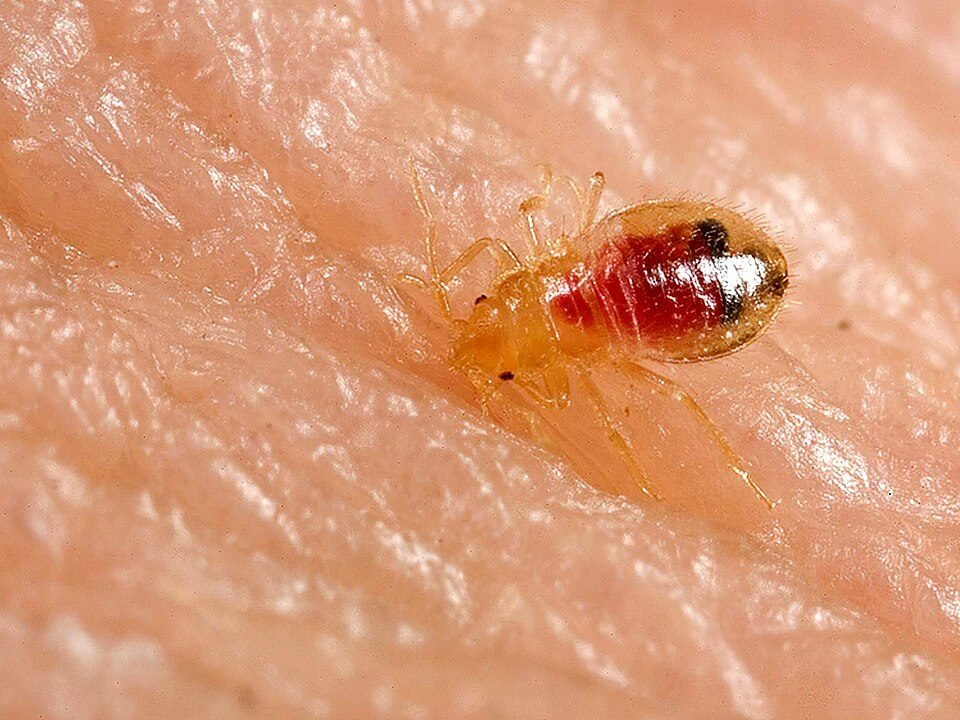

How AstraHive Pest Control gets rid of bed bugs
Bed bugs hide in seams, joints, box spring frames, plumbing voids, wall voids and behind electrical outlets, so every treatment starts with a careful inspection. We offer two treatments and choose between them by situation: Aprehend is our first choice for homes where people live and sleep and for severe infestations, and the standard chemical treatment is the right choice for Airbnbs, hotel rooms and vacant units.
How an AstraHive bed bugs treatment works
Inspect and confirm
We inspect the bed, furniture seams, baseboards, outlets and surrounding areas, confirm the insect and tell you which treatment fits, with the preparation list for that treatment.
Aprehend: for homes where people live and sleep
Aprehend is our premium bed bug treatment, a biopesticide built on a naturally occurring fungus. We apply it with a dedicated machine as a continuous band along baseboards, bed frames, box springs and the pathways bed bugs travel, and we put Drione dust into wall voids and outlets. Bed bugs pick up the spores as they cross the barrier and carry them back to the colony, where the fungus reaches the bugs a spray cannot, including pyrethroid-resistant bed bugs. It takes real knowledge to apply well, so only our experienced, trained technicians do it. Preparation is light: strip the beds, move them a little away from the walls and clear under the bed.
Standard chemical treatment: for empty units
For Airbnbs, hotel rooms and vacant units we take the bed apart, steam every seam and joint, vacuum with a HEPA vacuum, apply a residual spray (Temprid SC, which combines two active ingredients) according to its label, which stays active for about 90 days, and put Drione dust into wall voids and outlets. Nobody, pets included, stays inside during the treatment or for at least 6 hours afterwards, and the preparation is thorough, so it suits spaces nobody is living in. Mattress encasements are available as an optional extra.
Follow up 4 to 6 weeks later
We return 4 to 6 weeks after treatment to check the results and re-treat where needed. It is normal to still see live bed bugs for up to about 6 weeks, because bed bugs spread slowly, hide well and eggs laid before treatment keep hatching. If you still see live bed bugs after 6 weeks, call us.
Document everything and back it with a 90-day warranty
Where we found bed bugs, what we found and every product used goes in the service report. If bed bugs come back within 90 days, we re-treat at no charge.
Our products are Health Canada approved and safe for kids and pets, and we apply every product according to its label. AstraHive is licensed by the Ontario Ministry of the Environment, Conservation and Parks. Ontario requires a ministry-approved certification course before it issues an exterminator licence, and that training is delivered through the University of Guelph, Ridgetown Campus.
We choose one treatment per home, so you only prepare once. The two are not steps in one job: the standard residual spray is water-based, and water or steam deactivates Aprehend, so surfaces treated with Aprehend should not be wiped, mopped or steamed afterwards. In our experience live bed bugs drop in stages after Aprehend, roughly 50 to 55 percent fewer by week 3, 80 to 85 percent fewer by week 4 and 90 to 95 percent fewer by weeks 5 to 6. These figures are our own experience, not from the product label, and results vary.
In condos and apartments, neighbouring units and the building manager should be told early, because bed bugs travel through shared walls, ducts and plumbing chases.
Typical cost: Starting at $450 CAD, with final cost depending on property size and severity of infestation - there is no fixed upper limit. Call 905-925-8427 for an exact free quote.
Why Choose AstraHive
- Licensed & Insured: Certified by the Ontario Ministry of Environment, Conservation and Parks.
- Fast response: Same-day service available, with a callback within 5 minutes.
- 90-Day Warranty: If pests come back within that window, we re-treat at no additional charge.
- Proven track record: 5.0 stars on Google across 200+ reviews.
- Family & pet safe: Health Canada approved products on every job.
Frequently Asked Questions
Can you get bed bugs from a library book?
Technically yes, since bed bugs can hitchhike inside the spine or cover of a book that spent time near an infested bed or couch. In practice this is a minor risk compared with secondhand furniture, hotel stays, and travel luggage, which are the pathways behind most home infestations.
Do bed bugs live in books?
Bed bugs do not live in books the way they live in mattress seams, but they can hide temporarily in the crevices of a spine, binding, or page gutter. They do not eat paper or glue; they only use the tight, dark space as shelter between feedings.
How common are bed bugs in library books?
Given the enormous number of books circulating through libraries, documented transfers are uncommon relative to the volume of material being borrowed. A book showing heavy fecal spotting or live insects is far more concerning than the simple fact that it was borrowed from a shared collection.
Can books spread bed bugs between rooms or homes?
Yes, in the same way any object can: if a bug or egg is on a book, moving that book to another bedroom, bag, or household carries the insect along with it. This is the same hitchhiking principle behind luggage and furniture, just on a smaller scale.
What should I do if I find a bed bug in a book?
Avoid crushing it. Seal it in a small container or take a photo, isolate the book away from beds and upholstered furniture, and check nearby mattress seams and furniture for eggs, shed skins, or fecal spotting. If you find evidence beyond the book itself, contact a licensed pest control provider for a full inspection.
Sources
- Health Canada: Bedbugs, what are they? — Bed bugs cannot fly or jump, and eggs usually hatch in 6 to 17 days after a female lays at least 200 in her lifetime, plus the listed signs of black spots, white spots, and live or dead bugs.
- Canadian Centre for Occupational Health and Safety (CCOHS) — Bed bugs are not known to spread diseases, bites do not usually require medical treatment, and a bite can take up to 14 days to appear depending on the person.
- University of Toronto Environmental Health and Safety: Bed Bug Procedure (citing City of Toronto guidance) — Simply disposing of infested items is not a sound approach because re-infestation is easy and bed bugs may spread while the item is being moved, so damaged or unusable items should be rendered unusable before disposal.
- Ontario.ca: Pesticide licences and permits — Ontario's Ministry of the Environment, Conservation and Parks issues exterminator licences after a ministry-approved certification course, delivered through the University of Guelph, Ridgetown Campus.
- Penn State Extension: Biology, Habitat, and Management of Bed Bugs — In apartment buildings, bed bugs can move from one apartment to another vertically and horizontally, long distance spread happens when infested objects are moved, and temperatures of 131 F or higher are lethal to all bed bug life stages.
- Barbarin et al., Journal of Invertebrate Pathology (2012) — An oil based Beauveria bassiana formulation killed bed bugs quickly on all surfaces tested and spread efficiently from exposed to unexposed bed bugs inside artificial harbourages, supporting how fungus based professional treatments work.
Areas We Serve
AstraHive Pest Control proudly serves 75+ communities across the following regions:
- Toronto: Toronto, North York, Scarborough, Etobicoke, East York, York, Leslieville, Lakeview
- Durham Region: Oshawa, Whitby, Ajax, Pickering, Clarington, Bowmanville, Courtice, Newcastle, Port Perry, Brooklin, Uxbridge, Scugog, Brock, Seaton
- York Region: Vaughan, Markham, Richmond Hill, Aurora, Newmarket, Thornhill, Woodbridge, Kleinburg, Maple, Stouffville, Unionville, Keswick, Holland Landing, East Gwillimbury, Georgina, King City, King Township, Nobleton, Berczy Village, Cathedraltown, Commerce Valley, Cornell, Wismer, Whitchurch-Stouffville, Sutton, Schomberg
- Peel Region: Mississauga, Brampton, Caledon, Malton, Port Credit, Streetsville, Meadowvale, Cooksville, Bolton, Palgrave
- Extended Service Area: Peterborough, Lindsay, Port Hope, Barrie, Bradford, Innisfil, Collingwood, Wasaga Beach, Orillia, Burlington, Oakville, Milton, Hamilton, Grimsby, St. Catharines, Welland, Niagara Falls
Don't see your city listed? Call us — we likely cover it.
Got a pest problem right now?
Call AstraHive for a free consultation. Licensed & insured, serving the GTA, Durham, York, Peel and Simcoe County.
Call 905-925-84275.0 Stars — 200+ Google Reviews | Licensed & Insured | Health Canada Approved