Yes, secondhand furniture can bring bed bugs into your home. Used couches, mattresses, and box springs picked up curbside, from a thrift shop, or from an online marketplace rank among the top three entry points for bed bugs in Ontario homes, right alongside travel luggage and hotel stays. A thorough inspection before a piece crosses your doorway is the best protection you have.
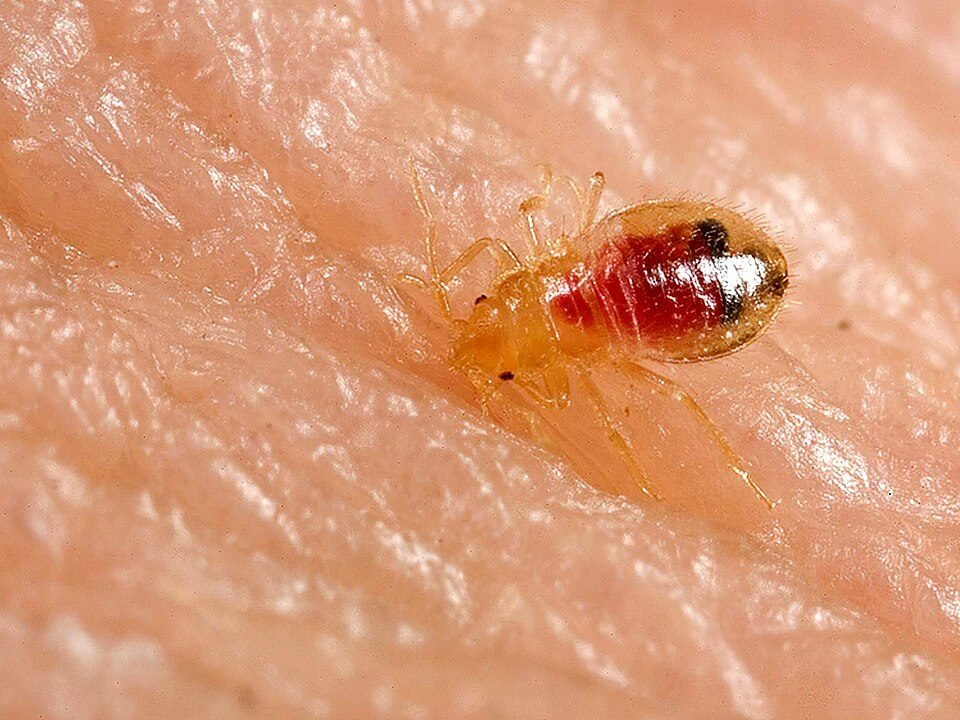

Yes, You Can Get Bed Bugs From Secondhand Furniture
Bed bugs cannot fly or jump from one home to another. Their only way of travelling is by hitching a ride on something, and furniture is an ideal carrier because it stays put long enough for a small population to grow before anyone notices. Used furniture, luggage, and clothing brought back from trips are among the most common ways bed bugs get a foothold in a new space, and this pathway accounts for a large portion of the fresh infestations pest control technicians encounter.
A secondhand sofa, loveseat, or bed frame does not have to look worn or dirty to pose a risk. A single bug can ride along inside a seam, a staple hole, or a fabric fold without being spotted, then start laying eggs once it settles into its new surroundings.
Bed Bugs in Thrifted Couches and Mattresses: Why Upholstery Is the Riskiest Pick
Risk is not spread evenly across secondhand items. Soft, seamed, upholstered furniture offers bed bugs many more hiding spots than hard surfaces such as a wooden table or a metal shelving unit. Give the closest scrutiny to:
- Couches, loveseats, and recliners, particularly those with removable cushions or skirting
- Mattresses and box springs, regardless of age or brand
- Upholstered headboards and bed frames with fabric panels
- Armchairs, ottomans, and anything with tufted or buttoned upholstery
Furniture and mattresses left in shared disposal areas or hallways are a frequent source of infestation in condos and apartment buildings, since discarded pieces often sit in communal space for days before anyone claims them.
| What You're Seeing | Where It Shows Up | |
|---|---|---|
| Live bed bugs | Flat, reddish-brown insects deep in seams, folds, or frame joints | |
| Eggs | Tiny, pale, fixed in place in narrow seams and corners | |
| Shed skins | Pale, hollow casings in folds, screw holes, and drawer joints | |
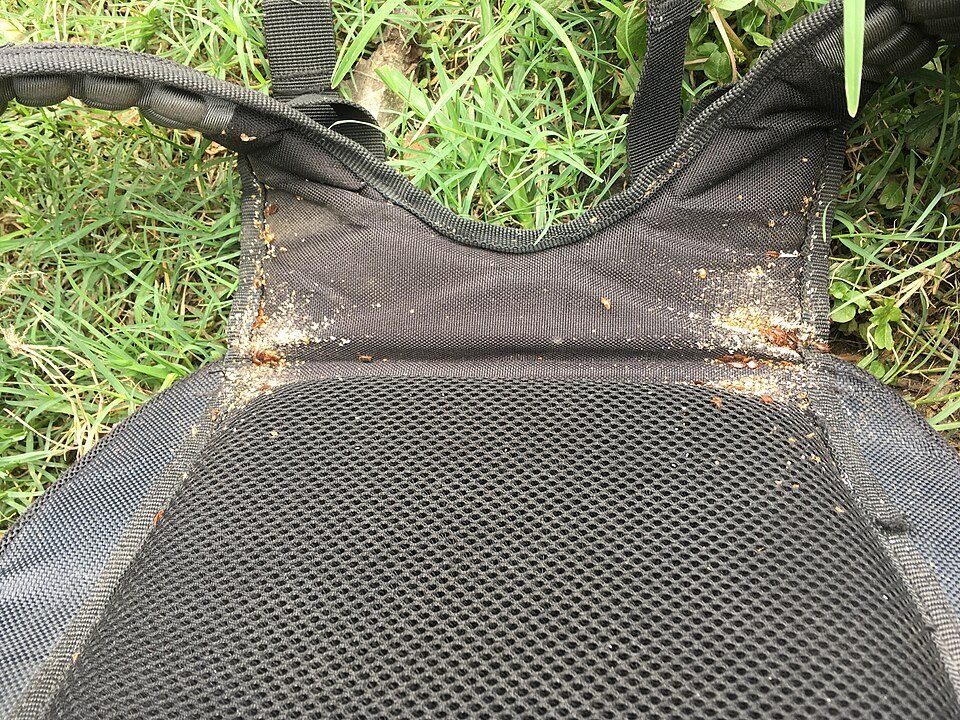
| Fecal spotting / blood stains | Dark or rust-coloured marks on piping, tags, and fabric seams |
How to Check a Used Couch for Bed Bugs Before It Comes Inside
Examine the item outdoors, in daylight, before it gets anywhere near your door. Secondhand beds, couches, and other furniture deserve a close look for infestation signs before they enter the home. A flashlight paired with a flat object like a plastic card makes the search easier, since you need to see into narrow seams rather than just scan the surface.
- Remove every cushion and run a card along piping and folded seams
- Check beneath cushions, inside zippers, and around buttons or tufting
- Turn the piece over to examine the underside, staples, and wood joints
- Look at the back panel and the points where legs or arms attach to the frame
- Check for a faint, sweet, musty smell, which can point to a heavy infestation
If daylight or outdoor space is not available before pickup, it is better to walk away from the piece than to carry an unchecked couch or mattress into your home.
What the Evidence Actually Looks Like
Solid physical proof of bed bugs comes in a few forms: live insects, eggs, shed skins, and fecal spotting found in mattress seams, box springs, or nearby furniture. Each one has a distinct appearance:
- Live bugs: flat, reddish-brown, oval insects that retreat deeper into a seam or crack when disturbed
- Eggs: tiny and pale, fixed in place rather than loose, tucked into narrow seams and corners
- Shed skins: pale, hollow casings left behind as the insects grow, turning up in folds, screw holes, and drawer joints
- Fecal spotting and blood stains: dark or rust-coloured marks on fabric that can spread into the material much like marker ink
Bite marks arranged in a line or cluster on skin are sometimes associated with bed bugs, but random patterns happen too, and other insects produce similar marks. Bites by themselves prove nothing. What confirms an infestation is evidence on the furniture itself, not the pattern of bites.
How to Check a Used Couch for Bed Bugs
1. Inspect outside first
Examine the piece in daylight or strong light before it gets near your door, ideally while it is still at the seller's curb or driveway.
2. Pull every cushion and seam
Take out the cushions and run a flashlight and flat card along piping, folded seams, zippers, and tufted buttons.
3. Flip it over
Inspect the underside, staples, wood joints, and the spots where legs and arms meet the frame for spotting or shed skins.
4. Decide and treat as a precaution
If the piece checks out, vacuum every seam with a crevice tool once it's inside and consider a steam pass before it reaches a bedroom.
Is Used Furniture Ever Truly Safe From Bed Bugs?
No inspection eliminates risk entirely, but a careful one reduces it substantially. Whether bed bugs are present has nothing to do with how clean an item looks. A spotless couch pulled from a well-kept home can still hold an active infestation, while clutter simply gives bed bugs more places to hide once they have already gotten in. Bed bugs show up in homes across every neighbourhood and income level, which is exactly why assuming a clean appearance means a clean piece is such a common misstep.
Even furniture that passes a visual check is worth treating with caution: run a crevice tool over every seam with a vacuum right after bringing it indoors, and consider going over seams and joints with steam, since sustained high heat kills bed bugs and their eggs. If any doubt remains, keep the piece away from your bedroom for a week or two and inspect it again before letting it anywhere near a sleeping area.
Secondhand Furniture Risk in Condos and Apartment Buildings
Living in a multi-unit building adds a second source of risk beyond secondhand furniture itself. Bed bugs travel between units through wall voids, baseboards, and shared walls, meaning a neighbour's infestation can spread to your unit even if you never bring home a single used item. This is also why "free furniture" piles in hallways and common areas are a known trouble spot: a piece set out for disposal can find a new owner before it ever leaves the building.
Putting an infested item out for garbage collection is not enough on its own, since the furniture can be picked up by someone else or keep spreading bugs while it waits. Before an infested mattress or piece of furniture leaves a unit, it should be broken down or visibly defaced so no one is tempted to take it, mattresses should be slashed to make them unusable, and the item should be sealed in plastic while still inside the unit, then moved out only shortly before collection.
If You Already Brought It Home: What to Do Next
If a secondhand item is already sitting in your home and you notice any of the warning signs above, do not reach for a store-bought fogger. Setting off foggers before the pest is confirmed and its hiding spots identified is one of the most common ways people waste money chasing a bed bug problem, because foggers simply cannot reach the cracks, seams, and voids bed bugs occupy.
While arranging a professional inspection, a few steps are worth taking in the meantime:
- Keep the piece away from bedrooms and other furniture
- Run a vacuum with a crevice attachment over seams, folds, and joints, then remove and dispose of the bag outside right away
- Fit mattresses and box springs with zippered encasements, sealing the zipper with tape, and leave them in place for a full year
- Place bed leg interceptors or sticky tape around furniture legs to catch and reveal any bugs attempting to climb
- Skip homemade pesticide mixtures and ozone generators, and never apply any pesticide product to bedding, cribs, toys, pets, or people unless the label explicitly permits it
Used carefully in cracks and crevices, diatomaceous earth and boric acid can help a homeowner manage a light, confirmed problem between professional visits. Boric acid works internally once a bug ingests it, while diatomaceous earth scrapes away the insect's outer shell and dries it out. Neither substitutes for professional treatment once an infestation is established.
When to Call a Licensed Pest Control Professional
A professional bed bug treatment should begin with a detailed visual inspection covering the bed, surrounding furniture, baseboards, and electrical outlets, not just a glance at the mattress, before any product is applied. That inspection confirms the pest is actually bed bugs, maps out where they are hiding, and shapes the treatment plan that follows. AstraHive returns 4 to 6 weeks later to verify the treatment worked and repeat it where needed.
Once a secondhand couch or mattress has produced bites, stains, or live insects, treat the situation as confirmed rather than waiting to see whether it gets worse.

How AstraHive Pest Control gets rid of bed bugs
Bed bugs hide in seams, joints, box spring frames, plumbing voids, wall voids and behind electrical outlets, so every treatment starts with a careful inspection. We offer two treatments and choose between them by situation: Aprehend is our first choice for homes where people live and sleep and for severe infestations, and the standard chemical treatment is the right choice for Airbnbs, hotel rooms and vacant units.
How an AstraHive bed bugs treatment works
Inspect and confirm
We inspect the bed, furniture seams, baseboards, outlets and surrounding areas, confirm the insect and tell you which treatment fits, with the preparation list for that treatment.
Aprehend: for homes where people live and sleep
Aprehend is our premium bed bug treatment, a biopesticide built on a naturally occurring fungus. We apply it with a dedicated machine as a continuous band along baseboards, bed frames, box springs and the pathways bed bugs travel, and we put Drione dust into wall voids and outlets. Bed bugs pick up the spores as they cross the barrier and carry them back to the colony, where the fungus reaches the bugs a spray cannot, including pyrethroid-resistant bed bugs. It takes real knowledge to apply well, so only our experienced, trained technicians do it. Preparation is light: strip the beds, move them a little away from the walls and clear under the bed.
Standard chemical treatment: for empty units
For Airbnbs, hotel rooms and vacant units we take the bed apart, steam every seam and joint, vacuum with a HEPA vacuum, apply a residual spray (Temprid SC, which combines two active ingredients) according to its label, which stays active for about 90 days, and put Drione dust into wall voids and outlets. Nobody, pets included, stays inside during the treatment or for at least 6 hours afterwards, and the preparation is thorough, so it suits spaces nobody is living in. Mattress encasements are available as an optional extra.
Follow up 4 to 6 weeks later
We return 4 to 6 weeks after treatment to check the results and re-treat where needed. It is normal to still see live bed bugs for up to about 6 weeks, because bed bugs spread slowly, hide well and eggs laid before treatment keep hatching. If you still see live bed bugs after 6 weeks, call us.
Document everything and back it with a 90-day warranty
Where we found bed bugs, what we found and every product used goes in the service report. If bed bugs come back within 90 days, we re-treat at no charge.
Our products are Health Canada approved and safe for kids and pets, and we apply every product according to its label. AstraHive is licensed by the Ontario Ministry of the Environment, Conservation and Parks. Ontario requires a ministry-approved certification course before it issues an exterminator licence, and that training is delivered through the University of Guelph, Ridgetown Campus.
We choose one treatment per home, so you only prepare once. The two are not steps in one job: the standard residual spray is water-based, and water or steam deactivates Aprehend, so surfaces treated with Aprehend should not be wiped, mopped or steamed afterwards. In our experience live bed bugs drop in stages after Aprehend, roughly 50 to 55 percent fewer by week 3, 80 to 85 percent fewer by week 4 and 90 to 95 percent fewer by weeks 5 to 6. These figures are our own experience, not from the product label, and results vary.
In condos and apartments, neighbouring units and the building manager should be told early, because bed bugs travel through shared walls, ducts and plumbing chases.
Typical cost: Starting at $450 CAD, with final cost depending on property size and severity of infestation - there is no fixed upper limit. Call 905-925-8427 for an exact free quote.
Why Choose AstraHive
- Licensed & Insured: Certified by the Ontario Ministry of Environment, Conservation and Parks.
- Fast response: Same-day service available, with a callback within 5 minutes.
- 90-Day Warranty: If pests come back within that window, we re-treat at no additional charge.
- Proven track record: 5.0 stars on Google across 200+ reviews.
- Family & pet safe: Health Canada approved products on every job.
Frequently Asked Questions
Can you get bed bugs from secondhand furniture?
Yes. Secondhand furniture is one of the three main pathways bed bugs use to enter homes, alongside travel luggage and hotel stays. Upholstered pieces like couches, mattresses, and box springs carry the highest risk because their seams and joints give bed bugs places to hide during transport.
Is used furniture safe from bed bugs if it looks clean?
Not necessarily. Cleanliness is not a factor in whether bed bugs are present, and a spotless-looking couch from a tidy home can still carry live bugs, eggs, or shed skins in its seams. A visual inspection of the seams, joints, and underside is more reliable than appearance alone.
How long can bed bugs live in a couch or mattress before it's used again?
Bed bugs can survive for extended periods without feeding, which is part of why a piece sitting in storage, a hallway, or a moving truck for days or weeks can still be carrying live insects when it finally reaches a new home.
What are the first signs of bed bugs in a thrifted couch or mattress?
Look for live insects, tiny pale eggs, shed skins, and dark fecal spotting or rust-coloured stains in the seams, piping, and underside of the piece. Bite marks on your skin alone are not reliable proof, since patterns vary and other insects can cause similar marks.
Should I throw out a couch or mattress if I find bed bugs in it?
If you discard it, take it apart or deface it so it cannot be reused, slash mattresses so they're unusable, and wrap the piece in plastic inside the unit before moving it, putting it out only shortly before pickup. Simply setting an infested item out for collection without these steps makes re-infestation and spread to others easy.
Sources
- Health Canada: Bedbugs, what are they? — Adult bedbugs up to 10 mm, oval, flat, brown and blood red after feeding; feed on blood while people sleep; a bite can take up to 14 days to appear; bites often on the face, neck, arms, legs and chest; not known to spread disease; eggs are white, about 1 mm, in cracks and crevices.
- Ottawa Public Health — Bed bugs are often introduced on used furniture, used clothing and luggage, and signs include a sweet musty odour, rust-coloured stains, shed exoskeletons and live bugs in mattress and box spring folds.
- Vancouver Coastal Health — Blood stains and fecal material spots on upholstered furniture, sheets, pillows, mattresses and box springs are recognized signs of a bed bug infestation, and bite reactions vary by individual.
- University of Toronto Environmental Health and Safety (citing City of Toronto) — Simple disposal of infested items is not a sound approach because re-infestation is easy; discarded items should be taken apart or defaced, mattresses slashed, and furniture wrapped in plastic before being moved.
- Health Canada — Mattresses and box springs should be fully enclosed in zippered encasements taped over the zipper and left in place for a full year, with leg interceptors used to trap and detect bugs.
- Ontario.ca: Pesticide licences and permits — Ontario's Ministry of the Environment, Conservation and Parks issues exterminator licences after a ministry-approved certification course, delivered through the University of Guelph, Ridgetown Campus.
- US EPA — Foggers will not reach the cracks and crevices where bed bugs hide and should not be used as the only method of control.
- US EPA — Secondhand furniture, beds and couches should be checked for signs of bed bug infestation before being brought into the home.
Areas We Serve
AstraHive Pest Control proudly serves 75+ communities across the following regions:
- Toronto: Toronto, North York, Scarborough, Etobicoke, East York, York, Leslieville, Lakeview
- Durham Region: Oshawa, Whitby, Ajax, Pickering, Clarington, Bowmanville, Courtice, Newcastle, Port Perry, Brooklin, Uxbridge, Scugog, Brock, Seaton
- York Region: Vaughan, Markham, Richmond Hill, Aurora, Newmarket, Thornhill, Woodbridge, Kleinburg, Maple, Stouffville, Unionville, Keswick, Holland Landing, East Gwillimbury, Georgina, King City, King Township, Nobleton, Berczy Village, Cathedraltown, Commerce Valley, Cornell, Wismer, Whitchurch-Stouffville, Sutton, Schomberg
- Peel Region: Mississauga, Brampton, Caledon, Malton, Port Credit, Streetsville, Meadowvale, Cooksville, Bolton, Palgrave
- Extended Service Area: Peterborough, Lindsay, Port Hope, Barrie, Bradford, Innisfil, Collingwood, Wasaga Beach, Orillia, Burlington, Oakville, Milton, Hamilton, Grimsby, St. Catharines, Welland, Niagara Falls
Don't see your city listed? Call us — we likely cover it.
Got a pest problem right now?
Call AstraHive for a free consultation. Licensed & insured, serving the GTA, Durham, York, Peel and Simcoe County.
Call 905-925-84275.0 Stars — 200+ Google Reviews | Licensed & Insured | Health Canada Approved