Yes, bed bugs can turn up on a flight. They do not set up a permanent colony on an aircraft the way they would in a home mattress, but they ride along in carry-ons, coats and seat fabric, and one infested passenger can leave live bugs behind for the next traveller to discover hours later.
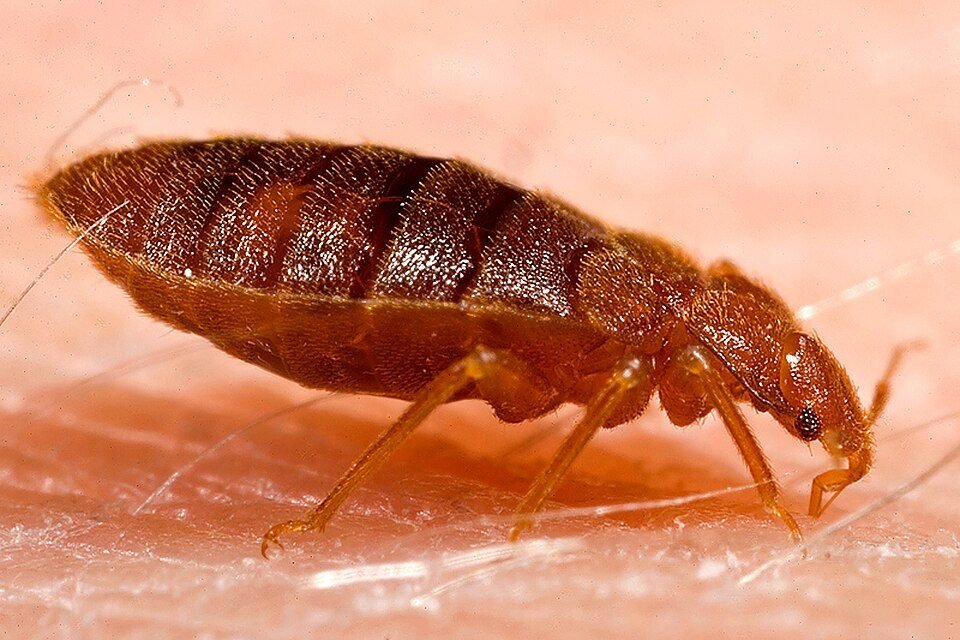

Can You Get Bed Bugs on a Flight? Here's What Actually Happens
Bed bugs have no wings and no jumping ability. The only way they move from place to place is by crawling onto a person, a bag or a piece of clothing and hitching a ride. A plane cabin is just another enclosed space filled with upholstered seats, fabric seatback pockets and a constant rotation of travellers and luggage, and that mix is exactly what bed bugs rely on to spread.
Long flights add an extra risk factor. Passengers stay seated for hours in steady contact with the same seat, seatbelt and tray table, giving any bugs already there plenty of time to feed before landing.
Do Bed Bugs Live on Airplanes, or Just Pass Through?
Bed bugs almost always get into a new space by riding in on people and their belongings rather than moving there on their own, and an airplane seat works the same way. A bug does not need a permanent home in a seat to cause trouble; it just needs to drop off from one passenger's bag or coat and survive long enough to bite whoever sits there next.
Adults can go weeks without a blood meal, and in cooler conditions some survive close to a year between feedings. That means a bug left in a seat after one flight can still be alive and biting on a later flight if the plane was not thoroughly cleaned between trips.
| Common Belief | What's Actually True | |
|---|---|---|
| How bed bugs move around a cabin | They fly or jump from seat to seat | Bed bugs have no wings and cannot fly or jump; they only crawl onto people or bags and hitchhike |
| Which flights are at risk | Only budget airlines or older planes get bed bugs | Any airline and any cabin class can be affected, including a modern long-haul Boeing 787 on a major carrier |
| What a clean-looking cabin means | A tidy, modern cabin is automatically bed bug free | Bed bugs hide in seat seams, tray table hinges and seatback pockets, and routine cleaning does not always reach them |
| Finding one bug | Spotting a single bed bug means the whole plane or suitcase is infested | A single live bug is evidence worth preserving and reporting, not automatic proof of a full-blown infestation |
What the Qantas Bed Bug Flight Showed Ontario Travellers
A notable case happened on a Qantas flight in October 2026. Passengers aboard flight QF5 from Perth to Rome reported being bitten during the roughly 17-hour trip on October 9, prompting Qantas to pull the Boeing 787 from service and cancel the return leg from Rome to Perth so the plane could get a deep clean.
The source of the issue was isolated to several economy class seats, with affected travellers relocated to alternative flights within two days. For people in Ontario taking international flights or transferring via congested airports, this incident serves as a reminder that pest infestations can occur on any aircraft, including modern wide-body jets operated by established airlines. While a well-maintained cabin interior and a carrier's strong reputation reduce the likelihood of encountering insects during flight, these factors alone do not prevent such problems from happening.
Bed Bugs in Overhead Bins and Seat Pockets: Where They Hide
Aboard a plane, bed bugs gravitate toward the same hiding spots they'd choose anywhere else: tight seams, folded fabric and dark corners that go undisturbed. Common places to check on an aircraft include:
- Seams and piping along the seat, including where the seatback meets the cushion
- The elastic seatback pocket, especially the folded material at the bottom
- The tray table hinge and the gap where it folds against the seat ahead
- Seatbelt buckles and webbing
- Fabric panels inside overhead bins, particularly near stacked soft-sided bags
The clearest proof of bed bugs is a live insect, an egg, a shed skin or a fecal stain, and on a plane that staining typically appears as tiny dark or rust-toned flecks on the seat fabric, seatbelt webbing or tray table hinge rather than a bug crawling in plain view. Actually spotting a live bed bug mid-flight is unusual; the stains tend to show up first.
Bed Bug Checklist for Air Travel
Before you pack
Opt for hard-sided luggage where you can, and keep clothing sealed in packing cubes or resealable bags so any hitchhikers stay contained.
At the gate and while boarding
Keep bags and coats off waiting-area floors and upholstered seating, and skip resting luggage on a hotel bed the night before a flight.
Once in your seat
Glance over the seat seams, seatbelt and tray table hinge for small dark stains before settling in, and stow coats and soft bags overhead rather than in the seatback pocket.
After you land
Unpack away from the bedroom, check suitcase seams and pockets under good light, and wash and dry travel clothing on hot for about 30 minutes to kill bed bugs at any life stage.
How to Avoid Bed Bugs When Flying: Before You Board
The best prevention happens before boarding even starts. A few simple habits cut down the odds of picking up hitchhikers:
- Pick hard-sided luggage when it's an option, since bed bugs grip fabric far more easily than smooth, hard shells
- Pack clothes inside sealed packing cubes or resealable bags so any stowaways stay contained instead of roaming the suitcase
- Keep bags and coats off the floor at the gate, off hotel beds the night before flying, and off upholstered airport seating
- Travel in light-coloured clothing, since bed bugs stand out more against lighter fabric than dark
During the Flight: Limiting Contact With Seats and Fabric
Once seated, a fast visual scan of the area takes seconds and costs nothing. Look over the seat seams, seatbelt and tray table hinge for small dark marks before getting settled, since these can be dried blood or waste left by bed bugs. Stowing jackets, scarves and soft bags overhead instead of in the seatback pocket or on the floor cuts down how much fabric touches the seat during the flight. If something looks off, tell a flight attendant and ask about switching seats rather than trying to investigate further on your own.
Spotting a live bed bug anywhere, on a plane or elsewhere, is not a reason to squash it. Snapping a photo or sealing it inside a container keeps it intact for identification by a pest professional later, and one bug on its own does not mean a full infestation is underway.
After You Land: Can You Still Get Bed Bugs on a Flight and Not Know It?
Yes. Bed bugs are roughly the size of an apple seed, and their bites often don't register right away, so it is entirely possible to arrive home carrying hitchhikers in a bag or coat without noticing anything during the flight itself. The evidence tends to surface later, either on the skin or in the luggage.
A handful of habits after arrival catch most hitchhikers before they reach a bed:
- Unpack somewhere other than the bedroom, such as a garage, entryway or bathroom
- Inspect suitcase seams, pockets and straps under good light before storing it away
- Run travel clothing through a hot wash and dryer, since about 30 minutes in a hot dryer kills bed bugs at every life stage
- Vacuum both the inside and outside of the suitcase before putting it away
- Watch for bite marks forming in clustered lines or zigzag patterns over the next day or two, a pattern more typical of bed bugs than an ordinary rash
If You Spot a Bed Bug on a Plane or After You Get Home
Telltale signs include live or dead insects, dark spots from dried blood or droppings, and tiny white eggs tucked into mattress seams, box springs or nearby furniture. Any of these turning up in luggage or near a bed after a trip is worth looking into right away, even if only one sign shows up.
A licensed pest control provider assesses how far the problem has spread and builds a treatment around the space, typically removing live bugs by hand and targeting the exact spots where eggs and bugs are hiding rather than relying on a single surface spray. Dealing with it early, before bugs move from a suitcase into a bedroom or spread through shared walls in an attached unit, keeps the job small and far simpler to finish.
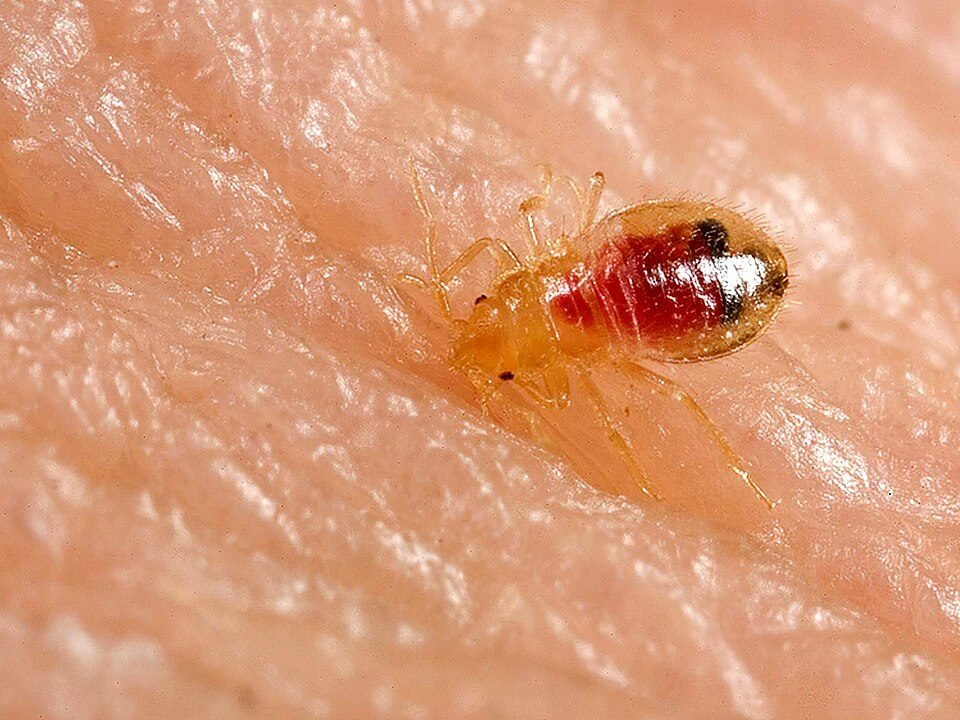

How AstraHive Pest Control gets rid of bed bugs
Bed bugs hide in seams, joints, box spring frames, plumbing voids, wall voids and behind electrical outlets, so every treatment starts with a careful inspection. We offer two treatments and choose between them by situation: Aprehend is our first choice for homes where people live and sleep and for severe infestations, and the standard chemical treatment is the right choice for Airbnbs, hotel rooms and vacant units.
How an AstraHive bed bugs treatment works
Inspect and confirm
We inspect the bed, furniture seams, baseboards, outlets and surrounding areas, confirm the insect and tell you which treatment fits, with the preparation list for that treatment.
Aprehend: for homes where people live and sleep
Aprehend is our premium bed bug treatment, a biopesticide built on a naturally occurring fungus. We apply it with a dedicated machine as a continuous band along baseboards, bed frames, box springs and the pathways bed bugs travel, and we put Drione dust into wall voids and outlets. Bed bugs pick up the spores as they cross the barrier and carry them back to the colony, where the fungus reaches the bugs a spray cannot, including pyrethroid-resistant bed bugs. It takes real knowledge to apply well, so only our experienced, trained technicians do it. Preparation is light: strip the beds, move them a little away from the walls and clear under the bed.
Standard chemical treatment: for empty units
For Airbnbs, hotel rooms and vacant units we take the bed apart, steam every seam and joint, vacuum with a HEPA vacuum, apply a residual spray (Temprid SC, which combines two active ingredients) according to its label, which stays active for about 90 days, and put Drione dust into wall voids and outlets. Nobody, pets included, stays inside during the treatment or for at least 6 hours afterwards, and the preparation is thorough, so it suits spaces nobody is living in. Mattress encasements are available as an optional extra.
Follow up 4 to 6 weeks later
We return 4 to 6 weeks after treatment to check the results and re-treat where needed. It is normal to still see live bed bugs for up to about 6 weeks, because bed bugs spread slowly, hide well and eggs laid before treatment keep hatching. If you still see live bed bugs after 6 weeks, call us.
Document everything and back it with a 90-day warranty
Where we found bed bugs, what we found and every product used goes in the service report. If bed bugs come back within 90 days, we re-treat at no charge.
Our products are Health Canada approved and safe for kids and pets, and we apply every product according to its label. AstraHive is licensed by the Ontario Ministry of the Environment, Conservation and Parks. Ontario requires a ministry-approved certification course before it issues an exterminator licence, and that training is delivered through the University of Guelph, Ridgetown Campus.
We choose one treatment per home, so you only prepare once. The two are not steps in one job: the standard residual spray is water-based, and water or steam deactivates Aprehend, so surfaces treated with Aprehend should not be wiped, mopped or steamed afterwards. In our experience live bed bugs drop in stages after Aprehend, roughly 50 to 55 percent fewer by week 3, 80 to 85 percent fewer by week 4 and 90 to 95 percent fewer by weeks 5 to 6. These figures are our own experience, not from the product label, and results vary.
In condos and apartments, neighbouring units and the building manager should be told early, because bed bugs travel through shared walls, ducts and plumbing chases.
Typical cost: Starting at $450 CAD, with final cost depending on property size and severity of infestation - there is no fixed upper limit. Call 905-925-8427 for an exact free quote.
Why Choose AstraHive
- Licensed & Insured: Certified by the Ontario Ministry of Environment, Conservation and Parks.
- Fast response: Same-day service available, with a callback within 5 minutes.
- 90-Day Warranty: If pests come back within that window, we re-treat at no additional charge.
- Proven track record: 5.0 stars on Google across 200+ reviews.
- Family & pet safe: Health Canada approved products on every job.
Frequently Asked Questions
Can you get bed bugs on a flight if the plane looks clean?
Yes. Bed bugs hide in seat seams, tray table hinges and seatback pockets, spots that a visual glance or routine cabin cleaning does not always reach. A tidy-looking cabin reduces the odds but does not remove the risk entirely.
Do bed bugs actually live on airplanes long-term?
Not in the way they live in a mattress at home. Bed bugs get onto planes by hitchhiking in luggage or clothing, and because adults can survive weeks without feeding, a bug left behind after one flight can still be present and able to bite on a later flight if the aircraft is not deep cleaned in between.
How can I avoid bed bugs when flying?
Use hard-sided luggage, pack clothing in sealed bags, keep bags off the floor and off seatback pockets, and do a quick visual check of the seat seams and tray table hinge before settling in. After landing, unpack away from the bedroom and wash travel clothing on hot.
What are the first signs of bed bugs after a flight?
Watch for small dark or rust-coloured stains in luggage seams, tiny white eggs, shed skins, or bite marks that appear in clustered lines or zigzag patterns one to two days after exposure. Any one of these signs is worth investigating.
I found a bed bug in my seat pocket or overhead bin item. What should I do?
Do not crush it. Trap it in a sealed container or photograph it, report the seat to a flight attendant, and once home, inspect and wash the item that was near it. A single bug is evidence to act on, not proof of a full infestation.
Sources
- Health Canada: Bedbugs, what are they? — Bed bugs cannot fly or jump and cannot easily climb metal or polished surfaces, and a female lays at least 200 eggs in her lifetime, which usually hatch in 6 to 17 days.
- Ottawa Public Health: Bed Bugs — Signs of bed bugs include a sweet musty odor, rust-coloured stains and shed exoskeletons, bed bugs can live a long time without feeding, cannot fly or jump, and are often introduced on used furniture, used clothing and luggage.
- MyHealth Alberta — Placing clean clothing in a hot dryer for 30 minutes will kill all life stages of bed bugs, and travellers should avoid putting bags or suitcases directly on hotel beds.
- Ontario.ca: Pesticide licences and permits — Ontario's Ministry of the Environment, Conservation and Parks issues exterminator licences after a ministry-approved certification course, delivered through the University of Guelph, Ridgetown Campus.
- CP24 / CNN — Qantas cancelled its Rome to Perth service after passengers on flight QF5 from Perth to Rome reported bedbug bites on October 9, allowing a deep clean of the aircraft after an issue was identified on a small number of economy seats.
- Fodor's Travel — Signs of bed bugs on a plane include small dark spots or stains on seats, seatbelts or tray tables, including their hinges, which may be feces or bloodstains.
Areas We Serve
AstraHive Pest Control proudly serves 75+ communities across the following regions:
- Toronto: Toronto, North York, Scarborough, Etobicoke, East York, York, Leslieville, Lakeview
- Durham Region: Oshawa, Whitby, Ajax, Pickering, Clarington, Bowmanville, Courtice, Newcastle, Port Perry, Brooklin, Uxbridge, Scugog, Brock, Seaton
- York Region: Vaughan, Markham, Richmond Hill, Aurora, Newmarket, Thornhill, Woodbridge, Kleinburg, Maple, Stouffville, Unionville, Keswick, Holland Landing, East Gwillimbury, Georgina, King City, King Township, Nobleton, Berczy Village, Cathedraltown, Commerce Valley, Cornell, Wismer, Whitchurch-Stouffville, Sutton, Schomberg
- Peel Region: Mississauga, Brampton, Caledon, Malton, Port Credit, Streetsville, Meadowvale, Cooksville, Bolton, Palgrave
- Extended Service Area: Peterborough, Lindsay, Port Hope, Barrie, Bradford, Innisfil, Collingwood, Wasaga Beach, Orillia, Burlington, Oakville, Milton, Hamilton, Grimsby, St. Catharines, Welland, Niagara Falls
Don't see your city listed? Call us — we likely cover it.
Got a pest problem right now?
Call AstraHive for a free consultation. Licensed & insured, serving the GTA, Durham, York, Peel and Simcoe County.
Call 905-925-84275.0 Stars — 200+ Google Reviews | Licensed & Insured | Health Canada Approved