Bed bugs are not picky eaters. When one person in a household has bites and another has none, the cause is almost always a difference in how each body reacts to the bite, not a bug that is choosing favourites. Some people simply never develop a visible mark.
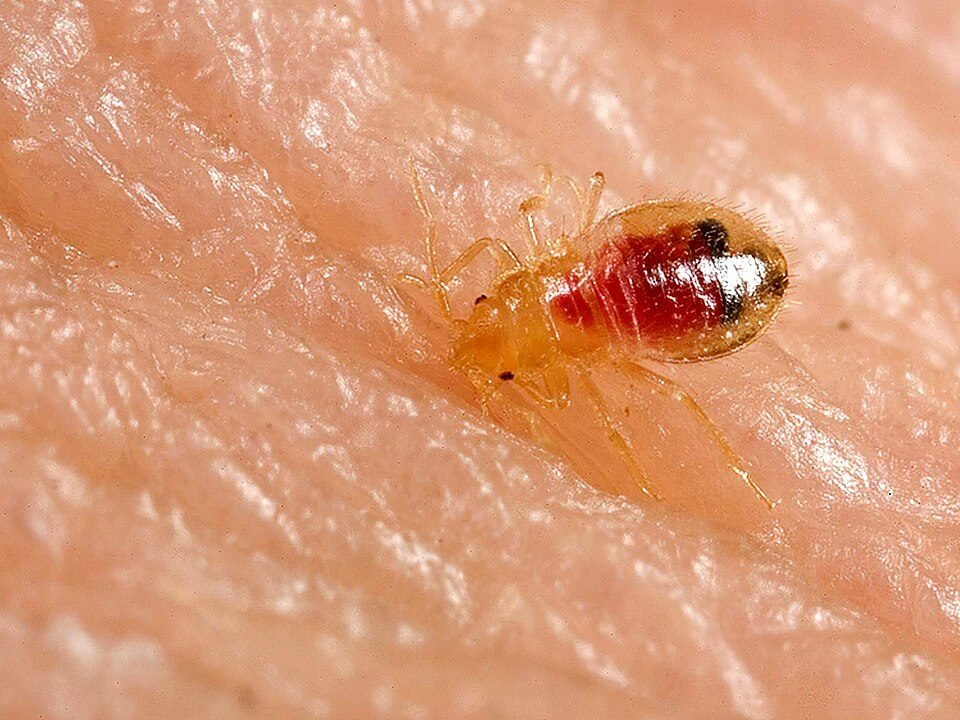

Do Bed Bugs Bite One Person and Not Another in the Same Bed?
It can happen that one person sharing a bed or room ends up with bites while the other is left untouched, but this is the less common outcome. A bed bug population feeding on a group of sleepers can end up concentrated on one side of a mattress or inside a nightstand or piece of furniture positioned closer to a particular sleeper, which makes it look like only that person is being targeted.
In most cases, both people are actually being fed on, and only one of them ends up with a mark on their skin afterward. The bugs themselves are not choosing a side; the real variable is how each person's body answers the bite.
Bed Bugs Bite One Person and Not Another Because Reactions Differ, Not Preference
Bed bug saliva contains both a blood-thinning compound and a mild numbing agent. Their mouthparts deliver this mixture straight into a capillary as they feed, which is why most people never feel the bite happening in the first place. The welt that shows up afterward is not the bite wound itself but a histamine reaction from the immune system responding to that saliva, and this reaction looks completely different from person to person.
- Reactions to bed bug bites vary widely, and roughly one in four people never develops a visible reaction.
- Some people never develop any mark, others get a mild bump, and a small number can have a stronger allergic response.
- Repeated exposure can make a person more sensitive over time, so someone who went weeks without a single mark may suddenly start reacting after being bitten enough times.
This is what produces the familiar household situation where one partner wakes up with itchy welts while the other, sleeping in the same bed, has nothing to show for it.
| Common Belief | What Actually Happens | |
|---|---|---|
| Bed bugs only bite one person | Bed bugs feed on whoever is accessible; reactions to the bites are what differ, not the biting itself | |
| No visible marks means no bed bugs | Around 20 per cent of people show no reaction at all, even when bitten repeatedly | |
| Bed bugs prefer sweeter or thinner blood | Bed bugs are drawn to a blood source and nearby hiding spots, not to blood type or skin type | |
| Bites show up right after feeding | A bite can take up to 14 days to appear, depending on the person | |
| More bites always mean a bigger reaction | Allergic sensitivity can build up and increase the more a person is bitten over time |
What a Bed Bug Bite Looks Like and How Long It Lasts
When a reaction does show up, it tends to follow a recognizable pattern. Bed bugs go after skin that is left uncovered overnight, which is usually the face, neck, arms, and hands, and because they often feed more than once in a session, several bites can appear grouped close together.
A reaction, once it appears, does not fade fast. Visible marks typically stick around for one to two weeks. Since bed bugs are nocturnal and tend to feed on roughly a weekly cycle, new bites can keep popping up in waves even while earlier ones are still healing, which tends to make it harder for a household to pin down what is actually going on.
Do Bed Bugs Prefer a Certain Blood Type or Skin Type?
There is a common belief that bed bugs single out people based on blood type, thinner skin, or "sweeter" blood. The way these insects actually find hosts does not support that idea. Bed bugs are drawn toward a blood source and the tight, dark hiding spots close to it, not toward any particular trait of the person, which is also why a tidy home is no protection against an infestation taking hold. Someone who appears mark-free after sharing a bed is far more likely to just be a non-reactor than someone the bugs are purposely skipping.
What To Do When Only One Person Has Bite Marks
Check the mattress and seams on both sides
Examine the mattress piping, tags, and seams on both sleepers' sides of the bed, not just the side belonging to the person with visible bites.
Inspect the bed frame and nearby furniture
Look at bed frame joints, headboards, nightstands, and baseboards near the bed, since bed bugs cluster in tight voids close to a blood source rather than on one person's skin.
Look for physical evidence, not just bites
Search for shed skins, small dark spotting, or live insects, since these confirm an infestation in a way that bite marks alone cannot.
Document any findings with photos
Photograph anything suspicious before buying treatment products, so the source can be confirmed rather than guessed at from symptoms.
Book a professional inspection
A licensed technician can confirm the species and map the extent of an infestation regardless of which household members are reacting to bites.
Why Bites Alone Don't Confirm an Infestation
Because skin reactions vary so much, bite marks on their own are a shaky way to diagnose a bed bug problem. A bite can take up to two weeks to actually surface, depending on the individual. That lag means someone could have been getting bitten for close to fourteen days before anything appears, well after a household may have already stopped suspecting the bed.
Bite patterns can also resemble mosquito bites, skin irritation, or marks from other pests, which adds to the confusion. The only dependable way to confirm bed bugs is finding the insects themselves or their physical traces, such as shed skins, dark spotting, or eggs tucked into mattress seams, box spring edges, bed frame joints, or nearby furniture. Buying treatment products based on bite marks alone, before the source is actually confirmed, tends to waste time and money chasing the wrong problem.
If only one person in the home has visible bites, inspect both sides of the bed and all nearby furniture joints before assuming the problem is isolated to that person's sleeping area.
What To Do When Only One Household Member Shows Bites
One person reacting does not mean only one person is being bitten. Bed bugs feed on whoever is closest and easiest to reach, so the whole sleeping area should be treated as exposed, not just the side of the bed belonging to the person with marks. This also matters in apartment buildings and condos, since bed bugs can move between adjoining units through wall voids and shared plumbing lines, meaning a neighbour with no complaints is not necessarily free of them.
A thorough check of the space, rather than relying on who shows symptoms, is the most reliable way to catch an infestation early, before it spreads past one side of the bed and into the rest of the home.
When to Call a Licensed Pest Control Professional
Since bite marks are unreliable evidence and bed bugs hide in far more places than just the mattress, the recommended step once bed bugs are suspected is a professional inspection that physically locates the insects or their signs, whether or not every household member is showing bites.
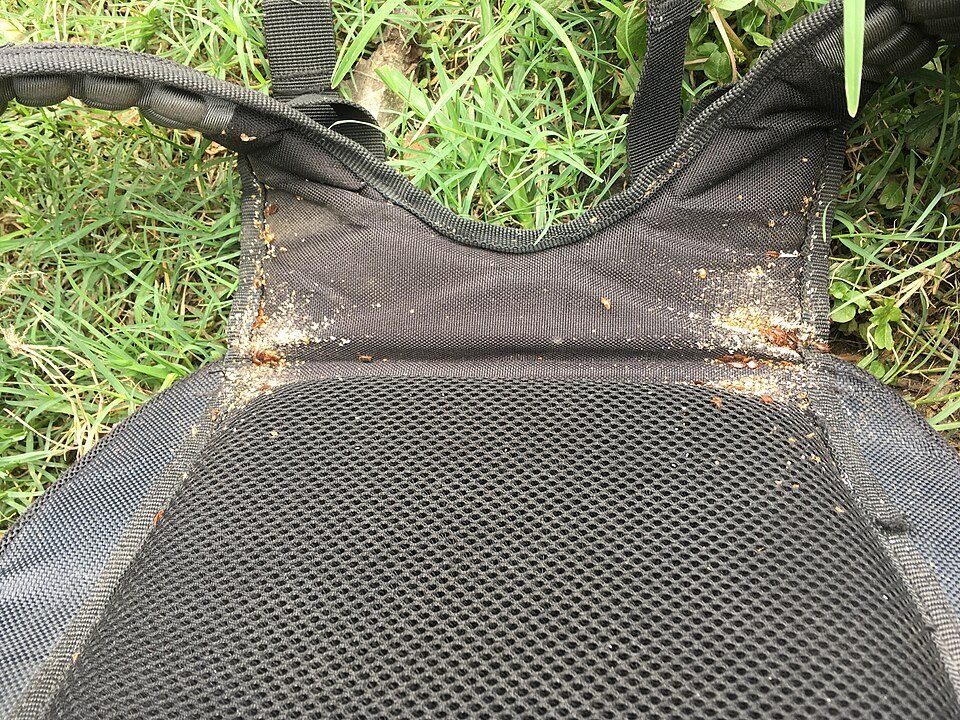

How AstraHive Pest Control gets rid of bed bugs
Bed bugs hide in seams, joints, box spring frames, plumbing voids, wall voids and behind electrical outlets, so every treatment starts with a careful inspection. We offer two treatments and choose between them by situation: Aprehend is our first choice for homes where people live and sleep and for severe infestations, and the standard chemical treatment is the right choice for Airbnbs, hotel rooms and vacant units.
How an AstraHive bed bugs treatment works
Inspect and confirm
We inspect the bed, furniture seams, baseboards, outlets and surrounding areas, confirm the insect and tell you which treatment fits, with the preparation list for that treatment.
Aprehend: for homes where people live and sleep
Aprehend is our premium bed bug treatment, a biopesticide built on a naturally occurring fungus. We apply it with a dedicated machine as a continuous band along baseboards, bed frames, box springs and the pathways bed bugs travel, and we put Drione dust into wall voids and outlets. Bed bugs pick up the spores as they cross the barrier and carry them back to the colony, where the fungus reaches the bugs a spray cannot, including pyrethroid-resistant bed bugs. It takes real knowledge to apply well, so only our experienced, trained technicians do it. Preparation is light: strip the beds, move them a little away from the walls and clear under the bed.
Standard chemical treatment: for empty units
For Airbnbs, hotel rooms and vacant units we take the bed apart, steam every seam and joint, vacuum with a HEPA vacuum, apply a residual spray (Temprid SC, which combines two active ingredients) according to its label, which stays active for about 90 days, and put Drione dust into wall voids and outlets. Nobody, pets included, stays inside during the treatment or for at least 6 hours afterwards, and the preparation is thorough, so it suits spaces nobody is living in. Mattress encasements are available as an optional extra.
Follow up 4 to 6 weeks later
We return 4 to 6 weeks after treatment to check the results and re-treat where needed. It is normal to still see live bed bugs for up to about 6 weeks, because bed bugs spread slowly, hide well and eggs laid before treatment keep hatching. If you still see live bed bugs after 6 weeks, call us.
Document everything and back it with a 90-day warranty
Where we found bed bugs, what we found and every product used goes in the service report. If bed bugs come back within 90 days, we re-treat at no charge.
Our products are Health Canada approved and safe for kids and pets, and we apply every product according to its label. AstraHive is licensed by the Ontario Ministry of the Environment, Conservation and Parks. Ontario requires a ministry-approved certification course before it issues an exterminator licence, and that training is delivered through the University of Guelph, Ridgetown Campus.
We choose one treatment per home, so you only prepare once. The two are not steps in one job: the standard residual spray is water-based, and water or steam deactivates Aprehend, so surfaces treated with Aprehend should not be wiped, mopped or steamed afterwards. In our experience live bed bugs drop in stages after Aprehend, roughly 50 to 55 percent fewer by week 3, 80 to 85 percent fewer by week 4 and 90 to 95 percent fewer by weeks 5 to 6. These figures are our own experience, not from the product label, and results vary.
In condos and apartments, neighbouring units and the building manager should be told early, because bed bugs travel through shared walls, ducts and plumbing chases.
Typical cost: Starting at $450 CAD, with final cost depending on property size and severity of infestation - there is no fixed upper limit. Call 905-925-8427 for an exact free quote.
Why Choose AstraHive
- Licensed & Insured: Certified by the Ontario Ministry of Environment, Conservation and Parks.
- Fast response: Same-day service available, with a callback within 5 minutes.
- 90-Day Warranty: If pests come back within that window, we re-treat at no additional charge.
- Proven track record: 5.0 stars on Google across 200+ reviews.
- Family & pet safe: Health Canada approved products on every job.
Frequently Asked Questions
Do bed bugs bite one person and not another in the same bed?
Usually both people are bitten, but only one develops a visible mark because bed bug bite reactions vary so much from person to person. True single-target biting is rare and usually means the bugs happen to be concentrated closer to one sleeper's side of the bed.
Why do some people never react to bed bug bites?
Roughly one in four people never develops a visible reaction to bed bug bites: when results from several clinical studies were combined, about 75% of people reacted, and a survey of emergency department patients found about a third had never had an itchy rash. For these people bites leave no visible bump or itching, even after repeated feeding. This does not mean they are being bitten less, only that their skin is not reacting.
How long after a bed bug bite does a reaction appear?
A reaction can take as long as 14 days to show up, depending on the person, which is why bites are a poor way to time when an infestation actually started. Some people react within hours while others never notice a mark at all.
Can bed bug bite sensitivity change over time?
Yes, allergic sensitivity to bed bug bites can increase the more a person is bitten, so someone who showed no reaction early in an infestation may start developing welts weeks later. The reverse can also happen, with strong early reactions fading over time.
If only one person has bites, does the whole house need to be checked?
Yes. Since reactions, not biting behaviour, explain most single-person bite patterns, the entire sleeping area and nearby furniture should be inspected rather than just the bed of the person with visible marks.
Sources
- Health Canada - Bedbugs: what are they? — A bedbug bite can take as long as 14 days to appear, depending on the person, and some people do not react at all while others have severe allergic reactions.
- Quebec.ca - Bed bug bites — Bed bugs can bite only one person in a group sharing a bedroom, and symptoms vary from one person to another, with some having no reaction at all.
- Espace pour la vie (Montreal) - Bed bugs: allergies and bites — Around 20 per cent of the population has no reaction to bed bug bites, and the bite is usually painless due to an injected anticoagulant and painkiller.
- Emergency Care BC - Bed Bugs fact sheet — Bed bugs usually feed weekly, bites occur on exposed skin such as the face, neck, arms and hands, and allergic sensitivity may increase the more a person is bitten.
- Ontario.ca: Pesticide licences and permits — Ontario's Ministry of the Environment, Conservation and Parks issues exterminator licences after a ministry-approved certification course, delivered through the University of Guelph, Ridgetown Campus.
- Doggett et al., Clinical Microbiology Reviews (2012): Bed bugs, clinical relevance and control options — Volunteer study: 13 of 24 (54.2%) had no reaction to first bites and 18 of 19 (94.7%) reacted after repeated exposures; pooled studies 249 of 331 (75%) reacted; some people never react even with repeated exposure.
- Sheele et al., Cureus (2019): Bed bug exposure and reactions among emergency department patients, Cleveland — Of 253 emergency department patients who had been fed on by bed bugs, 68% reported an itchy rash and about a third (32%) did not.
Areas We Serve
AstraHive Pest Control proudly serves 75+ communities across the following regions:
- Toronto: Toronto, North York, Scarborough, Etobicoke, East York, York, Leslieville, Lakeview
- Durham Region: Oshawa, Whitby, Ajax, Pickering, Clarington, Bowmanville, Courtice, Newcastle, Port Perry, Brooklin, Uxbridge, Scugog, Brock, Seaton
- York Region: Vaughan, Markham, Richmond Hill, Aurora, Newmarket, Thornhill, Woodbridge, Kleinburg, Maple, Stouffville, Unionville, Keswick, Holland Landing, East Gwillimbury, Georgina, King City, King Township, Nobleton, Berczy Village, Cathedraltown, Commerce Valley, Cornell, Wismer, Whitchurch-Stouffville, Sutton, Schomberg
- Peel Region: Mississauga, Brampton, Caledon, Malton, Port Credit, Streetsville, Meadowvale, Cooksville, Bolton, Palgrave
- Extended Service Area: Peterborough, Lindsay, Port Hope, Barrie, Bradford, Innisfil, Collingwood, Wasaga Beach, Orillia, Burlington, Oakville, Milton, Hamilton, Grimsby, St. Catharines, Welland, Niagara Falls
Don't see your city listed? Call us — we likely cover it.
Got a pest problem right now?
Call AstraHive for a free consultation. Licensed & insured, serving the GTA, Durham, York, Peel and Simcoe County.
Call 905-925-84275.0 Stars — 200+ Google Reviews | Licensed & Insured | Health Canada Approved