Drain flies keep coming back when the breeding site is still there: the slime film inside a drain, a floor drain trap that has dried out, a damaged line that is leaking into the ground, or wet organic matter somewhere else. Swatting and spraying only remove adults. This guide shows how to tell which of the four causes you have, what you can fix yourself, and when the job belongs to a plumber, a pest control company, or both.
Local trade featured in this guide

Rob Munro
Munro Plumbing, Oshawa and Durham Region
- Locally owned, licensed and insured, serving Oshawa, Whitby, Ajax, Pickering, Courtice, Bowmanville and Port Perry
- Free written quotes before any work starts, with drop cloths and a full clean-up after every job
- Drain clearing, repairs, new installs and renovation plumbing for homes and commercial properties
Why drain flies keep coming back after you clean
Drain flies, also called moth flies, breed in the gelatinous organic film that builds up inside drains. Penn State Extension describes it as an ideal breeding site, and University of California IPM says the most common developmental sites in homes are bathroom drains. Eggs hatch in about 48 hours, and the cycle takes as little as 8 days or as long as 24 days.
Why one missed drain keeps the flies coming
Eggs go into the slime
The female lays eggs on the moist organic film that lines a drain or the soil and debris under a leaking pipe. Eggs hatch in about 48 hours.
Larvae feed in the film
The larvae live and feed in the same film, out of reach of anything you spray in the room.
Adults emerge in 8 to 24 days
The whole cycle can be done in as little as 8 days, or take as long as 24 days. A single untouched source keeps producing adults.
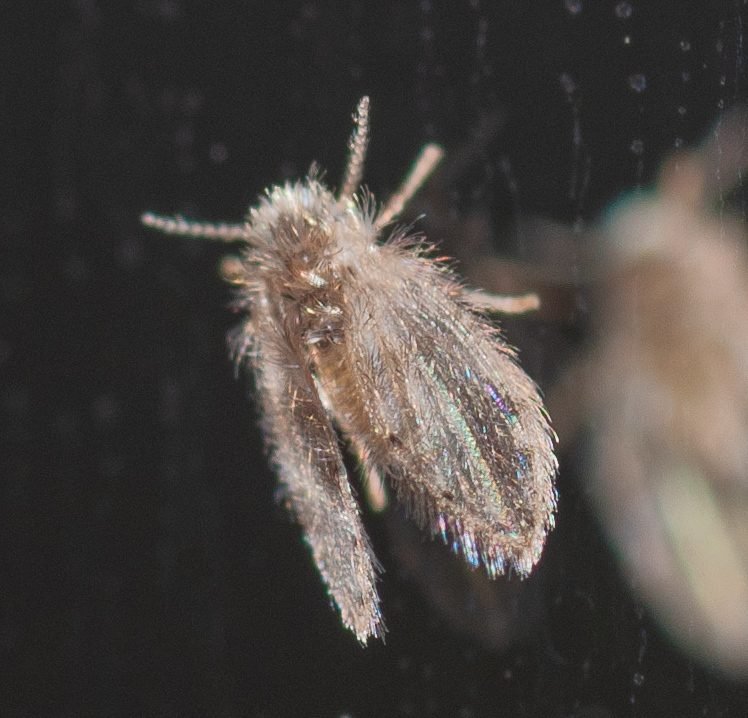
That is why a quick flush, a spray, or one scrub of the drain you can see often fails: if any breeding site is left, a new generation is ready within three weeks. It is also worth confirming what you have. Washington State University describes moth flies as small, hairy and moth-like, and University of California IPM says adults resting on walls near a drain are a clear sign. A CBC Edmonton story notes that fruit flies also lay eggs in sinks, drains and showers. Drain flies do not bite, but University of California IPM notes they may carry pathogens from their breeding sites and that dead flies can become allergens. Our full guide to drain flies in Ontario covers identification, and the guide to fruit flies in Ontario helps if the flies are around fruit rather than a drain.


The four sources behind drain flies that keep coming back
Every persistent drain fly problem comes down to one of four sources. The table shows how to recognize each one and who fixes it.
| Source of the flies | How to confirm it | Who fixes it |
|---|---|---|
| Slime film in a used drain | Flies rest on walls near a sink, shower or tub drain; scraping the drain wall brings up slime | You, with a brush and an enzyme-action cleaner; a pest control company if it keeps returning |
| A floor drain or fixture that is rarely used | A basement or garage floor drain, a spare bathroom, or a toilet that sees little water; flies appear after a holiday or a long gap | You, by keeping water in the trap; a plumber can fit a trap primer so it stays filled |
| A leaking or broken drain line | Flies come back after the drain is cleaned and the trap is full; a persistent sewage smell or a damp floor near the drain | A plumber, who can inspect the line; pest control only treats the leftover film and adults |
| Wet organic matter somewhere else | Flies in rooms with no drain, or outside sources such as a septic system, compost or wet garbage | You, by removing the wet material; pest control for a persistent indoor population |
The first two are usually fixable at home, and the third needs a plumber.
Step 1: find which drain the flies are coming from
Start by catching the source, because guessing wastes weeks.
- Cover each suspect drain overnight. Penn State Extension suggests placing a jar over the outlet or taping a plastic bag over the overflow opening, then checking it at intervals for adult flies. University of California IPM suggests coating the inside of the jar with petroleum jelly or vegetable oil so flies stick.
- Use a glue board for a clearer answer. Ohio State Extension describes covering the opening with a clear plastic container that has glue boards taped to the sides, so you can see which drain is producing flies.
- Scrape the drain wall. University of California IPM says to remove the drain plate and scrape the slime from the sides. If slime comes up, you have found a breeding film.
- Check the drains nobody uses. The University of Kentucky lists rarely used toilets, basement and garage floor drains, and refrigerator drip pans as common breeding sites.
Step 2: remove the film, because spray will not reach it
Cleaning is where most do-it-yourself attempts fall short. Pouring a product down the drain does not scrub the film off the pipe wall, and the larvae sit in that film.
- Scrub first. Penn State Extension says to clean sinks, drain pipes and traps with a stiff wire brush or by steam. University of California IPM recommends a hard bristle brush, and says to run water through the drain afterwards so it flows freely. A badly slowed drain may need snaking first.
- Use an enzyme or biological cleaner for the film. Ohio State Extension says cleaning is best done with an enzyme-action product designed to break the sticky bond of the film. Washington State University describes non-toxic biological drain cleaners that remove the organic slime layer, and Penn State notes products containing bacteria or enzymes that break down the gelatinous scum.
- Do not rely on insecticide. Ohio State Extension says a flying-insect aerosol will not kill the larvae and new flies will soon appear, and the University of Kentucky says not to pour insecticides down drains. University of California IPM goes further and says insecticide use in homes is particularly discouraged. Washington State University lists chemical control as none recommended.
Washington State University adds that if you cannot manage a moth fly problem, you should contact a licensed pest management professional.
Step 3: check the trap, especially basement floor drains
Every drain has a trap, a bend that holds water and blocks gas from the sewer. A floor drain in a basement, laundry room or garage is the easiest to forget, because nothing runs into it day to day.
Plumbing & Mechanical magazine explains the problem plainly: floor drain traps that do not connect to a water-supplied fixture will tend to evaporate, and traps in very dry areas also lose their seal by evaporation. Once the water is gone, the trap no longer keeps sewer gas out of the room, and the drain becomes an open path to the pipe below. The same article describes a trap primer, a piping device that helps maintain a water seal in a remote trap, which a plumber can fit when a floor drain needs to stay filled without anyone remembering to do it.
The University of Kentucky describes the typical pattern: flies appear after a vacation or long period of travel and disappear soon after normal household activity resumes and water moves through toilets and drain traps again. A renovation can create the same situation, because fixtures and floor drains in the work area may sit unused or disconnected for weeks. If the flies started around a renovation, check every floor drain and unused fixture in that part of the house first.
- Run enough water into every rarely used floor drain, sink and tub to refill the trap, and flush rarely used toilets.
- Repeat every week or two, or ask a plumber about a trap primer for a floor drain that never gets water.
- Empty and wipe the drain pan under a refrigerator or dehumidifier, which the University of Kentucky lists as a breeding site.

Why you can never fully remove drain flies, and what protects your home
Rob Munro of Munro Plumbing in Oshawa adds an important point that most drain fly advice leaves out: drain flies cannot be eliminated for good, and no treatment inside one house changes that. Even if every drain in a neighbourhood were cleaned, drain flies would still be present in the municipal sewer system. Our homes are connected to that system, so the flies always have a route to every house, no matter how thoroughly the drains inside it have been treated.
What decides whether they reach the inside of your home is the plumbing between the sewer and the room. Rob's advice is that the best form of protection is a properly functioning P-trap. Every sink, tub, shower and floor drain relies on a trap, the bend that holds a plug of water in the pipe. With water in the trap, the pipe is closed. With a dry, damaged or missing trap, the pipe is an open path from the sewer to your living space.
That changes how to read the rest of this guide. Cleaning the film and treating adults removes the flies that are already breeding in your home, and it should be done. Keeping every trap full and in working order is what keeps new ones from coming in. If flies keep appearing from a drain after it has been cleaned, ask a plumber to check that the trap is intact, holds water and is properly vented, and to fit a trap primer on any floor drain that rarely sees water.
When drain flies keep coming back from a broken drain line
If the drain is clean, the trap is full and the flies still return, the source may be below the floor. University of California IPM says flies develop in material beneath leaking drain and sewage pipes, and that pipes in crawlspaces, wall voids and under concrete slabs may need inspecting for breaks or leaks.
A pest control company's case study from New Jersey shows how this plays out. A homeowner renovating a kitchen floor found a large drain fly infestation and then discovered a broken pipe under the floor that had caused a waste backup, the kind of wet, organic-rich spot drain flies thrive in. The homeowner booked a plumber to repair the pipe the same day, while the pest control team cleaned out the area and treated the pipe and the odour source. That is one documented case, not a rule, but it shows that a pest treatment cannot repair a damaged line, and a repair does not remove the film and adults left behind.
Signs worth raising with a plumber include flies that return within weeks of a thorough clean even though the trap holds water, a damp patch near the drain, and a sewage smell that does not go away. None of these proves a broken line on its own, which is why the next step is an inspection by a licensed plumber.
Plumber or pest control: who to call and when
Most drain fly problems need two kinds of skill: someone who understands the plumbing and someone who understands the insect. A plumber handles a dry trap that needs a primer, a leaking or damaged line, and a slow drain that needs clearing. A pest control company finds the breeding drain, removes the film, treats the adults and follows up, and can confirm the species when you are not sure what you are looking at.
If you are not sure where to start, begin with the checks in this guide. A full trap and a clean drain that still produce flies point toward the plumber. Flies around a drain that holds water and has a slimy film in it point toward cleaning and treatment. When a plumbing job is planned, mention the flies, so unused floor drains and fixtures are checked before the work ends.
How to stop drain flies coming back
- Run water through unused drains weekly, including basement floor drains, spare bathrooms, laundry standpipes and guest tubs.
- Clean the film, do not just flush it. A brush and an enzyme cleaner once a month in drains that tend to slow down keeps the film from rebuilding.
- Fix slow drains and leaks early, before organic matter builds up.
- Empty drip pans under refrigerators and dehumidifiers.
- Keep every trap working. A functioning P-trap is the best protection against flies coming up from the sewer. Have a plumber repair or replace any trap that is cracked, siphoning dry or missing.
Who to call in Durham Region: Munro Plumbing
Munro Plumbing is the local plumber we point people to when drain flies, slow drains or a damaged line are the problem. The company is locally owned, licensed and insured, quotes in writing before work begins and protects floors and finishes while it works. Customer reviews describe honest, tidy and clearly explained work, which is what you want when the answer might be a repair beneath the floor. Call them when the trap is full, the drain is clean and the flies still return, or when you notice a persistent sewer smell or a damp floor near a drain. Visit their website.
AstraHive Pest Control is a fellow member of BNI Momentum, a Durham business referral network, alongside the businesses featured here. We recommend them because of what their own sites and customer reviews show.
How AstraHive Pest Control gets rid of drain flies
Drain flies are a source problem, and the source is inside your plumbing. The work is finding which drain is breeding them, removing the film they live in, and telling you plainly when the cause is a plumbing fault that needs a plumber.
How an AstraHive drain flies treatment works
Inspect and find the breeding drain
We inspect bathrooms, kitchen, laundry, basement floor drains, traps, rarely used toilets and any wet spots to find which drains are producing flies, and we look for signs of a dry trap or a damaged line.
Remove the film at the source
After scrubbing, we apply a professional bioenzyme treatment that breaks down the organic film where drain flies breed and destroys the eggs. Sprays and quick flushes alone do not reach that film.
Treat adults indoors only when needed
If large numbers of adults are already flying through the house, we add an interior treatment applied according to its label. Otherwise cleaning the source is what solves it.
Back it with a 90-day warranty
If drain flies come back within 90 days, we re-treat at no charge.
Our products are Health Canada approved and safe for kids and pets, and we apply every product according to its label. AstraHive is licensed by the Ontario Ministry of the Environment, Conservation and Parks. Ontario requires a ministry-approved certification course before it issues an exterminator licence, and that training is delivered through the University of Guelph, Ridgetown Campus.
A pest treatment cannot repair a dry trap or a damaged drain line. When our inspection points to a plumbing fault, we say so, because no treatment will hold until the plumbing is fixed.
Why Choose AstraHive
- Licensed & Insured: Certified by the Ontario Ministry of Environment, Conservation and Parks.
- Fast response: Same-day service available, with a callback within 5 minutes.
- 90-Day Warranty: If pests come back within that window, we re-treat at no additional charge.
- Proven track record: 5.0 stars on Google across 200+ reviews.
- Family & pet safe: Health Canada approved products on every job.
Frequently Asked Questions
Why do drain flies keep coming back after I clean the drain?
Usually a breeding site was missed. Eggs hatch in about 48 hours and the cycle can finish in as little as 8 days, so a second drain, a dry floor drain trap or a leaking line can restart the problem. Cover each drain overnight with a jar or glue board to find which one is producing flies.
Can a broken drain pipe cause drain flies?
Yes. University of California IPM says moth flies develop in material beneath leaking drain and sewage pipes, and that pipes in crawlspaces, wall voids and under concrete slabs may need to be checked for breaks or leaks. A licensed plumber is the right person to inspect the line.
Do floor drains need water in them to stop drain flies?
A floor drain trap needs water to work. Floor drain traps that do not connect to a water-supplied fixture tend to dry out, which leaves an open path to the pipe. Pour water in rarely used drains every week or two, or ask a plumber about a trap primer.
Does pouring insecticide down the drain kill drain fly larvae?
No. Ohio State Extension says flying-insect aerosols will not kill the larvae, and both Ohio State and the University of Kentucky advise against pouring insecticide down a drain. Scrubbing the film and using an enzyme or biological drain cleaner removes what the larvae live in.
Should I call a plumber or a pest control company for drain flies?
Start with the checks in this guide. If the drain is clean, the trap holds water and the flies still return, or you notice a sewage smell or damp floor, call a plumber. If the flies come from a slimy drain that keeps rebuilding, or you cannot find the source, call a pest control company.
Can drain flies be eliminated for good?
Not in the sense of removing them from the area. Drain flies live in the municipal sewer system that every home connects to, so they always have a route to your house. You can remove the ones breeding in your own drains and then keep new ones out with properly working P-traps, which is the best protection according to Rob Munro of Munro Plumbing.
Sources
- CBC News: Those annoying little fruit flies are heading indoors at this time of year (Edmonton, 2023) — A gardening expert told CBC Edmonton that fruit flies love to lay their eggs in sinks or drains and in showers, and that the flies do not like to travel far from where they lay their eggs.
- Ontario.ca: Pesticide licences and permits — Ontario's Ministry of the Environment, Conservation and Parks issues exterminator licences after a ministry-approved certification course, delivered through the University of Guelph, Ridgetown Campus.
- UC IPM: Moth or Drain Flies (University of California Statewide IPM Program) — The life cycle can be completed in as little as 8 days but can take as long as 24 days; eggs hatch in about 48 hours; in homes the most common developmental sites are bathroom drains; flies also develop in material beneath leaking drain and sewage pipes; pipes in crawlspaces, wall voids and the underside of concrete slabs may need to be inspected for breaks or leaks; check drains by scraping the slime from the sides; use a hard bristle brush with an industrial drain cleaner and run water afterwards; insecticide use in homes is particularly discouraged; flies do not bite but may carry pathogens and dead flies may form allergens.
- Ohio State University Extension: Drain Flies (Moth Flies) — The most effective way to prevent drain fly infestations is to eliminate their breeding places; cleaning is best done with an enzyme-action product designed to break the sticky bond, with a stiff long-handled brush; flying-insect aerosols will not kill the larvae and new flies will soon appear; do not pour an insecticide down a drain; cover a drain with a clear plastic container with glue boards taped to the sides to confirm the source.
- Penn State Extension: Moth Flies in the Home — Moth flies breed in the gelatinous organic deposits that accumulate in drains; find the infested drain by placing a jar over the outlet or taping a plastic bag over the overflow opening and checking at intervals; clean sinks, drain pipes and traps with a stiff wire brush or steam; products containing bacteria or enzymes break down the gelatinous scum.
- University of Kentucky Entomology: Drain Flies or Moth Flies (ENTFACT 615) — Breeding sites include infrequently used toilet bowls and tanks, sink or floor drains in basements or garages, and drain pans under refrigerators; flies are seen after returning from a vacation and disappear soon after normal household activity resumes; clean pipes and traps thoroughly to remove surface films; do not pour insecticides down drains.
- Washington State University PestSense: Moth flies (drain flies) — Select non-chemical management options first; keep drains clear of sludge build-up; non-toxic biological drain cleaners can remove the organic slime layer; chemical control: none recommended; contact a licensed pest management professional if you cannot manage the problem.
- Plumbing & Mechanical: Trapping Floor Drains (Tony Marcello, 2015) — Floor drain traps that do not connect to a water-supplied fixture will tend to evaporate; traps in overly dry areas also lose their seal by evaporation; a trap primer is a piping device that helps maintain a water seal in a remote trap; the water seal keeps sewer gas from entering the room or building.
- Cowleys Pest Services: Broken Pipe Home for Drain Flies (Manasquan, NJ, 2022) — A homeowner renovating a kitchen floor found a drain fly infestation and discovered a broken pipe under the floor that caused a waste backup; the homeowner booked a plumber to repair the pipe while the pest company cleaned out the affected area and treated the pipe with a liquid product and bio-foam.
Areas We Serve
AstraHive Pest Control proudly serves 75+ communities across the following regions:
- Toronto: Toronto, North York, Scarborough, Etobicoke, East York, York, Leslieville, Lakeview
- Durham Region: Oshawa, Whitby, Ajax, Pickering, Clarington, Bowmanville, Courtice, Newcastle, Port Perry, Brooklin, Uxbridge, Scugog, Brock, Seaton
- York Region: Vaughan, Markham, Richmond Hill, Aurora, Newmarket, Thornhill, Woodbridge, Kleinburg, Maple, Stouffville, Unionville, Keswick, Holland Landing, East Gwillimbury, Georgina, King City, King Township, Nobleton, Berczy Village, Cathedraltown, Commerce Valley, Cornell, Wismer, Whitchurch-Stouffville, Sutton, Schomberg
- Peel Region: Mississauga, Brampton, Caledon, Malton, Port Credit, Streetsville, Meadowvale, Cooksville, Bolton, Palgrave
- Extended Service Area: Peterborough, Lindsay, Port Hope, Barrie, Bradford, Innisfil, Collingwood, Wasaga Beach, Orillia, Burlington, Oakville, Milton, Hamilton, Grimsby, St. Catharines, Welland, Niagara Falls
Don't see your city listed? Call us — we likely cover it.
Got a pest problem right now?
Call AstraHive for a free consultation. Licensed & insured, serving the GTA, Durham, York, Peel and Simcoe County.
Call 905-925-84275.0 Stars — 200+ Google Reviews | Licensed & Insured | Health Canada Approved