There isn't truly an instant kill temperature for bed bugs: every lethal heat level still needs a minimum amount of exposure time. Adults begin dying around 48°C (118°F), while eggs require closer to 55°C (131°F) held long enough for the heat to work through the shell. Actual results depend on both how hot a surface gets and how long it stays that way.
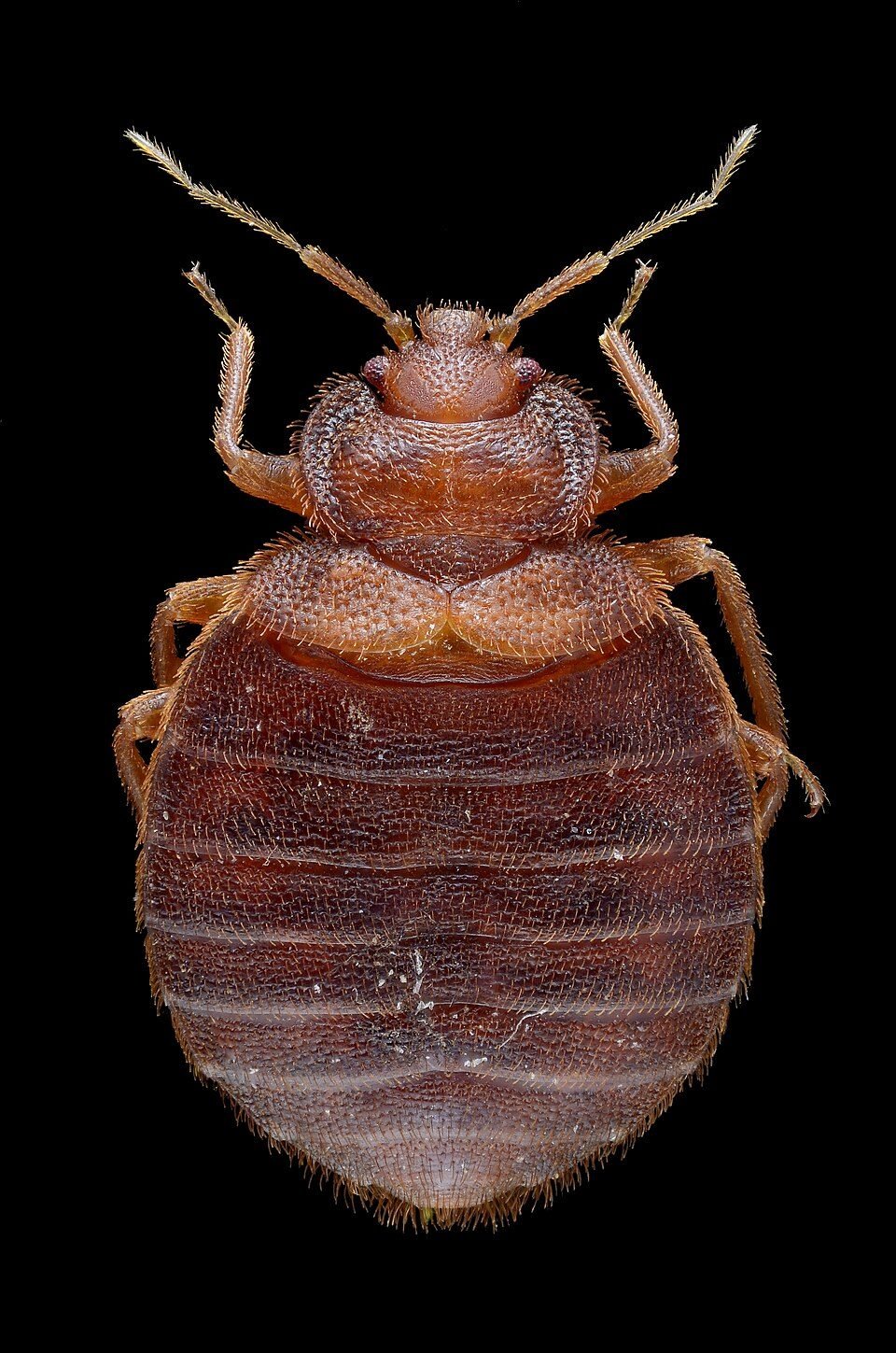

What Temperature Kills Bed Bugs Instantly? The Science of Time and Heat
Bed bugs don't die the instant a thermometer hits one magic number. Death results from a combination of temperature and duration: hotter surfaces need less time, while cooler ones let bed bugs hang on longer. In controlled heat chamber testing, adults needed roughly 95 minutes at a steady 45°C (113°F) before 99 percent died, while eggs took around 7 hours at that same temperature. Pushing the temperature up to 48°C still left eggs needing more than an hour to reach that same mortality rate.
That pattern explains why "instant" doesn't really apply here. A surface must be hot enough and stay hot enough long enough, which is also why steam works so fast on contact: steam cleaners put out heat at 100°C or higher, so whatever the steam physically reaches dies almost immediately, far quicker than the minutes-to-hours timelines seen with lower whole-room heat targets.
What Temperature Kills Bed Bugs and Their Eggs
The most reliable numbers come from controlled laboratory heat studies. Adult bed bugs hit 99 percent mortality at 48.3°C (119°F). Eggs required a noticeably higher 54.8°C (130.6°F) to reach that same result. Health Canada's guidance similarly notes that bed bugs die at 50°C, and that steam cleaners, running at 100°C or above, work well against them.
Eggs are what really determine the bar for any heat-based approach. Their hard outer shell offers protection, and they're frequently tucked into seams, cracks, and fabric folds, spots where heat spreads more slowly than across an open surface. A treatment aimed at full control has to be designed around the egg threshold rather than the lower adult one, otherwise the next generation survives untouched.
A surface that feels hot to the touch isn't proof it's hot enough. Bed bug eggs need sustained heat near 54.8°C, well beyond what a warm room or a brief burst of heat typically provides.
| Kill Temperature | Time Needed | Notes | |
|---|---|---|---|
| Adults (heat) | 48.3°C / 119°F | About 95 minutes at a constant 45°C | Fastest-dying stage under heat |
| Eggs (heat) | 54.8°C / 130.6°F | About 7 hours at 45°C; still over an hour at 48°C | Sets the real target for full heat treatment |
| Whole-room heat treatment target | 45-52°C / 113-126°F | Sustained throughout every surface | Commercial equipment range, allowing for cold spots |
| Cold exposure | Below -15°C | About 3.5 days for full control | Eggs are the most cold-tolerant stage |
| Extreme cold | Below -20°C | About 48 hours | Faster control at lower temperatures |
Bed Bug Temperature Range: From Freezing Cold to Deadly Heat
On the cold end, bed bugs hold up surprisingly well. Studies on their cold tolerance found average supercooling points, the point where body fluids freeze, ranging from -21.3°C to -30.3°C depending on life stage, with eggs being the hardiest. The lower lethal temperature needed to eliminate 99 percent of bed bugs came in at -31.2°C.
Practically speaking, temperatures under -15°C wiped out every life stage within about 3.5 days, and dropping below -20°C cut that down to roughly 48 hours. Above -12°C, some bed bugs were estimated to survive a full week of continuous cold, which explains why tossing items into an unheated garage for a single cold night rarely finishes them off.
Taken together, the full bed bug temperature range stretches from about -31°C, where virtually no life stage survives, up to roughly 55°C, where even eggs are reliably destroyed. Indoors at normal room temperature, bed bugs don't just get by, they thrive: their life cycle moves fastest between about 21°C and 28°C (70 to 82°F), which lines up closely with the comfort range of most Ontario homes year-round.
How Hot a Room Needs to Get for Heat Treatment to Work
Whole-room heat treatments are designed around the slowest-dying stage: eggs. Commercial systems typically aim for 45°C to 52°C (113 to 126°F) across the entire structure, because uneven heating in a real room can leave spots that run hotter or colder than the main target. So how high does the surface temperature actually need to climb? One extension guide puts 131°F (about 55°C) as lethal to every life stage, and states that heating a room to at least 140°F for two hours, or 130°F for three hours, is necessary to resolve an infestation using ambient heat alone.
Steam operates on a different principle. Passing a commercial steamer over a mattress seam, bed frame joint, or baseboard crack kills the eggs, nymphs, and adults it directly touches, since the heat delivered is so far beyond what any bed bug can tolerate. That's part of why professional treatment often combines a steam pass over seams, joints, cracks, and bed springs with a product that continues working after the visit, since steam only affects what it physically contacts and can't reach bugs hiding deeper in wall voids or furniture frames.
Can Washing or Drying Clothes at High Heat Kill Bed Bugs?
Fabric items offer the easiest way to hit a dependable kill temperature at home. Washing clothes in hot water, or drying them above 122°F (50°C) for 20 minutes, eliminates bed bugs at every life stage, including eggs. That threshold holds real value for washable bedding, clothing, and stuffed toys.
The catch becomes clear once you look beyond the laundry basket: that same heat does nothing for mattress seams, box springs, baseboards, electrical outlets, and furniture joints, which is where most of an infestation actually lives. Items that can go through a washer and dryer only make up a small slice of what needs addressing.
Why Hitting the Kill Temperature Once Doesn't End an Infestation
Reaching 55°C across one mattress won't end an infestation if eggs sitting in a nearby baseboard or outlet cover never feel that heat. Bed bug eggs hatch in about 10 to 15 days at normal room temperature, or in as few as 4 to 12 days under warmer conditions, so any egg that avoids a heat pass already has a hatch date set. A single female lays at least 200 eggs over her lifetime, meaning a small number of missed eggs is enough to rebuild a visible population within weeks.
This is why effective bed bug control uses temperature as one part of a larger strategy rather than the whole plan, and why follow-up inspections are scheduled around that same egg-hatch window instead of guessed at.
Getting the Pest Right Before Chasing a Temperature
Before applying any temperature-based or chemical method, it's worth verifying the insect is actually a bed bug. Several household pests get mistaken for them regularly, including bat bugs, carpet beetle larvae, bird mites, and booklice, and each requires a completely different approach. Treating the wrong insect with a bed bug method, whether heat or otherwise, wastes time and money while the actual problem keeps going unaddressed.
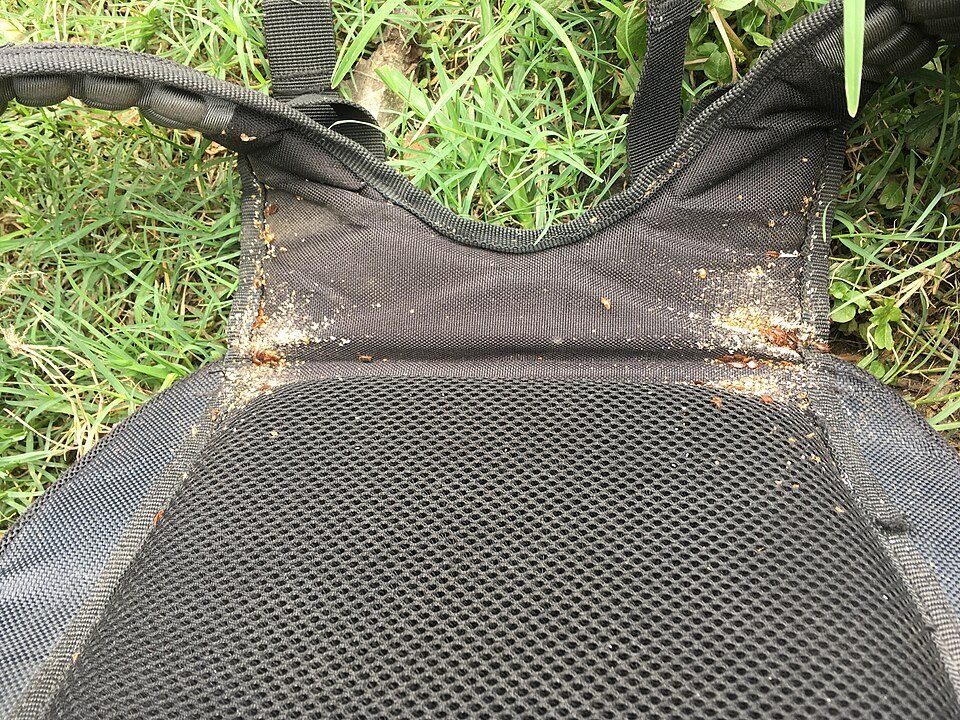

How AstraHive Pest Control gets rid of bed bugs
Bed bugs hide in seams, joints, box spring frames, plumbing voids, wall voids and behind electrical outlets, so every treatment starts with a careful inspection. We offer two treatments and choose between them by situation: Aprehend is our first choice for homes where people live and sleep and for severe infestations, and the standard chemical treatment is the right choice for Airbnbs, hotel rooms and vacant units.
How an AstraHive bed bugs treatment works
Inspect and confirm
We inspect the bed, furniture seams, baseboards, outlets and surrounding areas, confirm the insect and tell you which treatment fits, with the preparation list for that treatment.
Aprehend: for homes where people live and sleep
Aprehend is our premium bed bug treatment, a biopesticide built on a naturally occurring fungus. We apply it with a dedicated machine as a continuous band along baseboards, bed frames, box springs and the pathways bed bugs travel, and we put Drione dust into wall voids and outlets. Bed bugs pick up the spores as they cross the barrier and carry them back to the colony, where the fungus reaches the bugs a spray cannot, including pyrethroid-resistant bed bugs. It takes real knowledge to apply well, so only our experienced, trained technicians do it. Preparation is light: strip the beds, move them a little away from the walls and clear under the bed.
Standard chemical treatment: for empty units
For Airbnbs, hotel rooms and vacant units we take the bed apart, steam every seam and joint, vacuum with a HEPA vacuum, apply a residual spray (Temprid SC, which combines two active ingredients) according to its label, which stays active for about 90 days, and put Drione dust into wall voids and outlets. Nobody, pets included, stays inside during the treatment or for at least 6 hours afterwards, and the preparation is thorough, so it suits spaces nobody is living in. Mattress encasements are available as an optional extra.
Follow up 4 to 6 weeks later
We return 4 to 6 weeks after treatment to check the results and re-treat where needed. It is normal to still see live bed bugs for up to about 6 weeks, because bed bugs spread slowly, hide well and eggs laid before treatment keep hatching. If you still see live bed bugs after 6 weeks, call us.
Document everything and back it with a 90-day warranty
Where we found bed bugs, what we found and every product used goes in the service report. If bed bugs come back within 90 days, we re-treat at no charge.
Our products are Health Canada approved and safe for kids and pets, and we apply every product according to its label. AstraHive is licensed by the Ontario Ministry of the Environment, Conservation and Parks. Ontario requires a ministry-approved certification course before it issues an exterminator licence, and that training is delivered through the University of Guelph, Ridgetown Campus.
We choose one treatment per home, so you only prepare once. The two are not steps in one job: the standard residual spray is water-based, and water or steam deactivates Aprehend, so surfaces treated with Aprehend should not be wiped, mopped or steamed afterwards. In our experience live bed bugs drop in stages after Aprehend, roughly 50 to 55 percent fewer by week 3, 80 to 85 percent fewer by week 4 and 90 to 95 percent fewer by weeks 5 to 6. These figures are our own experience, not from the product label, and results vary.
In condos and apartments, neighbouring units and the building manager should be told early, because bed bugs travel through shared walls, ducts and plumbing chases.
Typical cost: Starting at $450 CAD, with final cost depending on property size and severity of infestation - there is no fixed upper limit. Call 905-925-8427 for an exact free quote.
Why Choose AstraHive
- Licensed & Insured: Certified by the Ontario Ministry of Environment, Conservation and Parks.
- Fast response: Same-day service available, with a callback within 5 minutes.
- 90-Day Warranty: If pests come back within that window, we re-treat at no additional charge.
- Proven track record: 5.0 stars on Google across 200+ reviews.
- Family & pet safe: Health Canada approved products on every job.
Frequently Asked Questions
What temperature kills bed bugs instantly?
No single temperature kills bed bugs the instant it's reached; every lethal level still requires a minimum exposure time. Adults reach 99 percent mortality at 48.3°C (119°F) after about 95 minutes at a slightly lower 45°C, while direct contact with steam, which runs at 100°C or higher, kills almost immediately because the heat is so far above that threshold.
What temperature kills bed bugs and their eggs?
Adult bed bugs reach 99 percent mortality around 48.3°C (119°F), but eggs need a higher 54.8°C (130.6°F) to be reliably destroyed. Since eggs are protected by a hard shell and tucked into seams and cracks, a treatment aiming to clear an infestation needs to hit the egg threshold, not just the adult one.
What is the bed bug temperature range for survival?
Bed bugs can survive brief exposure to temperatures from roughly -12°C up into the high 40s Celsius, with supercooling points as low as -21°C to -30°C depending on life stage. They reproduce fastest in warm indoor conditions, around 21°C to 28°C (70 to 82°F), and become increasingly vulnerable as temperatures push toward either extreme.
Can cold temperatures kill bed bugs?
Yes, but it takes sustained deep cold rather than just a cool room. Temperatures below -15°C control all bed bug life stages in about 3.5 days, and below -20°C that drops to about 48 hours, while some bed bugs are estimated to survive even a week of continuous cold above -12°C.
Does a clothes dryer get hot enough to kill bed bugs?
Yes, for washable items. Clothes laundered in hot water or dried at temperatures above 122°F (50°C) for 20 minutes will kill bed bugs at every life stage, including eggs, though this only works for fabric that fits in a washer and dryer, not mattresses, furniture, or baseboards.
Sources
- Health Canada: Bedbugs, what are they? — Adult bedbugs up to 10 mm, oval, flat, brown and blood red after feeding; feed on blood while people sleep; a bite can take up to 14 days to appear; bites often on the face, neck, arms, legs and chest; not known to spread disease; eggs are white, about 1 mm, in cracks and crevices.
- Health Canada: Bedbugs, how do I get rid of them? — Bed bugs die at 50°C and steam cleaners emit 100°C or more.
- Ontario.ca: Pesticide licences and permits — Ontario's Ministry of the Environment, Conservation and Parks issues exterminator licences after a ministry-approved certification course, delivered through the University of Guelph, Ridgetown Campus.
- Temperature and Time Requirements for Controlling Bed Bugs under Commercial Heat Treatment Conditions, Insects (2011) — Adult bed bugs reached 99 percent mortality at 48.3°C and eggs at 54.8°C; at 45°C adults needed about 95 minutes and eggs about 7 hours; commercial heat treatments target 45 to 52°C.
- Cold Tolerance of Bed Bugs and Practical Recommendations for Control, Journal of Economic Entomology (2013) — Supercooling points ranged from -21.3°C to -30.3°C; temperatures below -15°C controlled all life stages after 3.5 days and below -20°C took 48 hours.
- Penn State Extension: Biology, Habitat, and Management of Bed Bugs — 131°F is lethal to all stages; heating a room to at least 140°F for two hours or 130°F for three hours is required for control.
- University of Minnesota Extension: Bed Bugs — Clothes laundered in hot water or dried at temperatures hotter than 122°F for 20 minutes will kill bed bugs at every life stage, including eggs.
- UC IPM: Bed Bugs (Pest Notes 7454) — Eggs hatch in about 10 to 15 days at room temperature, the life cycle is fastest at 70 to 82°F, and females lay 200 to 500 eggs in a lifetime.
Areas We Serve
AstraHive Pest Control proudly serves 75+ communities across the following regions:
- Toronto: Toronto, North York, Scarborough, Etobicoke, East York, York, Leslieville, Lakeview
- Durham Region: Oshawa, Whitby, Ajax, Pickering, Clarington, Bowmanville, Courtice, Newcastle, Port Perry, Brooklin, Uxbridge, Scugog, Brock, Seaton
- York Region: Vaughan, Markham, Richmond Hill, Aurora, Newmarket, Thornhill, Woodbridge, Kleinburg, Maple, Stouffville, Unionville, Keswick, Holland Landing, East Gwillimbury, Georgina, King City, King Township, Nobleton, Berczy Village, Cathedraltown, Commerce Valley, Cornell, Wismer, Whitchurch-Stouffville, Sutton, Schomberg
- Peel Region: Mississauga, Brampton, Caledon, Malton, Port Credit, Streetsville, Meadowvale, Cooksville, Bolton, Palgrave
- Extended Service Area: Peterborough, Lindsay, Port Hope, Barrie, Bradford, Innisfil, Collingwood, Wasaga Beach, Orillia, Burlington, Oakville, Milton, Hamilton, Grimsby, St. Catharines, Welland, Niagara Falls
Don't see your city listed? Call us — we likely cover it.
Got a pest problem right now?
Call AstraHive for a free consultation. Licensed & insured, serving the GTA, Durham, York, Peel and Simcoe County.
Call 905-925-84275.0 Stars — 200+ Google Reviews | Licensed & Insured | Health Canada Approved